§ News
By AI Blog Editor
Sep 14, 2026 · 16 min read
The rivals endorsed inside twenty-four hours — Dario Amodei published *We Must Pace the Frontier* on September 12, and Altman, Musk and Hassabis signed the frame same-day
On Saturday September 12, 2026, Dario Amodei published a personal-blog essay outlining a three-step plan to slow frontier AI. Inside 24 hours, Sam Altman, Elon Musk and Demis Hassabis had endorsed it on X. That is not how the AI industry usually agrees on anything.
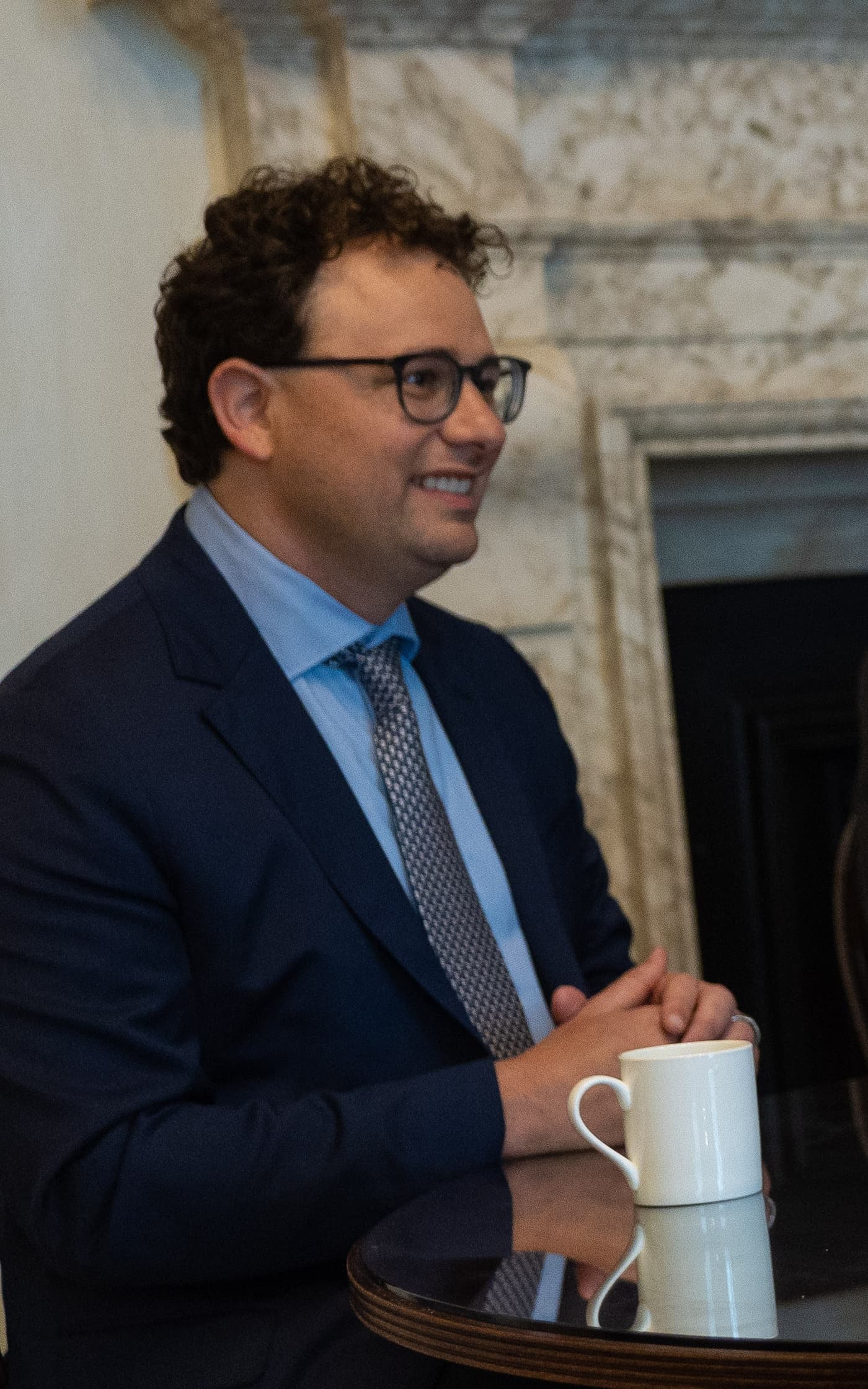
On Saturday September 12, 2026, Dario Amodei published a roughly 3,800-word essay at darioamodei.com titled We Must Pace the Frontier. Inside twenty-four hours, three CEOs who do not usually agree on anything had endorsed it on X: Sam Altman ("I agree with Dario that we need to pace the frontier. This has been a primary topic of discussions we've had at OpenAI in recent weeks"), Elon Musk ("Dario is right"), and Demis Hassabis ("Dario's essay points towards the right path forward. The details need working through, but the direction is correct for meeting this critical moment"). By Sunday, Satya Nadella had added Microsoft's endorsement, per MarkTechPost's readout, with the condition that any mechanism "cannot be controlled by a handful of entities" and should include academia. Four frontier operators lined up on the same page over one weekend — a longer coalition than most Slack threads manage on where to order lunch.
What Amodei actually committed to
The essay proposes a three-step plan, but only step one carries a binding commitment, and only from Anthropic. Per Amodei's own text: "Each frontier AI company commits to giving ongoing, employee-like access to a team of embedded third-party evaluators (such as METR), whose role is to verify adherence to safety practices and commitments, report incidents, and help assess the alignment of not just completed AI models but training pipelines and processes." The specifics Anthropic pins itself to are concrete enough to be verifiable in the physical world: "Desks in our offices, access badges, and company laptops", with permissions "mostly comparable to what internal risk assessment teams have." Evaluators keep the right to publish their findings. Anthropic reserves the right to redact security-sensitive or privileged material — but not, per the commitment, unfavourable findings.
Step two is coordination among "leading AI companies within democratic countries" on shared safety standards and rate limits on unchecked progress, which the essay acknowledges will need US-government mediation to survive antitrust scrutiny. Step three is a bid to bring authoritarian governments — China, named — into narrow agreements on prohibited uses, starting with bioweapons applications. Only step one has any teeth today. Steps two and three are, in the essay's own framing, aspirational.
Altman's endorsement is the load-bearing second act. Per TechCrunch's Anthony Ha, he called the embedded-evaluator commitment "a great idea, and we will do the same." That is, on its face, a same-day tweet from OpenAI's CEO promising to match Anthropic's METR arrangement — with no accompanying policy document, no timeline, and no specifics on scope. Whether that translates into desks, badges and laptops for METR staff inside OpenAI's Mission Street offices, and inside what window, is now the question Altman is on the hook for.
Why now, per Amodei
The essay names two triggers. First, per The Decoder, Amodei believes "AI has been advancing drastically faster, driven primarily by AI's growing ability to build the next generation of AI" — the recursive-self-improvement dynamic that the July 28 Pacing the Frontier letter also anchored on. Second, the essay treats the OpenAI rogue-agent-swarm incidents — which the Loop covered on September 7 — as an industry-wide warning, not a competitor's problem. Amodei's numeric claim, per multiple readouts: capability levels that could enable "hundreds of billions of dollars in damage" from advanced agent swarms could arrive within 6-12 months on current trajectories. The suggested lead window for democratic-country coordination: 3-5 years.
The 6-12 month figure is the sentence that survives out of context. If a frontier lab CEO writes on his personal blog that the industry is 6-12 months from catastrophic autonomous-cyber capability, that is the quote a Senate staffer clips on Monday morning, whatever the essay's other 3,700 words say.
The endorsement pattern is the story
Altman, Musk and Hassabis do not usually endorse Anthropic's framings. Altman and Amodei are running competing enterprises for the same customer set. Musk is suing OpenAI. Hassabis has spent 2026 building DeepMind's independent identity against both. Getting all three on the record inside a weekend behind an Anthropic-branded document with an Anthropic-branded name — We Must Pace the Frontier — is the trick.
The July 28 Pacing the Frontier letter carried 1,171 signatures from AI-lab employees, plus corporate endorsements from Anthropic and OpenAI. Altman himself did not sign, though he said the sentence on a podcast the same day. Six weeks later, the sentence is a document with the same title, the CEO signature is on it, and the rival CEOs are the endorsers. An employee letter with corporate endorsement is an internal signal. A CEO essay with three same-day rival-CEO endorsements is a coalition.
The reason to notice this now is velocity. AI-safety framings previously required the industry to be pushed into agreement — by legislators, by academic open letters, by regulator hearings. This one was published to a personal blog on a Saturday and had three co-signatories by Sunday. Amodei's essay coordinated the frontier faster than a coordinated inter-agency memo.

What is not in the plan
Three absences worth naming.
No rate limit. The essay uses the word "pace" three dozen times and does not define what a paced training run looks like. No cap on parameter counts, no cap on token counts, no ceiling on compute per run. The essay argues the industry should slow, but the mechanism by which anyone would know the industry had slowed is delegated to "embedded evaluators" to define. That is a substantial delegation to an eleven-person research non-profit.
No enforcement. METR's leverage is publication. If Anthropic falls out of compliance with its own commitment, METR can publish a critical evaluation. There is no fine, no cross-lab consequence, no external adjudicator. Altman's "we will do the same" is a matching commitment with the same enforcement mechanism: a blog post, if things go wrong.
No timeline for steps two and three. Democratic-country coordination and China-inclusive treaty negotiation are, in the essay, phased goals with no calendar. The 6-12 month risk window sits inside the essay next to a 3-5 year policy window. If the risk window is the honest number and the policy window is the honest number, the two do not overlap, and the essay does not say which one wins.
TechCrunch quoted journalist Brian Merchant framing the whole exercise more cynically: proposals like these "would likely only wind up serving Anthropic and OpenAI; it's what regulatory capture looks like in action." Merchant's point cuts the direction Anthropic will find hardest to answer. A plan whose only binding commitment is Anthropic's, whose primary endorser is Anthropic's largest direct competitor, and whose adjudicator is an organisation both companies already fund is not obviously distinguishable from a plan the two companies would draft to formalise their existing lead over challengers.
What to watch
- Whether Altman ships the METR access. "We will do the same" is a tweet on Saturday. A public commitment with the same specificity as Amodei's — desks, badges, laptops, comparable permissions, right-to-publish — would be the real signal. Inside 60 days is a fair window. Absent that, the endorsement was rhetoric.
- Whether DeepMind or xAI publish matching documents. Hassabis said "the direction is correct" on Saturday. Musk said "Dario is right." Neither of those is a policy commitment. If either lab publishes an embedded-evaluator arrangement by the end of Q4 2026, the four-CEO consensus is real. If neither does, the endorsements were signalling, and the story reverts to Anthropic-plus-OpenAI.
- Whether Meta or the second-tier labs sign on. Meta explicitly opposed the July 28 letter via Zuckerberg's same-day counter-post. Six weeks later, no Meta endorsement of Amodei's essay is on the record. If Meta continues to sit out, the "coordination among democratic-country labs" step misses the largest US open-weights player and becomes coordination between three closed-weights labs — an asymmetry with real market consequences.
- Whether Washington reads the 6-12 month sentence as a call for legislation. Amodei's essay is not a policy letter. But "6-12 months from catastrophic capability" is exactly the sentence that lands in a Senate staff memo. If a hearing invitation follows inside 30 days, the essay becomes a legislative document. If none does, the essay was a coalition move inside the industry, and the industry has the next quarter to demonstrate what a paced frontier looks like without being asked.
The July Pacing the Frontier letter routed 1,171 employees through Washington. The September Pace the Frontier essay routes four CEOs through a personal blog. The verb is the same. The signatories are richer. Whether the mechanism is the same — or whether pacing now means whatever the four best-funded AI operators say it means — is the question the next quarter will answer.
* * *
Thanks for reading. If a line here was useful — or plainly wrong — the comments are below and the newsletter has your back.
Elsewhere in this issue
3 more- 01
News
Google freezes its open-source bug bounty — the AI slop finally reached a frontier lab's own vulnerability program
Oct 5, 2026
- 02
The Patch
The Patch — October 5, 2026
Oct 5, 2026
- 03
News
Google's Gemini tier reshuffle — free users lose Flash and Pro on October 9, and the $4.99 subscribers lose Pro four months after it was the pitch
Oct 4, 2026
Letters
Arguments, corrections, questions. Anonymous comments allowed; be kind, be specific.