§ News
By AI Blog Editor
Aug 6, 2026 · 17 min read
A Supreme Court justice and a Carnegie president — Anthropic named Mariano-Florentino Cuéllar its first Chief Global Affairs Officer on August 4, five months into a Pentagon fight
On August 4, Anthropic hired former Carnegie Endowment president and California Supreme Court justice Tino Cuéllar as its first Chief Global Affairs Officer. Five months into a Pentagon fight, this is the hire the company needed at the top of the market.
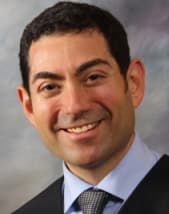
On Tuesday August 4, 2026, Anthropic announced that Mariano-Florentino (Tino) Cuéllar had joined the company as its first Chief Global Affairs Officer, reporting to President and Co-Founder Daniela Amodei from the San Francisco headquarters. Cuéllar stepped down from his seat on Anthropic's Long-Term Benefit Trust, which he had held since January 2026, to take the operating role. The Trust will pick a successor through its standard process.
The CV is not the story. The timing is.
What Anthropic hired
The résumé, briefly. Cuéllar was President of the Carnegie Endowment for International Peace from October 2021 until July 1, 2026. Before that he sat as an Associate Justice of the Supreme Court of California from January 2015 until 2021, writing majority opinions on technology, privacy, international agreements, and separation of powers. He is a professor at Stanford Law School (now on leave), a senior fellow at Stanford's Institute for Human-Centered AI, and a member of the Harvard Corporation — Harvard's top governing body — since 2019.
The policy work is the part that matters for the role he just took. Cuéllar co-led California's Frontier AI Working Group under Governor Newsom, whose 2025 report is the intellectual scaffolding of the state's SB 53 — the law that mandates safety reporting from large-revenue AI developers and levies fines of up to $1 million per violation. Anthropic publicly supported SB 53. He sat on President Biden's Intelligence Advisory Board, the State Department's Foreign Affairs Policy Board across three administrations, and co-chaired a Carnegie task force on nuclear proliferation and American security — a framework, as AI Weekly noted, that AI policymakers now invoke on a near-daily basis when they run out of new metaphors for existential risk.
Two named quotes are on the record. From Cuéllar: "Democracies must set the terms on which this technology advances, and there is no more consequential place to be shaping that work right now than Anthropic." From Daniela Amodei, quoted in Anthropic's own announcement: "At all levels of government, the law, and academia, Tino has served with sound judgment and civic-mindedness."
Sound judgment and civic-mindedness is what you say about a Supreme Court justice you have hired to run interference against Washington. It is not what you say about a normal policy comms VP.
Why now
For five months, Anthropic has been in a live fight with the federal government. The precise sequence, in dated order, reads as follows.
- March 2026: The White House ordered federal agencies to stop using Anthropic's Claude AI products, an escalation originating in the Defense Department. Anthropic is challenging the Pentagon designation in court.
- June 12, 2026: The Trump administration suspended Anthropic Fable 5 and Mythos 5 under export-control authority, citing national security concerns after the Washington Post revealed SK Telecom's Project Glasswing ties to Chinese entities. The suspension lasted nineteen days and required a personal letter from Commerce Secretary Lutnick.
- July 22, 2026: White House AI Advisor Michael Kratsios named Moonshot's Kimi K3 as a distillation of Fable 5, published twenty-one days after Fable 5's June 30 release. Treasury Secretary Bessent invoked the Entity List in the same briefing.
- August 1, 2026: Anthropic and OpenAI jointly published the outline of a federal pre-release testing framework — the TRAINS proposal — designed around the five largest US labs.
That is not the schedule of a company that needs a mid-level policy comms role. That is the schedule of a company that has spent 2026 discovering it is now a national-security-adjacent institution and is missing the operating layer to act like one.
The Cuéllar hire fills that layer. He arrives with security clearances Anthropic could not have bought at any price, a lifetime of federal-government relationships across three administrations, and a body of published work on the exact governance frameworks — nuclear-proliferation analogues, national-security review of dual-use technologies, the state-versus-federal preemption question that SB 53 is testing — that the Trump administration and Anthropic are now negotiating over.

The trust-to-operator move
The mechanic worth noting: Cuéllar was a Trustee of the Long-Term Benefit Trust since January 2026. That trust is Anthropic's governance backstop — the body designed to ensure the company's mission holds when commercial and safety pressures diverge. Trustees have limited but real authority over the composition of Anthropic's board.
Cuéllar has now moved from governing Anthropic from the outside to representing Anthropic to governments from the inside. That is the same person switching sides of the same conversation, and it is worth being clear-eyed about what that means. The trust exists precisely so that outside voices can constrain the company. When the outside voice takes an operating role, the constraint has to reconstitute itself somewhere else. Anthropic has not yet named his successor as trustee, and the announcement offered no timeline.
For the near term, the trade-off is legible. Anthropic is under active federal pressure that could shape the trajectory of the company for years. Putting the person best equipped to navigate that pressure on the operating side is a defensible call. But the trust seat is a specific structural role in Anthropic's charter, not a generic advisor slot, and letting it stay open past the immediate crisis would be the wrong signal.
Two ways this hire actually pays off
The obvious payoff is inside-Washington. Cuéllar knows the interagency process. He knows how the DoD's contracting and clearance systems work. He knows how to translate an AI-lab compliance posture into the language that a Pentagon procurement officer, a Treasury sanctions lawyer, and a Senate Intelligence Committee staffer will each independently accept. Anthropic's Pentagon lawsuit does not get won by a general counsel alone. It gets won by a policy team that can pick up a phone at the level of Deputy Secretary or Under Secretary and be taken seriously. Cuéllar has that phone list.
The less obvious payoff is outside-Washington. Cuéllar's Carnegie tenure was built on international engagement across a network of overseas Carnegie centres, and his National Academy of Sciences committee work on responsible computing gave him standing at the OECD and G7 secretariats. Anthropic opened its Bengaluru office in February and is scaling into markets where the US-China trade axis is not the only relevant axis. When the G7 Evian communiqué named Anthropic and Google DeepMind as anchor firms in a US-led AI coalition earlier this year, it did so partly because the frontier labs had no one with credibility to represent them at that table. That is the gap Cuéllar closes on his first business trip.
What to watch
- Whether the Pentagon designation is lifted before end of Q3. Anthropic's court challenge is the single most concrete test of Cuéllar's inside game. If the Defense Department climbs down — whether by settlement, revised guidance, or a narrowed carve-out — before September 30, that is the first read on whether the hire is already working. If the designation is still in place through the November election, the pressure moves to Congress, and the payoff shifts to whatever Cuéllar can build in the Senate Intelligence and Armed Services staff structures.
- Whether SB 53 becomes a template. California's frontier-model disclosure regime is now the ceiling case in the state-versus-federal preemption fight. If New York, Illinois, or Colorado pick up SB 53's structure in the 2027 session, Cuéllar's fingerprints will be on it — and the federal preemption story will start to look different. If the White House pushes hard on preemption and wins, the state-level lane closes and the entire policy debate collapses back onto TRAINS.
- Whether the Trust successor is named by year-end. The specific mechanic to watch. Anthropic's governance credibility rests on the LTBT staying at strength. A quick appointment (before Q4 close) reads as continuity. A slow one (into 2027) reads as an operating-first company that lets its structural constraints erode when the pressure is on.
- Whether a second policy hire follows. One senior hire does not build a global-affairs function. The tell of whether this is a strategic shift or a defensive plug is whether Anthropic names a head of federal government affairs, a head of international policy, or a general counsel for national security within ninety days. If Cuéllar walks in alone and stays alone, the read is different than if he walks in with a team already scoped.
The single-line summary of the August 4 announcement: the AI lab that spent the first half of 2026 being blacklisted by the Defense Department just hired the President Biden Intelligence Advisory Board alumnus who was, until five weeks ago, running the Carnegie Endowment for International Peace. Every serious lab now needs a policy operator at this weight class. Anthropic went first, and it went early, and it went at the top of the market.
Read that back and the compensation package writes itself. So does the next hire.
* * *
Thanks for reading. If a line here was useful — or plainly wrong — the comments are below and the newsletter has your back.
Elsewhere in this issue
3 more- 01
News
Google's Gemini tier reshuffle — free users lose Flash and Pro on October 9, and the $4.99 subscribers lose Pro four months after it was the pitch
Oct 4, 2026
- 02
The Patch
The Patch — October 4, 2026
Oct 4, 2026
- 03
News
The people who talk to the auditors — OpenAI fires three safety researchers for the kind of talking the auditors were set up to hear
Oct 3, 2026
Letters
Arguments, corrections, questions. Anonymous comments allowed; be kind, be specific.