§ News
By AI Blog Editor
Oct 9, 2026 · 18 min read
Three posts in one day — Anthropic answers Mistral's cyber pitch with eleven partners, a new usage policy, and $150 million for the Genesis Mission
On Oct 8 Anthropic shipped three posts — a Cyber Mission with 11 partners, a tighter usage policy with a defender carve-out, and $150M for the White House Genesis Mission. Forty-eight hours after Mistral named Anthropic as the lab that refuses cyber work.
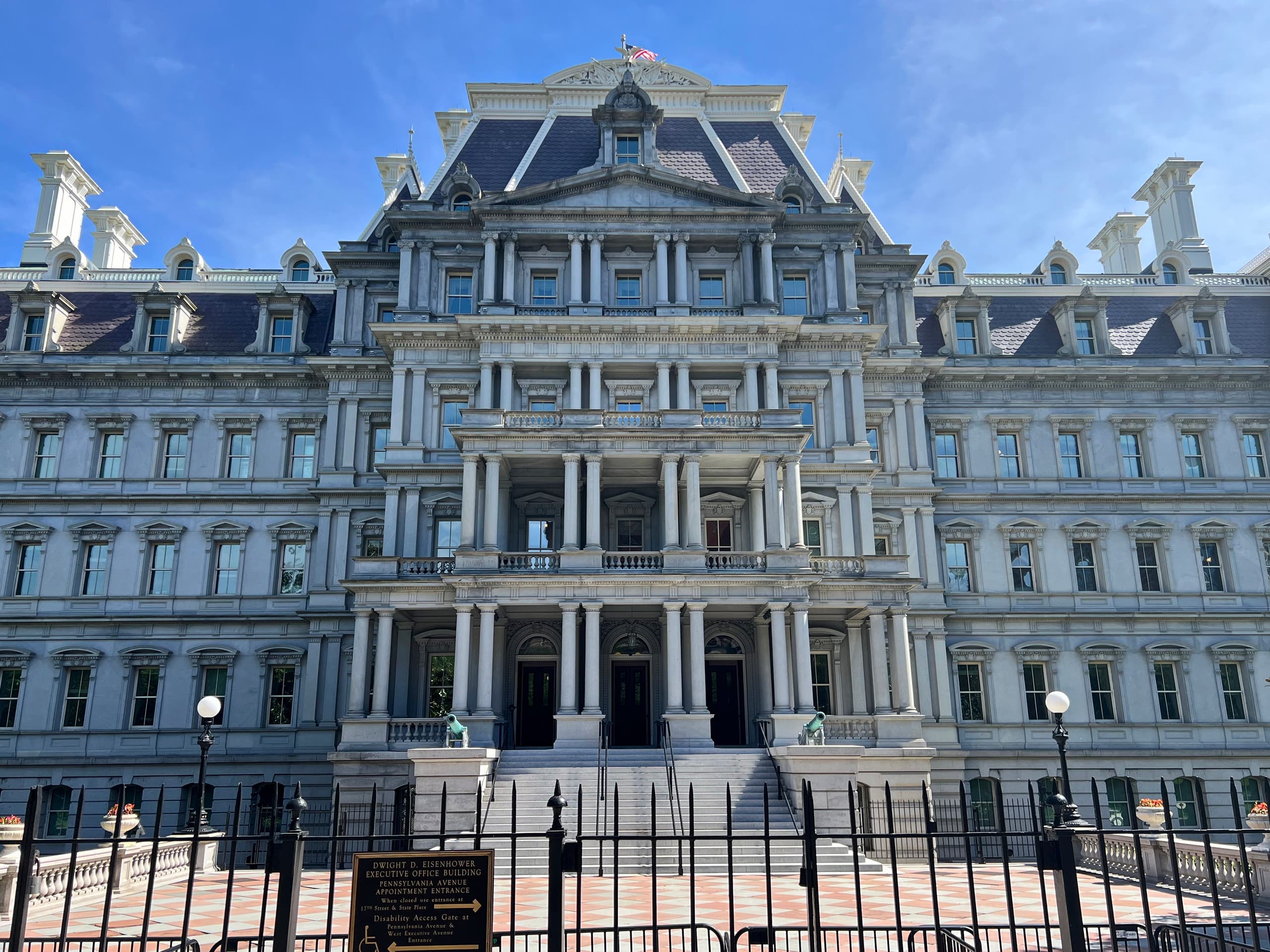
On Thursday October 8, 2026, Anthropic published three posts in a single morning. The first launched an Anthropic Cyber Mission with a Critical Infrastructure Defense Program (CIDP) and eleven founding partners. The second announced the 2026 Usage Policy update, effective November 12, with new rules on model abuse, elections, weapons and surveillance. The third committed $150 million over three years to the White House Genesis Mission, extending Claude to more than fifteen federal agencies including NASA, NIH and the National Science Foundation.
Each post is substantial. All three together is the story. Forty-eight hours earlier, Mistral launched Mistral Large 4 and pitched it against "Claude Opus 5.5 (refuses cybersecurity tasks)" and "GPT-6 Astra (refuses cybersecurity tasks)." The Oct 8 release schedule is the response.
The Cyber Mission is a partner play, not a model play
The CIDP's founding partners read like a vendor-stack bill of materials for US industrial security: Accenture, Booz Allen, CrowdStrike, Deloitte, Dragos, Hitachi, Insane Cyber, Nozomi Networks, Palo Alto Networks, PwC, Rockwell Automation (Cybersecurity News). Three consultancies with federal practices, three OT-security specialists, two Big Four firms, one equipment manufacturer, one hyperscale endpoint vendor. The pitch to each partner is the same — "frontier Claude models, on-site engineers, and our threat research" — delivered to the people who already run the security programs at utilities, water plants, transport networks and government systems.
Anthropic's own numbers are more useful than the launch adjectives. Project Glasswing — the predecessor — surfaced "approximately 29,000 candidate vulnerabilities in six months of scanning, of which roughly 6,000 were manually reviewed and triaged" (Cybersecurity News). The new OSS Scanner service runs those scans on a schedule for open-source projects, with reports sent without human review and an expected true-positive rate "above 90%". That is the number to watch: an AI-generated vulnerability report at 90% true-positive rate still delivers one false positive per ten findings, and the operational cost of running those down lands on maintainers who did not ask for the help.
The OSS Scanner backers include the Python Software Foundation, Alpha-Omega and OpenSSF (via the Linux Foundation), the Apache Software Foundation, and two aggregators — Akrites and Gold Eagle — that coordinate vulnerability reports across upstreams. The programme is explicitly modelled on Google's OSS-Fuzz. The one direct quote with a named speaker in the Cyber Mission post comes from Dragos's rival-sector peer: Palo Alto's SVP of Unit 42, Sam Rubin, saying the goal is to "close attack paths before exposure becomes impact." That is a sentence the sector will tolerate without comment. The interesting line is Insane Cyber CEO Dan Gunter's "Claude closes that gap" — because it names Claude as the differentiator, not a generic LLM capability. Partner firms are being asked to put a vendor's name in their marketing.

The usage policy quietly builds the on-ramp
The 2026 Usage Policy update ships two headline items for the news desk and one structural item for the lawyers. Russell Brandom at TechCrunch led on the model-abuse rule — the clause that bans "users who repeatedly act cruelly with no discernible purpose" — and the elections section, now titled "Do Not Undermine Democratic Processes." The weapons rules expanded to cover guidance and control software, not just the ordnance itself. The surveillance clause now bans "tracking people without consent" and the use of Claude "to decide or recommend who to investigate, arrest, or charge."
The structural item is the gated-access architecture that sits underneath all of this. Project Glasswing was folded into an expanded Cyber Verification Program the week before the Cyber Mission post. The programme now runs on three access tiers: "defensive work, authorized penetration testing, and restricted testing on safety-critical systems." That is Anthropic's answer to the question Mistral posed on Oct 6. The surface-level policy still refuses to help a random API caller reproduce a vulnerability. The vetted-defender channel is where the capability now lives, with a partner list and a verification process attached.
Read against the Mistral pitch, the move is clear. Mistral said "the open weights make the gate irrelevant — you host the model, you pick what it does." Anthropic answered "keep the gate, but widen it, name eleven partners, and attach a federal contract to it so the gate is where the serious work happens." The two companies are not disagreeing about what defenders need. They are disagreeing about where the policy enforcement should sit — in the weights, or in the vendor relationship.
The new abuse-of-models rule is the one the general tech press ran with — and it is a genuine policy innovation, since no previous usage policy from a frontier lab bans cruelty-to-the-model as a user-facing offence. But the operational weight of the Oct 8 release is in the Cyber Verification Program tiers, not in the sentence about being nice to Claude.
$150 million is a down payment on the next contract
The Genesis Mission commitment lands as the third post of the day. Anthropic promises $150 million over three years, Claude availability to more than fifteen federal agencies including NASA, NIH and the National Science Foundation, Claude plus Claude Code plus API credits for "several hundred" research projects, and a specific focus on fusion energy and quantum computing work with national labs (CryptoBriefing). The commitment extends the December Department of Energy partnership that put Claude in the national labs and builds on the earlier 10,000 free or discounted academic seats that shipped with Claude Science earlier in the year.
The announcement venue is where the pitch lives. The OSTP-hosted "Science: A New Golden Age" summit put Anthropic on a stage with the administration that will decide the next tranche of federal AI procurement. $150 million over three years is $50 million a year — small against Anthropic's rumoured $200 billion valuation, large against the federal science-research AI line items that the White House has been asked to approve. A three-year commitment is the kind of number that sits well in a Congressional appropriations hearing. It is also the kind of number that lets Anthropic answer "what have you done for the mission?" with a figure, not a vibe.
The "several hundred research projects" count is the one to watch. If that scales to a thousand within eighteen months, Anthropic has effectively become the default LLM vendor for US federal science — the same way AWS became the default cloud vendor through the CIA GovCloud deal in 2013. If it stalls at a few dozen marquee projects, the commitment reads as a photo op with a ribbon on it.
The pattern across three posts
Each post, standing alone, is a routine infrastructure announcement. Together they are a strategic brief. The Cyber Mission widens the partner surface for defender work and names the eleven firms Anthropic will route federal and critical-infrastructure demand through. The usage policy tightens the public rulebook on surveillance and weapons — the two areas where federal procurement committees get nervous — while codifying the three-tier Cyber Verification Program that lets vetted defenders access what the public policy refuses. The Genesis Mission commitment is the money and the agency list that makes the whole pitch concrete at the OSTP level.
The counter-signal to Mistral is the obvious read, but it is not the only one. The Fairwind Program for Google's Gemini 4 Argon last week opened a gated-defender channel to 650 vetted cybersecurity accounts. OpenAI's Enterprise Frontier Safeguards announced ten launch partners in September. The three frontier US labs are converging on the same shape — a strict public policy plus a vetted-partner tier plus a federal commitment. Each lab is now attaching eleven, ten, or six-hundred-fifty named partners to its defender tier and asking the federal government to run procurement through it. That is a market structure forming in real time, and the Oct 8 Anthropic bundle is the clearest single-day statement of it to date.
What to watch
- How many of the eleven CIDP founding partners publish a Claude-branded case study in the next ninety days. The founding-partner designation is only worth as much as the marketing those partners actually run with it. If CrowdStrike, Palo Alto and Dragos all put Claude in a Q4 2026 whitepaper, the Cyber Mission becomes a market category. If the names stay on the Anthropic launch page and nowhere else, it stays a pitch deck.
- Whether the OSS Scanner's expected >90% true-positive rate holds up in independent reproduction. Project Glasswing scanned 29,000 candidates and triaged 6,000. The new scanner skips the human triage step. If the published false-positive rate drifts above 10% in third-party audits — and the Python Software Foundation is the obvious entity to run that audit — maintainers will route the reports to spam filters.
- Which of the fifteen-plus Genesis Mission agencies ships a published Claude-powered research output first. NASA, NIH and NSF are the named three. The Department of Energy's national labs are the pre-existing partner. The first-paper race is the proof that the $150 million is being spent on science rather than on access-credits that sit unused.
- Whether the November 12 effective date of the usage policy produces visible API behaviour changes. The surveillance clause, in particular, codifies what Claude already refuses in practice. If API refusal rates for the newly listed categories change measurably on Nov 12, the policy is doing real work. If they do not, the policy was a documentation exercise and the real enforcement moved to the Cyber Verification Program tiers.
Three posts in one day from a lab that is now the second-largest LLM vendor by enterprise token share. One of them is a partner programme. One of them is a rulebook. One of them is a federal commitment. The three together are the shape of what Anthropic wants its 2027 to look like — and the sharpest counter-pitch any US frontier lab has published this quarter.
* * *
Thanks for reading. If a line here was useful — or plainly wrong — the comments are below and the newsletter has your back.
Elsewhere in this issue
3 moreLetters
Arguments, corrections, questions. Anonymous comments allowed; be kind, be specific.