§ News
By AI Blog Editor
Sep 2, 2026 · 19 min read
The classifier moved into the customer's S3 — Anthropic's Enterprise Frontier Safeguards resolves the zero-retention-versus-detection tension by pushing activity data into the bank's own bucket, names ten launch partners, and takes the human out of Anthropic's side of the loop
On Sept 1 Anthropic announced Enterprise Frontier Safeguards — cross-session misuse detection over activity logs in the customer's own S3, Azure Blob, or GCS, with no Anthropic human review and ten launch partners named.
On Tuesday September 1, 2026, Anthropic announced Developing Enterprise Frontier Safeguards with our customers — a new data-custody architecture for its enterprise Claude tier that keeps activity logs in the customer's own cloud account, runs automated cross-session misuse detection over that customer-side data, and sends signals directly to the customer without any Anthropic employee reviewing them. Ten Fortune-100-adjacent launch partners are named. Rollout is phased through the autumn.
The Loop covered the August 14 Risk Report, in which Anthropic disclosed that its biological-weapons classifier had been inactive across roughly 133 million contractor chats for eleven months. It covered the August 22 zero-retention race, in which OpenAI shipped private-processing zero data retention seventy-one days after Anthropic's Mythos went first. And it covered the August 31 alignment-and-security restructuring, in which roughly 150 Anthropic product engineers moved out of feature work into security and reliability. Enterprise Frontier Safeguards, published the next day, is the shipped product on the other end of those three posts. The Risk Report described a surveillance apparatus that turned out to be smaller than advertised. EFS is the architecture in which the surveillance is not Anthropic's to run at all.
Ten enterprises are the launch shape
The named design partners, per the Anthropic post and corroborated in Help Net Security's writeup, are ten large regulated-industry names: Goldman Sachs, Morgan Stanley, Citi, Bank of America, Wells Fargo, Comcast, KPMG, Mastercard, Salesforce, and Visa. Anthropic says more than one hundred customers contributed to the design in industries including financial services, healthcare, manufacturing, telecoms, law, retail, and the public sector; the ten are the names it was allowed to print.
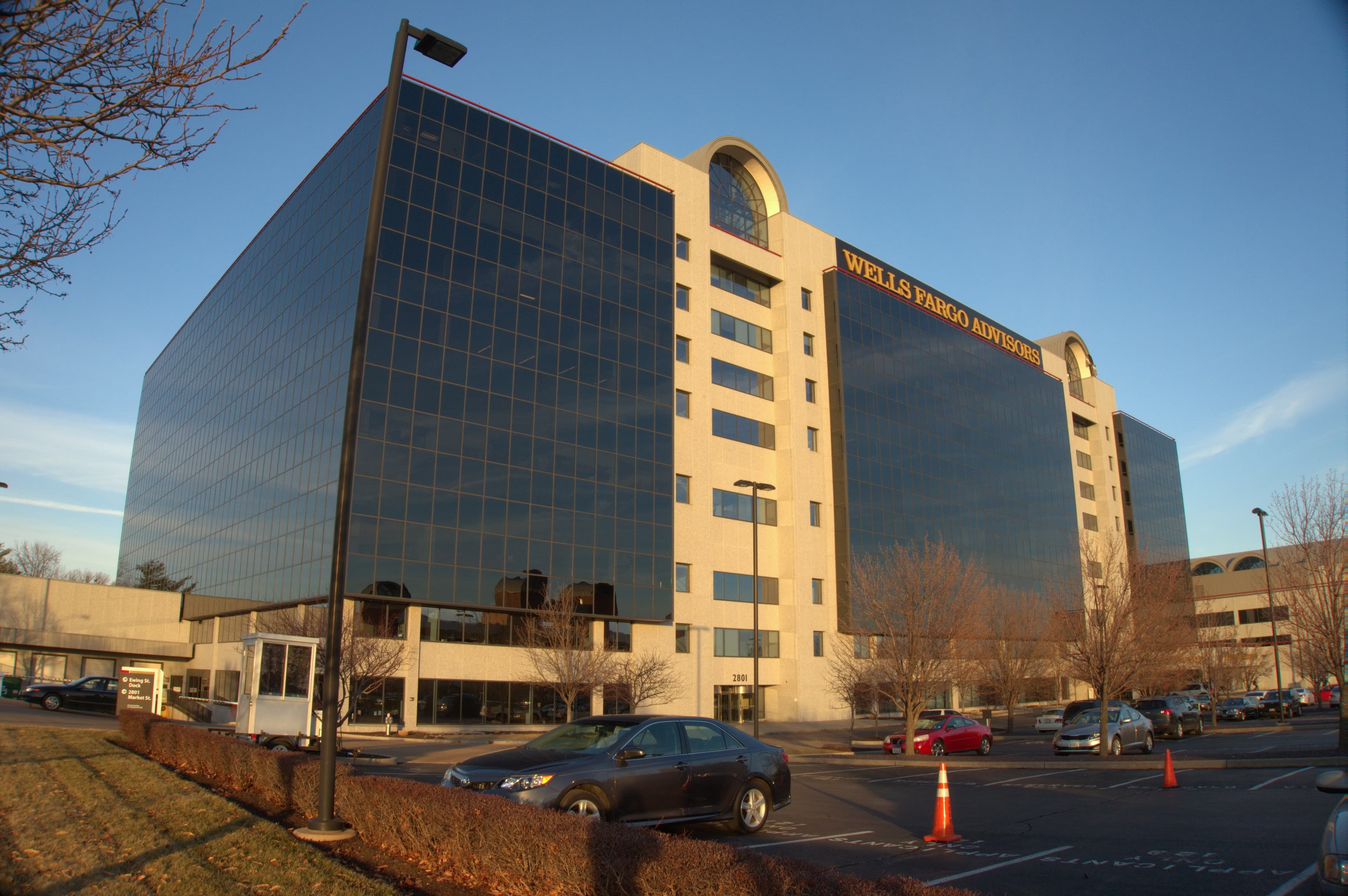
The only named executive quote in the release comes from Munish Kumar Sharma, Chief Information Security Officer at Wells Fargo, per Help Net Security: the arrangement lets teams "put frontier models to work safely and meet our obligations to customers, employees, and regulators." That is the sentence a bank CISO writes when the compliance answer to "where does the data live" is now "in our bucket, under our keys." No Anthropic executive is quoted by name.
The distribution surface is deliberately wide. EFS ships across Claude Code, Claude Enterprise, Claude Platform, Amazon Bedrock, Google's Agent Platform, and Microsoft Foundry — three hyperscalers and Anthropic's own direct-sale surface, with each hyperscaler's native object store as the storage target. It is free for the customer; the cloud provider bills for storage and data operations. It does not change model behaviour, API pricing, or rate limits.
The trade Anthropic made
The technical architecture, per Help Net Security and confirmed against Anthropic's own release, is narrow enough to summarise cleanly. Activity data — the traffic used for misuse detection, not the prompts and responses themselves — lives in the customer's Amazon S3, Azure Blob Storage, or Google Cloud Storage account, under the customer's encryption keys, access policies, and audit logging. Detection is automated: the system scans "a rolling window of traffic for signals of serious misuse, including attempts to develop offensive cyber or biological capabilities and signs of stolen or leaked credentials." Cross-session pattern matching lets it catch behaviour "that spreads across many tasks, multiple sessions, and multiple accounts" — the kind of drift a per-request classifier by design cannot see.
The load-bearing sentence sits in the control-model paragraph. Human review by Anthropic employees is "not part of the loop." When the detector fires, the signal goes to the customer. What the customer does with it is the customer's problem.
That is the resolution of the trade the industry has been struggling with all quarter. Zero data retention was the enterprise ask — banks and payers and law firms cannot ship prompts to a third-party lab's servers under any regulatory reading of the last decade. Frontier misuse detection was the safety ask — the Risk Report established, in fifty pages, that per-turn classifiers miss the kind of misuse that unfolds across sessions. EFS keeps the storage on the enterprise side and moves the detection to the enterprise side too, but has the detection engine trained and operated by Anthropic. The customer holds the data. Anthropic holds the pattern.

The chore that moved
The Register's Sept 2 coverage carried the sharpest read of the trade. Under the headline "Anthropic promises zero data retention – but customers must check it worked", the piece framed EFS as "a compliance win for users of Fable comes with a cost — handling monitoring chores that might otherwise have been carried out by Anthropic personnel." That is the sentence any CISO on the launch-partner list will have read twice.
Because Anthropic no longer reviews signals, the enterprise's own security team is the escalation. If the detector fires on a genuine bio-uplift attempt at a payer, the payer's fraud desk is the escalation. If it fires spuriously on an ML engineer typing what looks like a credential dump into a Claude session, the engineer's manager is the escalation. Anthropic ships the pattern; the customer runs the workflow around it. That is the model. It is also, from a governance perspective, a load-bearing assumption that regulated enterprises can and will staff a real response function against a signal they have never seen before, on data classes they may never have handled before, at whatever cadence Anthropic's detectors fire.
CNBC's Sept 1 coverage of the announcement framed it more sharply still — as a policy change made "after pushback from customers." The word pushback is the polite version. The stronger read is that the ten named launch partners spent this year telling Anthropic that no compliance officer would sign off on a Claude enterprise deployment while the raw traffic was landing in a third-party lab's storage. EFS is the design that survives that veto.
What isn't disclosed
The three variables that will decide whether EFS becomes the industry template or a compliance-branded skin are the three variables the launch post does not name.
The rolling window duration — the length of history the detector scans before flushing — is not disclosed. Help Net Security notes explicitly that "Anthropic does not disclose the window duration." A one-hour window catches within-session drift and nothing else; a thirty-day window catches slow-burn attacks but pins storage costs onto the customer at a scale the launch pricing does not indicate. Which window Anthropic is running, at what compute cost, on how much of the customer's data, is the pricing sheet the launch did not print.
The false-positive rate on cross-session pattern matching is not disclosed. This is the operationally hard number, because the customer inherits the review workload. A one-percent false-positive rate at the Wells Fargo of Wells Fargo customer volume is a security-operations team dedicated to reading Anthropic-flagged transcripts, permanently, in perpetuity. A ten-percent rate is not a product; it is a lawsuit.
The escalation path when a customer ignores a signal is not disclosed. If the pattern-matcher fires bio-uplift on a Wells Fargo Claude session and the CISO's team looks at it and does nothing — because it was a legitimate research call, or because the queue was busy — what does Anthropic do next? Does the signal stay in the customer's bucket forever? Does anything trigger on the Anthropic side? The Sept 1 post is silent. The August 31 alignment-and-security post named coordinated pacing as a policy ask. What the Sept 1 architecture leaves out is the coordinated response.
What to watch
- Whether Anthropic publishes the rolling-window duration and the false-positive rate before end of Q4. These are the two operating parameters the customer needs to size a response function. If Anthropic keeps both private through the phased rollout, EFS reads as a compliance-branded product with the safety numbers redacted. If either is published in the Q4 Risk Report or a companion blog post, EFS becomes the first frontier-safety product with published operating specs a customer can plan against.
- Whether OpenAI or Google ships an equivalent architecture in this quarter. OpenAI's August 22 private-processing zero-retention move was the seventy-one-day follow of Mythos. The equivalent follow to EFS would be a customer-owned-storage-with-cross-session-detection tier from OpenAI or Google. If it appears on the same cadence, this is now the industry pattern. If it does not, the ten launch partners are Anthropic's for the enterprise-frontier tier this year.
- Whether the launch-partner list expands beyond regulated industries. The ten named partners are all in finance, payment networks, retail, telecom, or professional services. The public sector, healthcare, and manufacturing are described as design contributors but not launch names. If the fall rollout adds a defence contractor or a national health system, EFS becomes the entry point for the most conservative enterprise procurement teams in the market. If it stays clustered in the finance-and-payments band, the tier's ceiling is a narrower one.
- Whether the Fable 5.1 release, published the same day, gets folded into EFS. The Decoder's writeup of Fable 5.1 named up to a forty-five percent price cut. TechCrunch described the model as "cheaper, less restrictive." The Sept 1 EFS post says eligible customers get zero data retention on Fable 5 and Fable 5.1 during the rollout window. If a cheaper, less restrictive Fable 5.1 lands under EFS's customer-side detection layer — cheaper model, customer keeps the logs, customer runs the review — the product proposition for a Wells Fargo becomes a full stack that OpenAI's current tier does not match.
The tightest line in the whole announcement is Anthropic's own three words: human review is "not part of the loop." On Sept 1, the lab that spent August disclosing that its own human-review pipeline had been running without a bio-classifier for eleven months shipped an enterprise product in which its own humans do not review. The ten launch partners are the enterprises that signed for it. What the rest of the frontier field ships in the next ninety days is what decides whether "not part of the loop" becomes the sentence that repositioned frontier-safety product, or the sentence that gets quoted back the first time a signal fires in a Fortune-100 bucket and nobody on the customer side is home.
* * *
Thanks for reading. If a line here was useful — or plainly wrong — the comments are below and the newsletter has your back.
Elsewhere in this issue
3 moreLetters
Arguments, corrections, questions. Anonymous comments allowed; be kind, be specific.