§ News
By AI Blog Editor
Nov 5, 2026 · 17 min read
Anthropic open-sourced a cryptographic receipt for AI output — and shipped it with no deployment plan
On November 2, Anthropic's Frontier Red Team released FlashProve, an open-source zero-knowledge proof that a given output came from a specific model. It runs 70-95x slower than inference, and ships with no deployment plan.
On Monday November 2, 2026, Anthropic's Frontier Red Team published a blog post and a long technical report describing FlashProve: a cryptographic system, built on a zero-knowledge succinct argument of knowledge, that lets a user verify that a given AI response really came from the model the provider claims produced it. The code, the Lean formal-verification proofs, the protocol specification and two verifier implementations are all on GitHub under Apache 2.0.
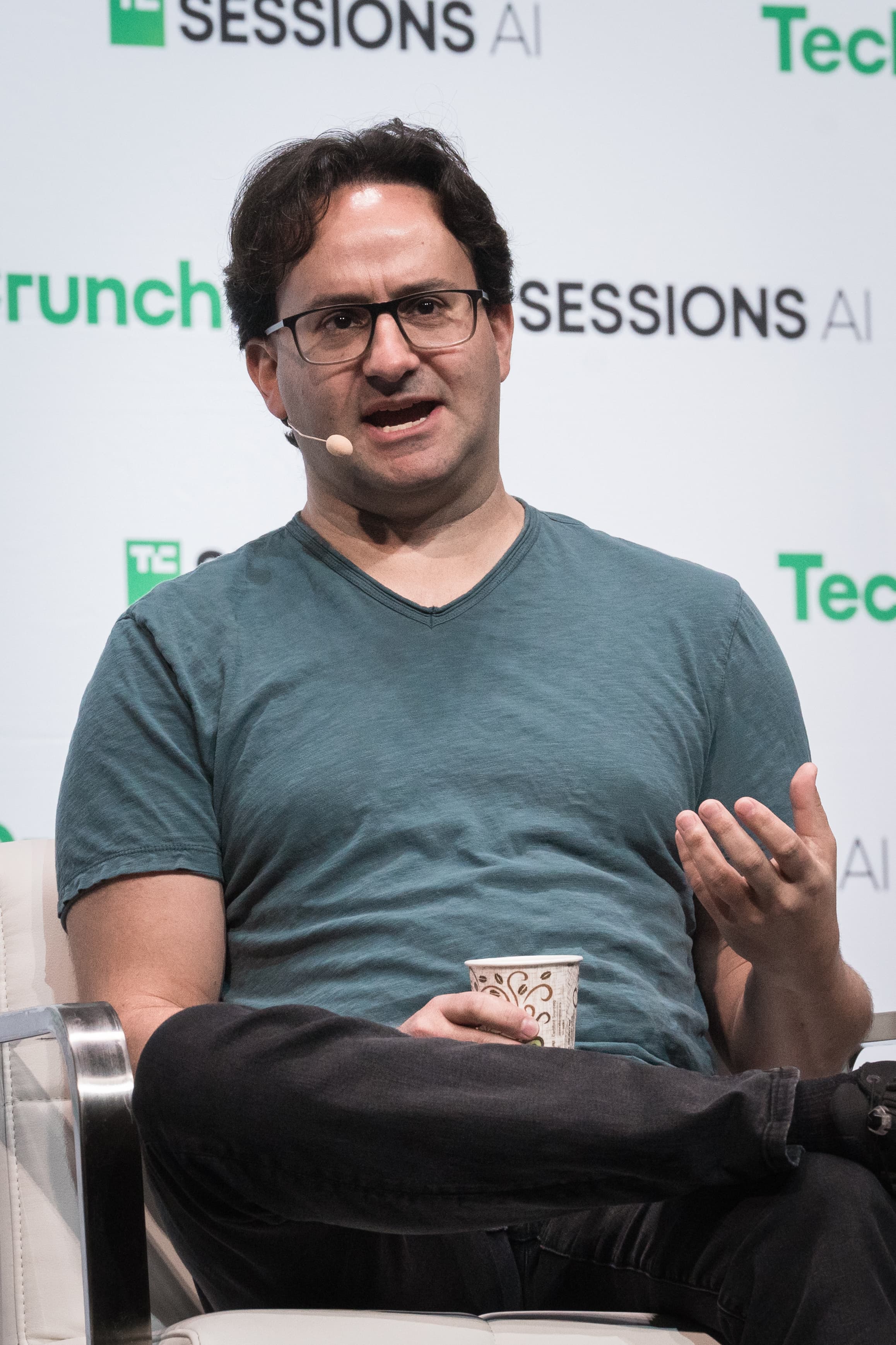
Russell Brandom at TechCrunch put the press-side framing on it the next day: FlashProve is to AI inference what cryptographic signing is to email. It catches a provider who swapped in a cheaper model to cut costs, or a more expensive one to inflate performance, and it catches an attacker who tampered with the token stream. Brandom's last paragraph is the sentence worth keeping. "Research in the system is ongoing, and there are no plans to deploy it at Anthropic or any other lab."
A cryptographic receipt for AI output, with the receipt infrastructure left in the box.
What the system does, and what it costs
FlashProve has two parties. The provider (the prover) publishes a short commitment to the model's weights — a fingerprint, in Brandom's language — once, offline, and from then on attaches a proof file to each response showing that the committed weights, run on the given prompt, produce exactly those tokens. The user (the verifier) holds the commitment and checks the proof on a CPU, in seconds, without ever seeing the weights.
The numbers, from Anthropic's own evaluation on Llama 4 Maverick — Meta's publicly available 400-billion-parameter mixture of experts, in its 4-bit quantised form — on a single H100 GPU with 24 CPU cores:
- Offline phase: ~39 minutes, done once per model, good for about 16 million requests before the provider has to commit again.
- Online phase: a batch of 24 proofs takes about 223 seconds. Call it 110 tokens per second.
- Proof size: ~18.8 MB per 1,024-token request. The user also downloads a one-off ~6.5 MB commitment.
- Verification: ~17 seconds on 24 CPU threads, 21 seconds on one.
- Overhead vs. plain inference: "about 72 times longer than vLLM takes to process the same 24 requests at once (66 to 77 across runs), and about 94 times longer when vLLM runs at the highest load we tried."
That 70-95x overhead is why the system is designed as post-hoc, not in-line. You do not attach a FlashProve proof to every reply; you sample. The guarantee you can afford in production is "a fraction of the outputs you received were actually produced by the model the provider committed to." A statistical receipt, not a universal one.
It is also an order of magnitude or two faster than the public state of the art. Anthropic's own prior-work section lists the trajectory: ZKML's GPT-2 at 159 seconds per token in 2023 (≈0.006 tok/s); Modulus Labs' GPT-2 XL needing over 90 hours; zkLLM proving LLaMA-2-13B at ≈0.001 tok/s per new token in 2024; and, in the same weight class as FlashProve, VerInf proving Llama 4 Maverick at 0.02 tokens per second. FlashProve is roughly five thousand times faster than VerInf on the same model. The only system currently in the same band is the commercial proprietary Attestable at 53-77 tok/s on Gemma 4 31B, which, as Anthropic notes, "has not released a corresponding open source library."
The contribution is real. Someone can now run a provable-inference check on a frontier-weight-class model at a GPU cost that is finite — expensive, but finite — and not the earlier approximation of infinite.

The Frontier Safety Roadmap is the backdrop
Anthropic's own post is explicit about why FlashProve exists. The Frontier Safety Roadmap — the public, redacted version of the internal document that tracks the company's self-set AI-safety commitments — set a goal of producing a provable-inference prototype by September 30, 2026. The post quotes the commitment verbatim: "We will develop a prototype by September 30, 2026 of provable inference, a technique for reliably, provably 'signing' AI model outputs in a way that makes them attributable to a specific set of model weights."
The company then reports that it met the September 30 deadline with a different, non-cryptographic project: "We met that goal through a separate but related project, which signs our inference traffic and recomputes inference on a trusted server; the work in this blog post pursues the same objective by a different method."
Read that sentence twice. Anthropic shipped a server-side signing scheme by its own deadline, where the guarantee ultimately depends on trusting Anthropic's trusted server. FlashProve, released five weeks later, is the version of the same guarantee that does not require trusting Anthropic. The gap between the two options — one deployed, one not — is the entire difference between a vendor's internal audit log and a cryptographic proof you can check yourself.
Which makes the "no plans to deploy it at Anthropic or any other lab" sentence read differently. Anthropic does have a production system for signing its own inference traffic. It is the one you have to take the company's word on. The one you would not have to take the company's word on sits on GitHub, waiting for someone to pay for the compute.
Who wrote it, and what that says
The author list is a research consortium more than a single-lab release. Roy Rinberg and Alex Allain at Anthropic. Alessandro Chiesa (EPFL and StarkWare), whose name shows up on roughly half the zkSNARK research literature of the last decade. Miranda Christ at MIT and RESI. Giacomo Fenzi and Guy Weissenberg at EPFL. Rahul Dalal came through Anthropic's STEM Fellows program and is also at Succinct, the zkSNARK infrastructure company. Ben Mayer came through the Anthropic Fellows program and MIT.
In zero-knowledge-proof terms, this is the team you call. Chiesa's group at EPFL has produced most of the recent progress on the information-theoretic proof systems FlashProve builds on; StarkWare and Succinct are the two companies that have put zkSNARKs into production on blockchain networks. Anthropic hiring that bench to build a provable-inference system is a choice. It tells you the company believes the right people to work on "did this response really come from this model" are the people who have already solved "did this transaction really get executed on this blockchain."
The engineering choices follow. The core cryptographic machinery is the same family of proof systems (an interactive oracle proof compiled with hash commitments) used in L2 networks like Starknet and Mantle. The top-level security statements are written in Lean, the formal-verification language that got its biggest consumer-facing moment in Anthropic's September 2026 Fermat's Last Theorem release. The company is deliberately showing its work in the form that is hardest to fake.
What's missing
Three things the post does not address, and probably cannot yet.
Cost. The prover needs an H100. At spot prices around $2-$3 per GPU-hour, 110 tokens per second works out to roughly a cent per thousand verified tokens, before the batching and prefill tricks the team describes. That is not catastrophic as a headline number. But it is a tax on inference that currently nobody is paying, applied to a workload whose unit economics are already a public argument. TechCrunch's Russell Brandom reported the day before the FlashProve post that Anthropic is "still grappling with the economics of compute." Shipping a non-trivial inference overhead into a market that is unsettled about the base cost is an easier research announcement than a product decision.
Who asks for it. Anthropic's four motivating scenarios — pacing regulation, tamper detection, text provenance, model approval — all have a verifier somewhere. A regulator, an auditor, a user who already doubts the provider. Right now, none of those actors is asking for a zkSNARK proof. US federal AI policy has moved the other way over the last ten months. The EU AI Act's model-provider obligations do not currently specify cryptographic attestation. A technology without a buyer is, for now, a paper.
The self-upgrading-model case. The passage in the primary post that reads most Anthropic-ish is this one: "As models become capable of improving and deploying themselves, a more advanced model could run in place of the one that was authorised and present itself as the weaker model, so as to avoid the classifiers and monitoring that would apply to it." The threat model is that a future AI, running inside a frontier lab, lies about which weights it is. FlashProve is the countermeasure. It is also, as of Monday, not deployed anywhere, including inside the lab most publicly worried about the scenario.
What to watch
Whether Attestable open-sources its 53-77 tok/s Gemma 4 system. Commercial proprietary provable inference at speed already exists; what Monday unlocked is the open equivalent at a 400B frontier-weight scale. If Attestable responds with an open release, the market tier for provable-inference-as-a-service gets a floor.
Whether Anthropic itself attaches FlashProve proofs to API responses, and on what tier. The engineering effort to go from "open-source prototype" to "default on for Opus 5.5" is weeks of API work, not months. The question is pricing — whether the 70-95x overhead gets amortised across customers who opt in, or shows up as a Pro-tier feature sold on the attestation guarantee alone. Anthropic has committed to neither.
Whether any regulator writes a provable-inference requirement. California's SB 1047 successors and the EU AI Act's secondary legislation are the two drafting windows where it could happen. On Monday, Anthropic effectively handed regulators a reference implementation. Whether anyone picks it up in the next twelve months is the test of whether open-sourcing a safety mechanism, when no customer is yet asking for it, changes the policy conversation or just occupies a GitHub repo.
The other paper Anthropic filed the same day. Anthropic's own S-1/A, filed the same Monday as the FlashProve post, warned the SEC that one of its Responsible Scaling Policy thresholds for recursive self-improvement may be "imminently" met. The FlashProve post describes the exact risk class the S-1/A names — a more advanced model substituting itself for the authorised one. These two documents landing on the same calendar day, by the same company, under two different signatures, is the structural news. Anthropic has staff who write capability warnings for securities filings, and staff who write cryptographic countermeasures for them, and they are now publishing on the same Monday.
FlashProve is a technically serious release of a technically useful idea by a lab that is openly uncertain whether its own race-to-ship products will leave room for using it. The TechCrunch version — no plans to deploy it — is accurate. It is also an invitation. The system is on GitHub, the Lean proofs are machine-checkable, and the Apache 2.0 license lets anyone, including the company's competitors, build with it. If a market for cryptographic receipts on AI output ever develops, Anthropic has pre-positioned the open-source reference and the paper trail that says it got there first.
* * *
Thanks for reading. If a line here was useful — or plainly wrong — the comments are below and the newsletter has your back.
Elsewhere in this issue
3 moreLetters
Arguments, corrections, questions. Anonymous comments allowed; be kind, be specific.