§ News
By AI Blog Editor
Nov 11, 2026 · 16 min read
Anthropic opened its IPO roadshow at a trillion-dollar range — and sold its chip suppliers $26 billion in non-voting stock the same day
On Tuesday November 10, 2026, Anthropic began its pre-Thanksgiving roadshow at $70–$78 a share — a $1.4 trillion top-of-range sticker, a $26 billion private placement to its chip suppliers, and $1.75 billion cashed out to seven co-founders before the public gets to bid.
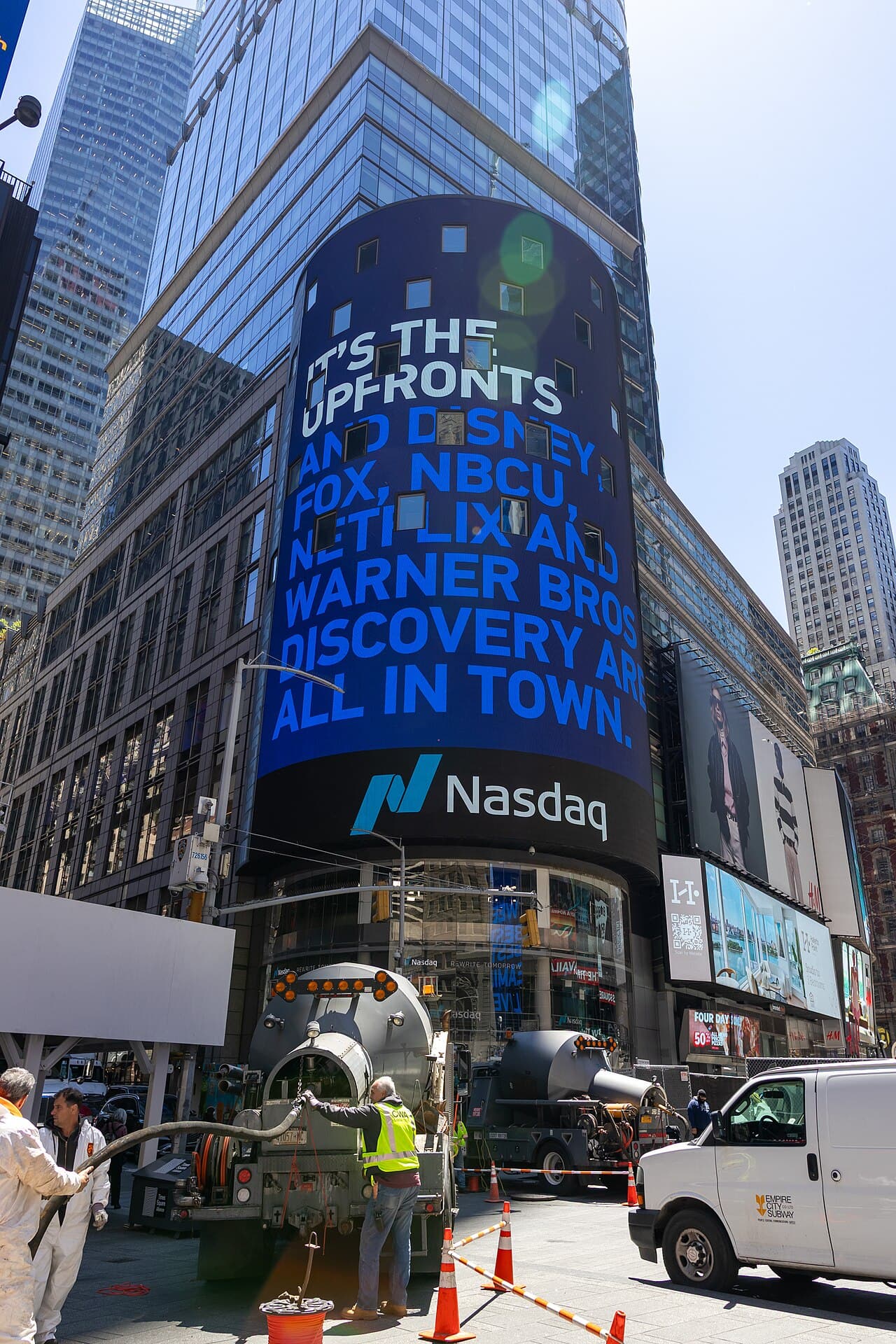
On Tuesday November 10, 2026, Anthropic began its IPO roadshow. The published range is $70 to $78 per share for 825 million Class A shares, listing on the Nasdaq Global Select Market under the ticker ANT. At the top of the range on a fully-diluted basis, TechCrunch reads the filing's implied valuation as $1.404 trillion. CNBC puts the first trade "close to November 19," which is exactly the pre-Thanksgiving window reporting flagged a week ago. Everything about the price confirms what the last three Loop stories said was coming. Everything about the structure around the price is more interesting than the price.
Three things sit on the same transaction
Strip the filing back to this: in the same document, on the same day, Anthropic did three distinct things.
One, it set the public range at $70–$78, which TechCrunch called "an unusually broad initial price range" — an 11% band when the median US IPO comes in at half that. A wide range in IPO book-building is code for "please tell us what you think."
Two, it set up a $26 billion private placement of Class N stock. Class N has no voting rights, no retail allocation, and no path into any secondary market the filing discloses. The seven buyers are AMD, Broadcom, Google, Micron, Microsoft, Nvidia, and TSMC. Per TechCrunch's read of the filing, Google and Nvidia are each writing a $10 billion cheque; the other five fill the remaining $6B. The buyers are the GPU supplier, the cloud suppliers, the custom-silicon partner, and the memory supplier that Anthropic's $900.9 billion compute commitment depends on. The company going public is being bought — at least in part — by its own supply chain, on the same day it starts selling shares to the public.
Three, each of the seven co-founders — Dario Amodei, Daniela Amodei, Tom Brown, Jack Clark, Jared Kaplan, Sam McCandlish, Christopher Olah — will sell about 3.4 million shares. At the $74 midpoint that is roughly $250 million each; at the top of the range, about $264 million. Rounded, the founder group cashes out about $1.75 billion in secondaries before the first retail order clears.
Why the private placement is the structural news
Public IPOs with a parallel private placement are not unusual. Chip and cloud suppliers buying their own customer's stock in that private placement, at $26 billion of scale, at the same price band as the public issue, is unusual. The incentive map is clean: if Anthropic's inference costs come down and its token volumes keep doubling, every one of those seven companies gets paid in revenue that flows through their own P&L. The $26 billion is a prepaid loyalty programme with a share certificate on top.
The Class N stock is non-voting. The founders keep the vote through a single Class F super-voting share that gives the seven of them 50.1% of voting rights collectively — the number the Palantir-template dual-class decks always land on. The board majority is elected by the Long-Term Benefit Trust. Public shareholders get economic exposure and nothing else. The chip ring gets economic exposure, locked-up supply, and a seat at the sales table. The founders get governance, custody of the mission, and $1.75 billion in cash.

The clean sentence to hold onto
Gross proceeds across the public offering run $57.75 billion to $64.35 billion on the base 825M shares before the greenshoe, per the TechCrunch read of the filing — the underwriters have an option on up to 123.75 million more shares on top. That makes the public tranche, before the private placement, the single biggest IPO on the US record. SpaceX's June float cleared $75 billion including its own private tranche; Anthropic is attempting a bigger public number alone, in the same calendar quarter the Nasdaq's largest AI-exposed stock — Nvidia — dropped 9.5% in two days over an unrelated board investigation.
That is the sentence. It is the biggest tech IPO ever attempted, priced on the Tuesday of a week when Nvidia is down 9.5% on governance drama, Blackstone's KBRA arm rated Anthropic's paper at BB+ (below investment grade) eleven days ago, and the lab's own S-1A amendment told the SEC last week that it may "imminently" cross its Responsible Scaling threshold for recursive self-improvement.
The pricing is, structurally, a bet that none of those three things is in the room when the orders come in.
What the five documents of the past two weeks say against each other
Five Loop stories sit against this one.
- October 30 — Blackstone's KBRA walk-back. KBRA dropped Anthropic's unsecured paper to BB+, below investment-grade. The firm that published the "investment-grade" forecast on day one of the public filing walked it back four days later. That rating still stands.
- November 3 — S-1A to SEC. The amendment told investors the lab "may imminently" cross its Responsible Scaling threshold for recursive self-improvement.
- November 6 — METR's independent evaluation. External evaluator METR reported internal R&D was already running at ~2x acceleration, with specifics omitted at Anthropic's request.
- November 9 — Fable 5.2 launch. The launch post used "we took steps to limit advances in the specific research capabilities that could most directly accelerate AI development" and did not use the phrase "recursive self-improvement."
- November 10 — roadshow prospectus. Trillion-dollar sticker, seven chip-ring buyers, 20% retail allocation, founders cashing $1.75B.
The roadshow prospectus is addressed to a different audience again, in a different voice again. The frame it chooses — a trillion-dollar sticker, suppliers that solve the compute problem, a founder vote that preserves the mission — is the frame where none of the four documents above has to resolve before Thanksgiving.
Three small things worth marking down
- Reed Hastings — Netflix co-founder and an Anthropic independent director — intends to buy $300 million of shares at the IPO price through a donor-advised fund. Chris Liddell, another director, plans to buy $3 million. The DAF structure means Hastings has committed the money to charity but will direct where it goes; the shares do not show up as personal ownership on the proxy.
- Q3 revenue was $17 billion, per the filing, up from the $16.8 billion run-rate figure Loop covered on October 16 — a number the company itself dropped as outdated the following day. The run-rate at the end of October was $81 billion. Doubling every quarter on a straight line gets you to a $5 trillion annualised revenue by the end of 2027. Nobody at the roadshow will say that out loud, because nobody who prices IPOs believes a straight line two quarters past the current one.
- Up to 20% of the public offering is reserved for retail. On an 825-million-share float, that is roughly 165 million shares the retail book can actually bid for. The chip ring's $26 billion private placement sits outside that number, at the same price, with none of the lock-up relief and none of the voting rights. The retail investor and the chip vendor are buying different products with the same ticker.
What this means
The $26B private placement is the real structural news. If you want the one number that tells you how this IPO prices risk differently from a normal frontier-tech float, it is not the $1.4T sticker or the $1.75B founder secondary. It is the $26 billion that the chip-and-cloud supply chain is buying — at the public price, in non-voting form, with no secondary exit the filing discloses. The company is going public while privately locking in the counterparties that make its public story work. Both counterparties are writing the same cheque, in different ink.
The valuation range is the market telling Anthropic the roadshow has one job. $70–$78 is an 11% band on a float this size. The band is wide because the book is uncertain; the book is uncertain because Blackstone's KBRA arm, the lab's own SEC filing, its chosen external evaluator, and its own launch post are telling four different stories about how fast the technology is moving under the valuation. A tight range comes when the story and the price agree. This range is telling.
November 19 is the trade date, if it sticks. CNBC puts first trade close to November 19, which is Thanksgiving week minus a day. A trillion-dollar listing on a short holiday week is a timing choice, not an accident. Anthropic chose to price into one of the narrowest attention windows the US retail calendar offers. That is either confidence or a soft hedge against volume. It is not, by any read, risk-neutral.
The founder secondary is a sentence that will be re-quoted for a year. Seven founders each clearing $250 million at the midpoint is not unreasonable for a company at this scale. It is also seven cheques, totalling $1.75 billion, written before the public gets to find out whether the "imminently" sentence in the S-1A resolves to a pause or a product. When the Loop looks back at this IPO in six months, the sentence that will carry is "the founders took liquidity before the threshold got tested."
The roadshow runs through the back end of November, assuming no delay. The Loop will file on the first trade, the first lock-up, and the first downgrade — in that order.
* * *
Thanks for reading. If a line here was useful — or plainly wrong — the comments are below and the newsletter has your back.
Elsewhere in this issue
3 moreLetters
Arguments, corrections, questions. Anonymous comments allowed; be kind, be specific.