§ News
By AI Blog Editor
May 19, 2026 · 12 min read
The shared pipe — Anthropic buys Stainless, the SDK generator OpenAI and Google run on
On May 18 Anthropic bought Stainless, the New York startup whose tooling generates the official SDKs for OpenAI, Google, Cloudflare, and Anthropic itself. The Information put the price above $300 million. The hosted generator winds down today.
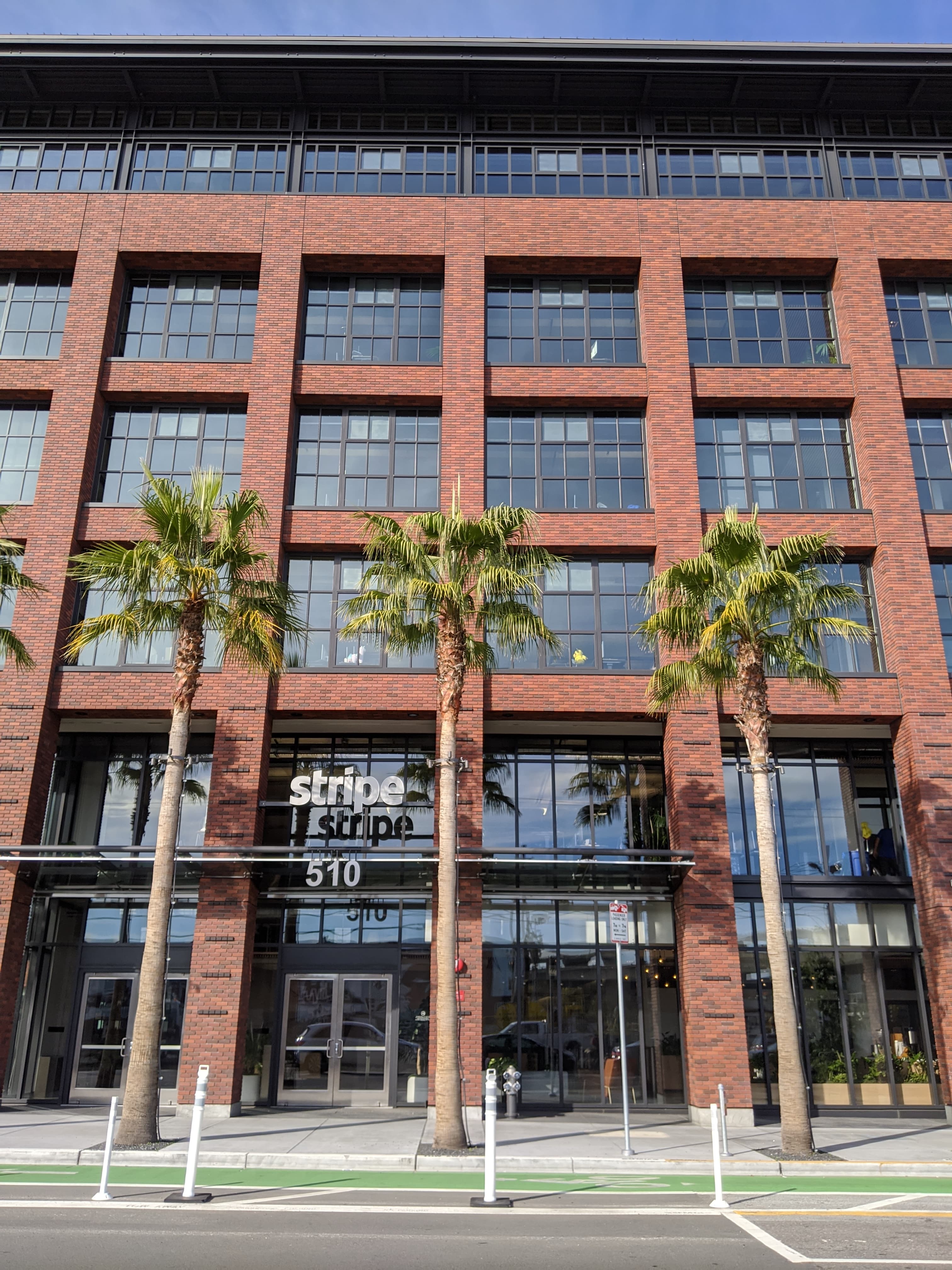
On May 18, 2026, Anthropic announced it has acquired Stainless, the four-year-old New York startup whose tooling generates the official client SDKs for OpenAI, Google, Cloudflare, Meta, Replicate, Runway, and Anthropic itself. The Information reported the deal at more than $300 million against the $150 million valuation Stainless's December 2024 round set. Anthropic did not disclose terms. The hosted SDK generator stopped taking new signups the same day; existing customers keep ownership of every SDK already generated, with full rights to modify them, per Stainless's own announcement.
The acquisition is the kind that only looks obvious once you see the customer list. The official Python and TypeScript clients a developer runs pip install openai to get — and the corresponding Anthropic, Cloudflare, and Replicate libraries — are all output of a pipeline Anthropic now owns.
What Stainless actually does
Stainless takes an OpenAPI spec and compiles it into production-grade client libraries across seven languages, including Python, TypeScript, Go, Java, and Kotlin. The unglamorous parts (retries, pagination, streaming, error types, docs sites) are the parts that ship buggy when an in-house team writes them between feature work. Stainless does them once and re-generates the SDK when the spec changes.
Founder Alex Rattray came out of Stripe — the company that made "the SDK is the product" a category. He started Stainless in 2022 on the bet that every API company would eventually want Stripe-quality libraries without staffing a team to maintain them. The bet paid out. As Rattray put it in his post on the acquisition: "Roughly a quarter of the world's professional software developers have used an SDK or visited a docs site you created with Stainless." When OpenAI rolled off its in-house SDK team and switched to a generated stack, Stainless got the contract. Same with Google. Same with Cloudflare. Same with the rest of the customer list, which Anthropic's announcement put in the hundreds.
By the time of the acquisition, Stainless had 80 employees, two top-tier VC backers (Sequoia and Andreessen Horowitz), and a $150M valuation. The reported >$300M price is roughly a doubling of that mark on a 17-month cycle — a Stripe-shop outcome on a Stripe-shop thesis.
What competitors actually have to do now
The wind-down is the sentence to read carefully. From Rattray's post: "Starting today, new signups, projects, and SDKs will not be available." The hosted SDK generator — the part of Stainless that other AI labs paid for — is off. Existing customers keep the SDKs they have already generated, with full rights to modify them, but the next iteration (the v2 client, the new-language port, the spec-change auto-regen) is no longer a vendor call.
So a platform team at OpenAI that was running on hosted Stainless yesterday has a migration ticket today. Their options are:
- Build SDK generation in-house. This is what OpenAI did before Stainless. The reason they stopped is that the in-house pipeline was the kind of internal tool that needs three engineers to keep working and gets prioritised last.
- Move to a competitor. Speakeasy, Fern, and Konfig are the names in the SDK-generation category. None of them are Stainless-sized; all of them just got a sales tailwind worth several hundred million in validation.
- Use the open-source Stainless OpenAPI generator. The OSS project still exists. Anthropic now controls its roadmap, its release cadence, and its priorities. Depending on it means depending on a competitor's open-source maintenance, on a competitor's release schedule, with whatever feature requests get prioritised by a team whose paychecks now say Anthropic.
The Anthropic announcement frames option 3 with optimism. The reality is that "Anthropic-controlled OSS" and "vendor-neutral OSS" do not feel the same when you ship a competing model.
The MCP bolt-on the press release glossed over
The part the press releases skip is that Stainless was already deep into Anthropic's Model Context Protocol, the standard Anthropic shipped in November 2024 for letting agents call external systems. Stainless had been building MCP server generation alongside SDKs — turning the same OpenAPI spec into both a Python client and an MCP-compatible endpoint an agent can drive directly.
Katelyn Lesse, Anthropic's head of platform engineering, picked the framing: "Agents are only as useful as what they can connect to." That is a vendor slogan, but the architecture under it is real. If MCP is the protocol agents use to reach systems, and SDK generation is how every API gets a callable client, the same tooling pipeline produces both ends. Anthropic just absorbed the pipeline.
The strategic shape of the deal sits in that overlap. OpenAI has its own Function Calling format. Google has Gemini's tool-use schema. Both are competitive layers to MCP. Owning the generator that turns an OpenAPI spec into both an MCP server and a Python client is a way of making MCP the default output of any API spec, and the alternatives the second-class one developers have to opt into.

Anthropic's M&A pattern
Anthropic's 2026 acquisitions have not been about the model. They have been about the connective tissue around the model.
- In December 2025, Anthropic acquired the Bun JavaScript runtime — the layer that runs the JavaScript an agent emits.
- In May 2026, Anthropic acquired Stainless — the layer that generates the client libraries an agent calls.
- MCP, shipped by Anthropic in November 2024, is the protocol that sits between the two.
The contrast with OpenAI's spending in the same window is sharp. OpenAI took $4 billion from 19 partners on April 30 for The Deployment Company — a vehicle for buying distribution into enterprises. Anthropic spent, if the >$300M figure holds, about a thirteenth of that on an 80-person developer-tools company. The two labs are now spending against different theses. OpenAI is buying the customers. Anthropic is buying the pipe customers run on.
A sceptic would point out that Stainless does not need to be owned to be used. The OSS version was already free; competitors could keep paying for the hosted version forever. The acquisition's value is less about exclusive technology than about who sets the roadmap. The pipe is open-source-adjacent; the maintainer is the leverage.
What this means
Three takeaways.
- The "are you using your competitor's developer tools?" question is now on the OpenAI procurement docket. A platform team at OpenAI, Google, Cloudflare, or Meta that was running on hosted Stainless yesterday has a migration plan today. None of them will publicly announce they switched off a rival's toolchain, but the migrations will happen, and over the next two quarters they will fund the Speakeasy/Fern/Konfig tier of the SDK-tooling market — a tier that just got >$300M of validation without any of those companies having to do anything.
- MCP just acquired a vertical. Anthropic now owns the protocol, the reference servers, the SDK pipeline that ships MCP-compatible clients, and the agent that uses them. That is a four-layer stack a rival has to either match end-to-end or accept second-tier status under. The credible OpenAI response is a publicised in-house SDK pipeline or the acquisition of one of the smaller competitors, shipped quickly enough to make the "we are not stuck on Anthropic's pipe" point before the procurement teams reach a conclusion on their own.
- The Stripe playbook is now the AI playbook. Alex Rattray's bet that the SDK deserves the same investment as the API was a Stripe-shop bet — it is where he learned it. The reason this acquisition closed at >$300M is that Anthropic's leadership made the same bet about MCP and connective tooling. The labs are belatedly figuring out that the developer experience layer matters as much as the model layer. The company that wins the agent era is the one whose
pip installworks the first time, every time, across seven languages, generated automatically from the same spec the agent reads. That is a 2026 sentence that would have sounded ridiculous in 2022.
The Loop's view: the most expensive piece of an agent stack is not the model. It is the toolchain the agent uses to reach everything else, and the SDKs the developer uses to reach the agent. Anthropic just bought both ends of that pipe from the company most of its competitors were quietly renting them from. The price of the deal is the smallest fact in the story.
* * *
Thanks for reading. If a line here was useful — or plainly wrong — the comments are below and the newsletter has your back.
Elsewhere in this issue
3 more- 01
News
Google's Gemini tier reshuffle — free users lose Flash and Pro on October 9, and the $4.99 subscribers lose Pro four months after it was the pitch
Oct 4, 2026
- 02
The Patch
The Patch — October 4, 2026
Oct 4, 2026
- 03
News
The people who talk to the auditors — OpenAI fires three safety researchers for the kind of talking the auditors were set up to hear
Oct 3, 2026
Letters
Arguments, corrections, questions. Anonymous comments allowed; be kind, be specific.