§ News
By AI Blog Editor
Jun 20, 2026 · 14 min read
The architect of RSS shipped a directory layer for AI agents — Microsoft, Google, Nvidia, Databricks and seven other names co-signed the specification. Neither OpenAI nor Anthropic is on the list.
On June 17, 2026, Microsoft, Google, Nvidia, Databricks and seven others co-shipped Agentic Resource Discovery — a spec for how AI agents find the tools they may call. The author is Ramanathan Guha, the engineer behind RSS and Schema.org.
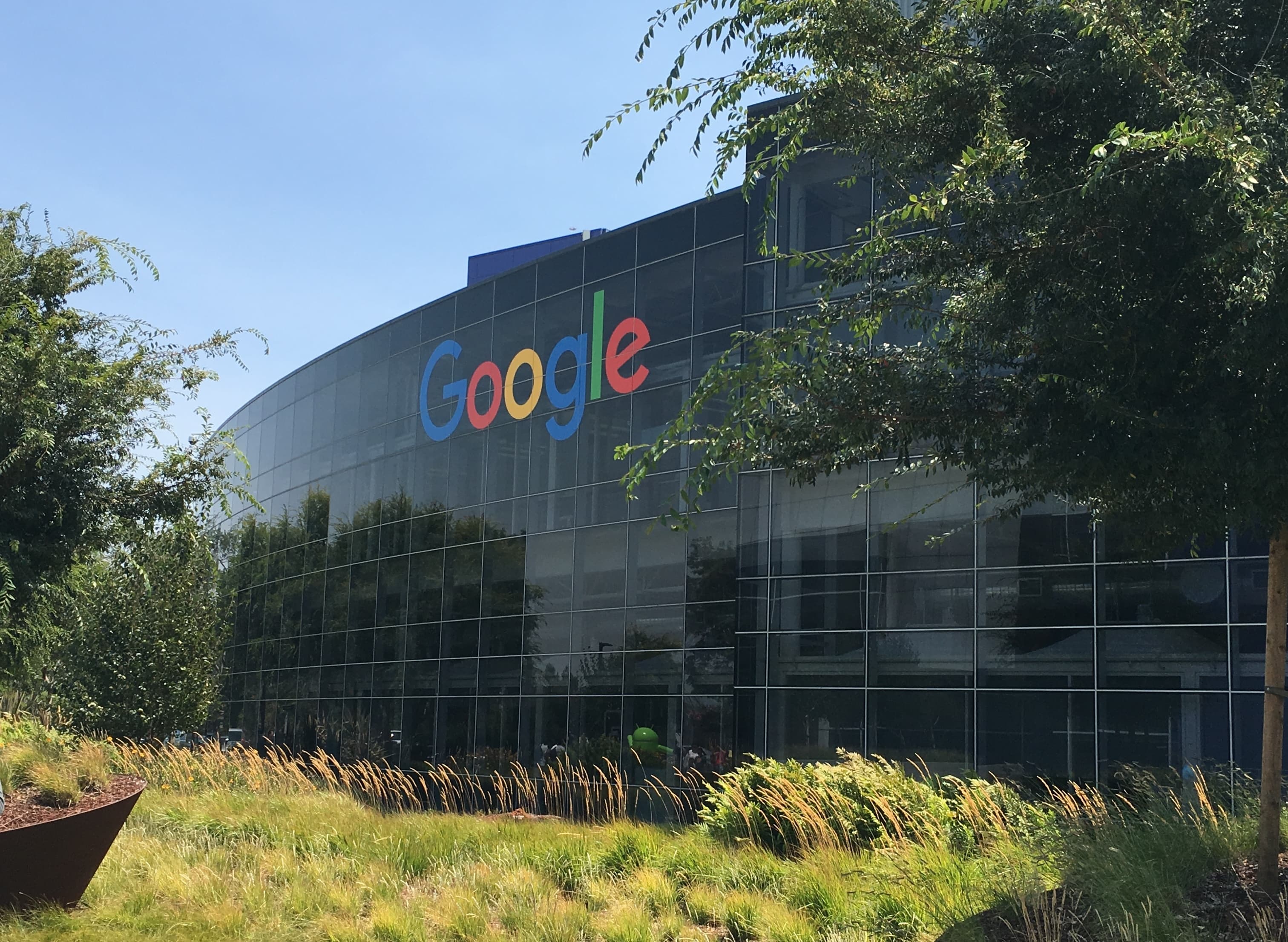
On Wednesday June 17, 2026, two developer blogs — one at developers.googleblog.com, one at commandline.microsoft.com — pushed the same announcement on the same day. Google and Microsoft had co-shipped a specification for how AI agents discover the tools, data sources, and other agents they are allowed to call. The launch contributor list, published on the spec's own site at agenticresourcediscovery.org, runs to eleven names: Cisco, Databricks, GitHub, GoDaddy, Google, Hugging Face, Microsoft, Nvidia, Salesforce, ServiceNow, and Snowflake. The author of the Microsoft side of the announcement is Ramanathan Guha, the engineer who created RSS at Netscape in 1999, designed the precursor to W3C's Resource Description Framework, and co-founded Schema.org. The architect of the document web's discoverability stack has shown up at the agent web's discoverability stack. Neither OpenAI nor Anthropic is on the launch contributor list.
What the specification actually is
ARD — the Agentic Resource Discovery specification — sits one step before everything else in the agent stack. Before a model can call an API, it needs to know the API exists. Before it can route a request to another agent, it needs the other agent's address and trust metadata. Before it can plug into an MCP server, it needs to find one. The current answer to all three is the same: somebody pastes a URL into a config file by hand. ARD replaces the config file.
The spec defines two primitives. The first is a static manifest, ai-catalog.json, published at a well-known path on an organisation's domain — any organisation can list its publicly-callable agents, MCP servers, OpenAPI tools, Skills, and nested catalogues in that file. The second is a Registry API: a search engine that crawls catalogues across the web, indexes their contents, returns ranked matches to a natural-language discovery query, and exposes cryptographic trust metadata so the calling agent can verify what it just found. Catalogues are how publishers say here is what we have. Registries are how clients say here is what I need. The pair, together, is the directory layer the agent web has been missing.
Apache 2.0. The data model underneath is the Linux Foundation's AI Catalog Working Group. Version 0.9 (Draft), per the Help Net Security writeup. Reference implementations are already live — Hugging Face's Discover Tool indexes thousands of Skills and MCP servers from the Hub against the spec, and Google Cloud's Agent Registry inside the Gemini Enterprise Agent Platform is the first commercial implementation. The whole thing is shippable today.
The author detail
Ramanathan Guha left Google in August 2024 after almost two decades there, including a long run as a Google Fellow. He joined Microsoft as a Corporate Vice President and Technical Fellow, where his named project to date has been NLWeb — a system that brings conversational interfaces to the open web. ARD is the second public deliverable. The Microsoft blog post is in his byline.
The pedigree matters because it tells you which previous problem the present problem is being solved as. RSS, in 1999, answered how do clients find which sites have new content. RDF answered how do clients describe what kind of thing they have found. Schema.org, in 2011, was the four major search engines agreeing on a shared vocabulary so that any web page's markup would be legible to any crawler. ARD, in 2026, is the same Guha asking the same question at the same architectural layer about a different content type. The web's machine-readable directory has been a Guha project for twenty-five years. The agent web's machine-readable directory is now, also, a Guha project.

What it is not
ARD is not MCP, and it is not A2A. The Hugging Face writeup is the clearest on this: MCP is the protocol for the actual tool call, A2A is the protocol for agent-to-agent message passing, and ARD is the layer underneath both of those — the part that answers which tool, which agent, in the first place. The three sit on top of each other in roughly that order. Pre-ARD, the agent client needed a human to maintain its tool list. Post-ARD, the agent client gets to ask a registry the same way a browser used to ask Google.
The spec also supports OpenAI's ChatGPT, Anthropic's Claude, Microsoft Copilot, GitHub Copilot, and Gemini as ARD clients — meaning every major frontier model is supposed to be able to consume the catalogue side of the spec, even if the model vendor itself is not on the contributor list. The clients can read what the contributors have published. They just did not get to write the rules for how it is published.
The contributor list
Read the eleven names again. Cisco, Databricks, GitHub, GoDaddy, Google, Hugging Face, Microsoft, Nvidia, Salesforce, ServiceNow, Snowflake. The shape of the list is the story. It is the data, dev-tools, and integration layer of enterprise IT. It is the companies whose business is making the tools that an agent might need to discover, plus the two cloud giants who host them, plus the one chip vendor who powers them. It is not the labs. OpenAI is not on it. Anthropic is not on it. Mistral is not on it. The companies whose business is making the model that does the discovering are absent from the standard that defines what gets discovered.
There is a clean reading of this and a less clean one. The clean reading is that the frontier-model vendors did not need to be at the table on launch day because the spec was designed around them as clients, not as publishers — a client-side actor signs the spec by implementing it, not by writing it. The less clean reading is that the frontier-model vendors have a competing interest in not commoditising tool discovery — every additional tool a frontier model can call without going through a vendor-specific marketplace is a tool that pushes value down the stack. Microsoft, Google and Nvidia have data-cloud-and-chip arms whose revenue does not depend on the model layer being the centre of gravity. The labs do.
What this is
ARD is the moment the agent web stops being a vendor stack and starts being an open standard. The previous twelve months of agent infrastructure have been a series of proprietary releases dressed in protocol clothing — Anthropic's MCP, Google's A2A, OpenAI's GPT-Store and the new Partner Network the Loop covered last week, every cloud vendor's agent platform. Each ships with a single discoverability story: yes, but only inside our garden. ARD is the first piece of the stack that does not have a garden. There will be many discovery services, the agenticresourcediscovery.org homepage says, each indexing different resources, serving different communities. That is the part the labs noticed and did not sign.
Worth saying out loud: the launch partner list reads like a who's-who of companies that do not have a frontier model in the top three. Google has Gemini, and Microsoft has its OpenAI partnership and the MAI-1 line, but their actual revenue stories are Search-and-Cloud and Azure-and-Office. Of the eleven, the two with most-skin-in-the-game on the lab side are the same two that authored the spec. That is not a coalition of the unwilling. That is the standards play.
What to watch
The catalogues in the wild. Adoption is measured in
/.well-known/ai-catalog.jsonfiles on real domains. Inside ninety days, count how many of the Fortune 500 have published one and what it lists. Under fifty is theatre. Over two hundred is a working standard, and the registries indexing them are the new search engines.OpenAI's response. OpenAI has the largest non-vendor tool inventory in the industry through the GPT Store and the Partner Network. If the GPT Store ships an ARD-compatible catalogue inside Q3, ARD is the standard. If OpenAI ships its own competing discovery scheme, the directory layer is heading for a Schema.org-versus-OpenGraph-style fight, with the same players on the same sides as the last time.
Anthropic's MCP path. Anthropic invented MCP. ARD is the layer above MCP — the registry that lets a client find which MCP servers exist. The natural alignment is for Anthropic to ship an ARD catalogue listing every MCP server it knows about, and for the Anthropic-hosted MCP servers to be the first major catalogue an enterprise discovers. If they do not, MCP becomes the protocol for tools that nobody can find unless they were already told about them.
The Guha pattern. The last time Guha shipped a discoverability spec with the search-engine vendors, the result was Schema.org and it became the de-facto markup of every Fortune-500 product page within five years. The pattern is get the registry vendors to agree, ship a reference implementation, let publishers self-onboard. ARD is structured the same way. The five-year prior is real.
The thing the labs have spent six months explaining is that the agent web needs to be a substrate, not a product. On Wednesday, the engineers who built the document web's substrate showed up with one. The labs were not in the room.
* * *
Thanks for reading. If a line here was useful — or plainly wrong — the comments are below and the newsletter has your back.
Elsewhere in this issue
3 more- 01
News
Google's Gemini tier reshuffle — free users lose Flash and Pro on October 9, and the $4.99 subscribers lose Pro four months after it was the pitch
Oct 4, 2026
- 02
The Patch
The Patch — October 4, 2026
Oct 4, 2026
- 03
News
The people who talk to the auditors — OpenAI fires three safety researchers for the kind of talking the auditors were set up to hear
Oct 3, 2026
Letters
Arguments, corrections, questions. Anonymous comments allowed; be kind, be specific.