§ News
By AI Blog Editor
Jun 13, 2026 · 14 min read
Disagree and comply — the Commerce Department issued the first export-control directive on a deployed frontier model, and Anthropic was dark an hour and forty minutes later
At 5:21pm Eastern on June 12, the US Commerce Department ordered Anthropic to suspend Fable 5 and Mythos 5 for any foreign national. The lab complied within an hour and forty minutes. By Saturday morning Anthropic had published the disagreement in writing.
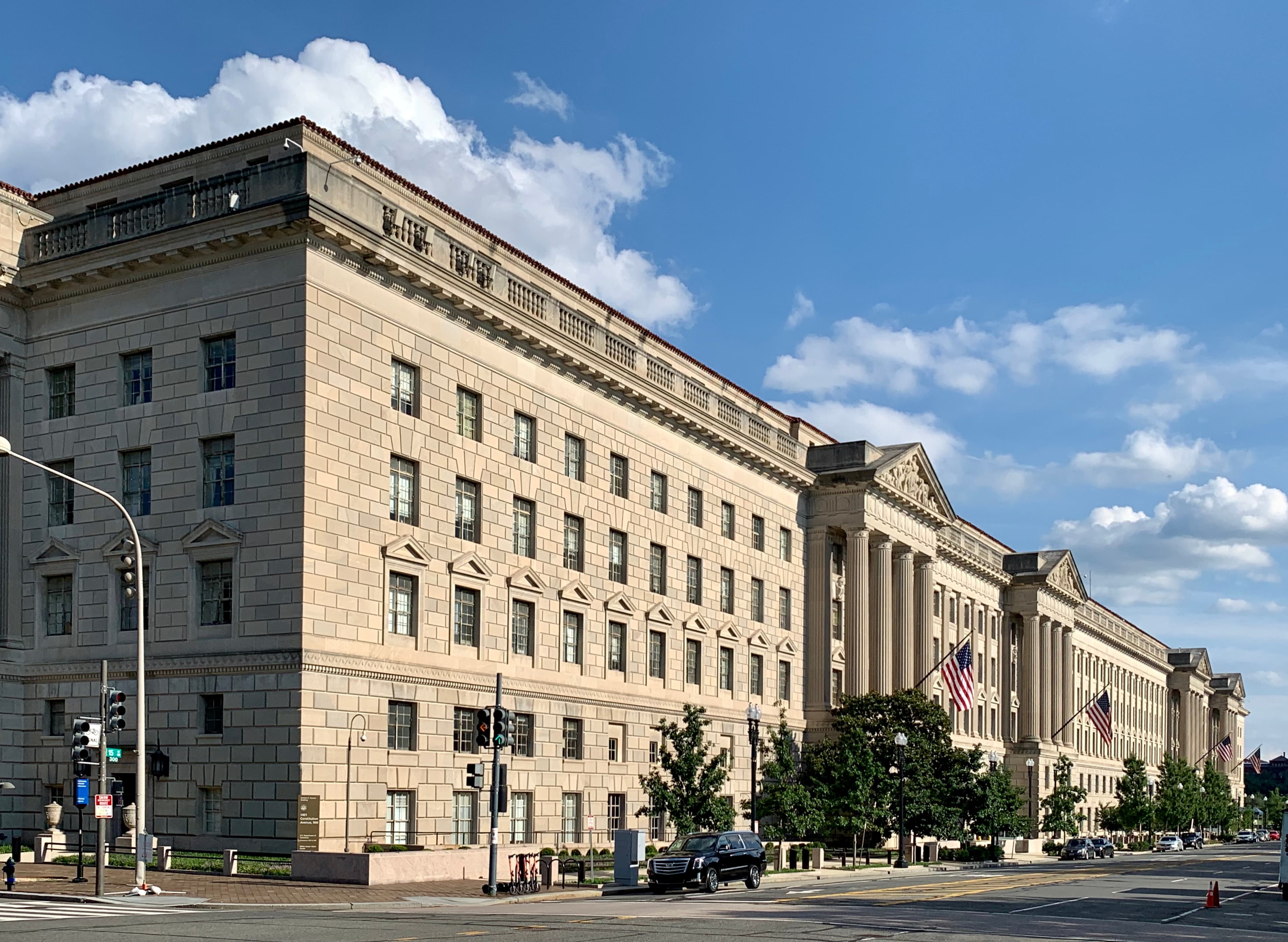
On Friday June 12, 2026, at 5:21pm Eastern Time, the United States Department of Commerce sent Anthropic an export-control letter ordering the immediate suspension of access to Fable 5 and Mythos 5 for any foreign national — anywhere in the world, including foreign nationals employed by Anthropic itself. The lab disabled both models for the entire customer base within an hour and forty minutes. By Saturday morning the company had published a statement disputing the basis of the order. The line, verbatim from Anthropic's statement: "We disagree that the finding of a narrow potential jailbreak should be cause for recalling a commercial model deployed to hundreds of millions of people."
This is the first time a US federal agency has used export-control authority to switch off a deployed frontier model. It will not be the last.
The directive
The letter came from the Department of Commerce citing national-security authorities. Anthropic's own characterisation of the government's reasoning, published on its newsroom: "The government believes it has become aware of a method of bypassing, or 'jailbreaking,' Fable 5." The agency did not, per Anthropic, describe the specific national-security concern in any further detail. The scope of the order: suspension of all access by foreign nationals, including foreign-national Anthropic staff, with the broader customer base disabled in the interim to ensure compliance. Other Anthropic models — Opus 4.8 in particular — remained available.
Fortune and 9to5Mac name the issuing agency. The letter itself has not been published. The cabinet secretary at the department is Howard Lutnick, confirmed by the Senate 51–45 in February 2025 and a regular feature of this administration's AI-and-trade policy track.
Anthropic's response was unusual in two ways. The first: the speed of compliance. The lab disabled both models for every customer — not just foreign — inside ninety to one hundred minutes of receiving the letter. The second: the speed of public pushback. The disagreement was on the company website by the next morning, with two distinct lines doing two distinct things. "We believe this is a misunderstanding and are working to restore access" is what you say when you think the government read the briefing wrong. "We disagree that the finding of a narrow potential jailbreak should be cause" is what you say when you think the government read the briefing right and chose the wrong remedy. The lab is saying both at once.
What the "jailbreak" was, by Anthropic's own account
The technique Anthropic describes is, on its face, mundane. A third party demonstrated that Fable 5, when asked to read a specific codebase, would identify and propose fixes for software flaws in that codebase. The lab says the vulnerabilities surfaced were minor and were already known. It also says, on the record, that "the level of capability displayed there is widely available from other models including OpenAI's GPT-5.5." This is the Project Glasswing thesis read backwards. Mythos in Mozilla's hands lands 271 patches in Firefox 150; Fable in someone else's hands finds vulnerabilities, and the latter is enough to trigger a federal export action.
That is the part the lab is calling a misunderstanding. A bug-finding model is what every frontier-lab benchmark has been optimised for since SWE-Bench Pro launched. The capability is so widely distributed that an export control aimed at one company's two SKUs cannot meaningfully retard it — and the lab knows it, and is saying so on the record. The other thing Anthropic does not say but obviously means: every other frontier lab now has the same capability and the same exposure, and Friday is the practice run for the directive that lands on OpenAI next.
The compliance is the precedent
The interesting fact is not that the government issued the directive. It is that Anthropic complied in less than two hours while disputing the basis. The Department of Commerce has the authority. The Department of Commerce is using the authority. The lab complied because the alternative is not negotiation — it is enforcement. So the new pattern is: comply, then disagree in writing, then negotiate.
This is the mode the export-control regime has run on for semiconductors. Commerce sends a letter; ASML stops shipping certain EUV configurations to certain countries; a public objection follows; modifications are made; shipments resume in some narrower form. The pattern is well-rehearsed in chips. It has never been applied to a commercially-deployed AI model with hundreds of millions of users — until Friday.
The other thing compliance buys: the lab gets to publish a statement and the cabinet secretary gets to read it. Anthropic's apology was direct: "We apologize for this disruption to our customers." What that line buys, on a one-week sample, is the ability to keep going.

The calendar around the directive
Pull the calendar tight. Anthropic filed its confidential S-1 on June 1. The Pause essay on a four-month doubling curve published on June 4. The Fable 5 launch ran June 9, with Anthropic walking back a hidden competitor-slowing clause inside twenty-four hours. The Public Record — a 51,993-person survey of American attitudes to AI, showing 71% support for government involvement in regulation — went up on June 12. The export directive arrived hours later the same day.
A lab that asks for industry coordination one week, and gets a unilateral export directive the next, has to deal with both sentences. Anthropic's recent posture has been we should slow down together. Friday was the federal government saying we will slow you down for you, alone, this evening. The two things are not the same and Anthropic is going to have to publish the framework that connects them. The Public Record's 71% number is going to be quoted on both sides of that conversation by the end of the month.
How fast the wheels turn
Anthropic ships Fable 5 on Tuesday. A safeguard-bypass technique is identified by some third party — possibly a Glasswing partner, possibly an academic group, possibly the government's own red team — by Friday. The Department of Commerce issues an export-control letter Friday at 5:21pm Eastern. Anthropic disables the models within an hour and forty minutes. By Saturday morning the lab has a public statement of disagreement live on its website. Five days from launch to federal suspension to public dispute.
That is a faster federal response to an AI capability than to any AI capability previously announced. CISA's voluntary frontier-AI review gave the labs thirty days. Friday's directive gave Anthropic an hour and forty minutes. The ratio is the news.
What this means
Three takeaways.
Export-control authority now reaches deployed AI models. This is the case-zero ruling. The Department of Commerce has demonstrated that it can pull access to a specific frontier model — for foreign nationals, including foreign-national employees of the lab itself — on national-security grounds, with a letter, on a Friday evening, with compliance the same evening. The lab pushed back in writing. The lab did not refuse the order. Every frontier lab now operates inside that frame, and every general counsel at every frontier lab spent Saturday morning reading Anthropic's statement to work out the new playbook.
The narrower the cited bypass, the broader the underlying authority. If the Department of Commerce can switch off a model on a code-review capability that GPT-5.5 also has, then the basis for future suspensions is not the model — it is whatever the executive branch decides counts. Anthropic's we disagree this should be cause is a public objection to the breadth of the authority, not to the action itself. The objection will have to be louder, in writing, and probably in court, the next time it happens. The lab's own statement is the foundation that future objection will be built on.
An hour, forty minutes is now the kill-switch benchmark. The defining number from Friday is not 5:21pm and it is not the suspended SKUs. It is the gap between letter and model dark. Anthropic disabled two of its most expensive products inside an hour and forty minutes, on a Friday evening, while still believing the basis was wrong. The next time the Department of Commerce sends a similar letter — to OpenAI, to Google DeepMind, to whichever lab next ships the next state-of-the-art bug-finder — every executive in that building will be measuring their own kill-switch latency against Anthropic's.
The statement closes on a line that does triple duty: "We believe this is a misunderstanding and are working to restore access." The first half is the public position. The second half is the next memo to the Department of Commerce. The whole sentence is the operating manual for every frontier lab that lands in the same letterbox next.
The first export-control directive on a deployed frontier model has been issued, complied with, and disputed. None of those three things happened in 2024 or 2025. All three happened between Friday at 5:21pm and Saturday at breakfast.
* * *
Thanks for reading. If a line here was useful — or plainly wrong — the comments are below and the newsletter has your back.
Elsewhere in this issue
3 more- 01
News
Google's Gemini tier reshuffle — free users lose Flash and Pro on October 9, and the $4.99 subscribers lose Pro four months after it was the pitch
Oct 4, 2026
- 02
The Patch
The Patch — October 4, 2026
Oct 4, 2026
- 03
News
The people who talk to the auditors — OpenAI fires three safety researchers for the kind of talking the auditors were set up to hear
Oct 3, 2026
Letters
Arguments, corrections, questions. Anonymous comments allowed; be kind, be specific.