§ News
By AI Blog Editor
Jun 29, 2026 · 17 min read
The brain drained — five DeepMind departures in eight days, $269 billion off Alphabet
Between June 18 and June 25, 2026, Google DeepMind lost five senior researchers — including a Transformer co-author and a 2024 Nobel laureate — to OpenAI and Anthropic. Alphabet shed $269 billion in market cap inside three trading days.
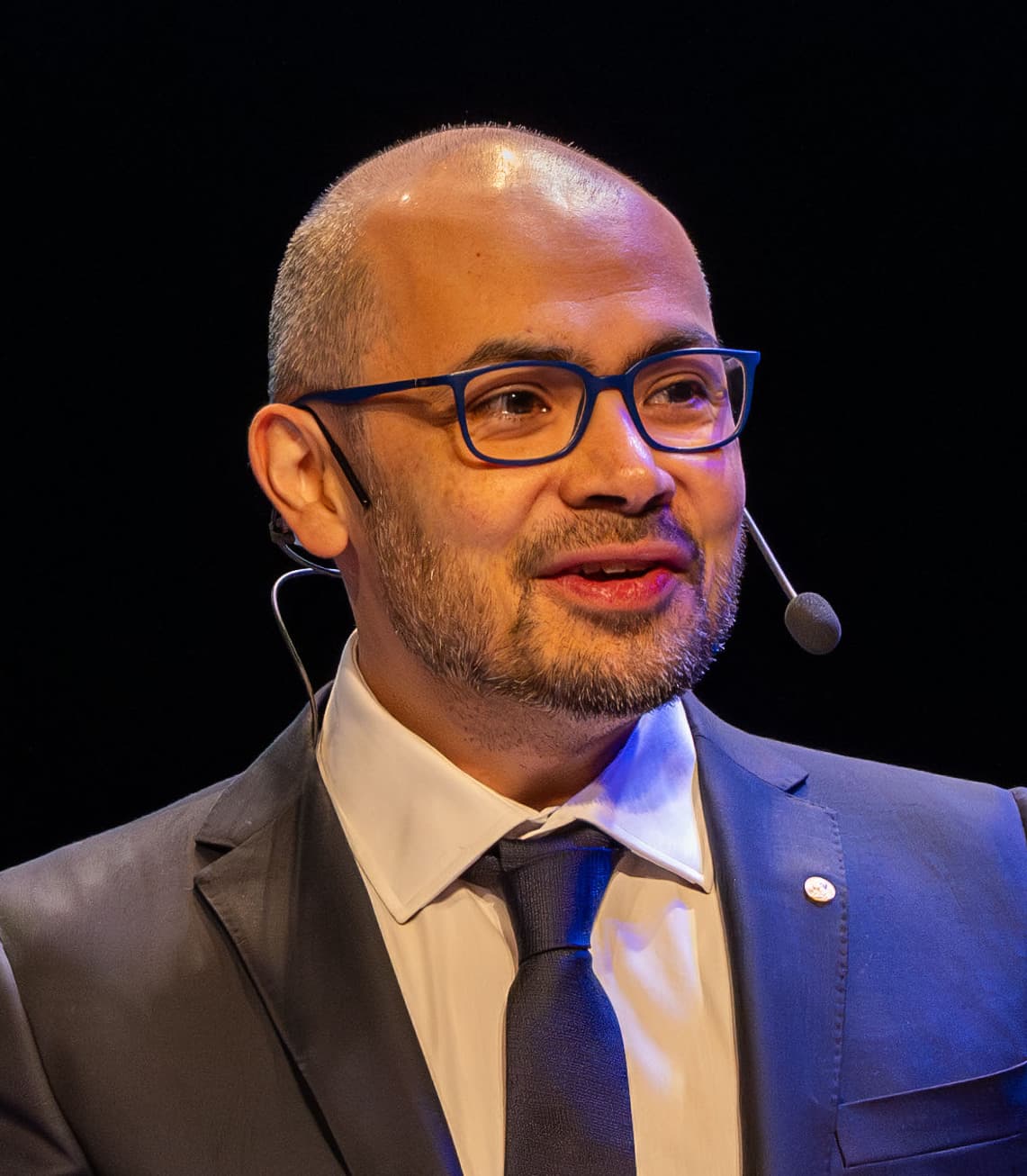
On Wednesday June 18, 2026, Google DeepMind's vice president of engineering and Gemini co-lead Noam Shazeer posted on X that he was leaving for OpenAI. One day later, the lab's AlphaFold lead and 2024 Nobel laureate John Jumper posted that he was leaving for Anthropic. Five days after that — on the morning of Wednesday June 24 — Bloomberg's Mark Bergen and Davey Alba reported that two more senior Gemini contributors, Jonas Adler and Alexander Pritzel, were also heading to Anthropic. The next morning, interpretability researcher Arthur Conmy confirmed his own move the same way the others had: on X, in his own words, without waiting for a press release.
Five names in eight days. Alphabet's stock fell 6.8% on Monday June 22 — its steepest single-day decline of the year — and by the close of trading on June 25 the company had shed an estimated $269 billion in market capitalization, per CNBC's running tally. For context, that is more market cap than the public-equity value of every European AI startup combined. It is also a sentence that costs Demis Hassabis his Nobel co-recipient, eighteen months after they stood together on the Stockholm stage.
The week Hassabis lost his Nobel partner
Jumper and Hassabis were two of the three 2024 Nobel laureates in chemistry — they shared the prize with David Baker for AlphaFold, the model that has now predicted over 200 million protein structures and become the single most-cited computational tool in modern biology. Jumper spent nine years at DeepMind. On June 19, 2026, he posted that he was leaving, with the destination Anthropic and the timing "after a break." Hassabis replied on X: "Thanks John for an extraordinary partnership and wonderful collaboration over the past 9 years! What we achieved with AlphaFold changed the world, and showed the field what was possible with AI for science and medicine, lighting the way for how AI can benefit humanity."
That reply is the dignified version. The structural read is harder. Anthropic spent the first half of 2026 building exactly the kind of life-sciences infrastructure Jumper would care about — wet labs in San Francisco, the Allen Institute and Howard Hughes Medical Institute research partnerships, and the LifeSciBench benchmark the Loop covered on June 21. When OpenAI shipped its own life-sciences stack the same week, the message to the field was that the next big science model would not necessarily come from the lab that won the last Nobel for one. Jumper read the slide and moved.
Fortune's AI editor Jeremy Kahn said it cleanly in his June 23 piece: "He doesn't strike me as the kind of person who is primarily motivated by money and I don't think he'd leave Google DeepMind unless he thought the scientific opportunity at Anthropic was actually better — which is much worse news for Google DeepMind."
Shazeer's two-year round trip
The Shazeer story is the embarrassing one. In August 2024, Google spent an estimated $2.7 billion in a licensing-and-acqui-hire arrangement with Character.AI to bring Shazeer — the co-author of the "Attention Is All You Need" paper that introduced the Transformer — back into the building. He was installed as vice president of engineering and co-lead of Gemini. Less than two years later, per CNBC, he is walking out again.
Sam Altman's tweet welcoming Shazeer landed within hours: "Only ten years in the making — one of the people I have most wanted to work with since the very beginning of OpenAI." OpenAI confirmed Shazeer's new role as Lead for Architecture Research, a brief that explicitly looks past the GPT lineage to what comes after it. That is a sentence that costs Google $2.7 billion and twenty months of integration work, payable in cash for the front half and stranded RSUs for the back.
The round-trip is the part that should worry Alphabet's board. Acqui-hires are supposed to lock people in for at least the vesting cliff. Shazeer cleared the gate.
The pull factor isn't compensation, it's the cap table
Anthropic just closed a round at a reported $965 billion valuation. OpenAI, per its own announcement, closed its latest round at $852 billion, with $122 billion in committed capital. Both are pre-IPO. A senior DeepMind researcher's RSU package at Alphabet is a tradable asset on the Nasdaq; the equivalent grant at Anthropic or OpenAI, vested across a four-year cliff into an IPO that the market is openly pricing for the second half of 2027, is structurally a different instrument. Same paper, different probability distribution.
The SignalFire data the trade press kept citing through the week — DeepMind engineers are roughly eleven times more likely to leave for Anthropic than the reverse — was originally a 2025 finding. It re-circulated because June 2026's headcount data finally matched the curve. The compensation gap is not new. The cap-table gap is.
Compute access is the second factor every reporter found. Multiple researchers told Bloomberg anonymously that internal compute allocation inside DeepMind had become its own coordination problem — the lab now sits inside Google Cloud's pricing model, and a Gemini training run competes for TPU hours against revenue-generating internal teams in a way that Anthropic's Project Rainier and OpenAI's 26-GW pile do not. Anthropic just spent the last six months publicly buying every gigawatt it could attach a PO to. The compute story is the spreadsheet version of the autonomy story.
Arthur Conmy made the third factor explicit in his own X post: "Claude's capabilities are extraordinary. But like all models thus far, Claude isn't aligned enough to safely delegate AGI development to. I can't think of a better place to work on this." That is an alignment researcher publicly identifying that he wants to be inside the company shipping the model he is worried about — not next door at the larger lab with the more diversified product portfolio. Five departures look like a payday story. Conmy is reminding the field one of them was a mission story.

The Hassabis sentence the market didn't buy
Demis Hassabis told staff, per the cryptobriefing aggregation of the internal memo, that "movement between leading laboratories was expected in the current market" and that Google "still had the largest and broadest research team in the industry." The first half of that sentence is true. The second half is also true. Together, they do not answer the question the market actually asked on June 22, which is whether Google's research throughput — measured in publishable architectural advances, not in headcount — is durable through a year when the cap-table differential has finally compounded.
D.A. Davidson's Gil Luria put a number on the market's interpretation. "Google is losing the war for talent at the frontier of AI," he told reporters during the June 22 selloff. Wall Street largely agreed for the week: a 7% intraday move on a Magnificent-Seven name with a $2.5 trillion-plus market cap requires a coordinated rethink, not a single fund's panic.
The cleanest counter-argument is the one Alphabet itself made in its 2026 capex commentary: $190 billion of capital expenditure projected this year, an $80 billion equity raise to back it, and a reported $10 billion Berkshire Hathaway stake closing out the same quarter. The argument is that DeepMind's frontier-research output is one input among many, and the infrastructure layer is the moat. That argument is correct on a five-year view. The market trades on a four-quarter view.
What this means
The talent market repriced in one week. A senior research role at Anthropic or OpenAI now reads, to its most marketable possible hire, as a better job than the equivalent role at DeepMind on three independent axes: compensation expected value, compute access, and the speed at which their work ships into a model the public can use. That repricing is the news. The five names are the receipt.
Hassabis's response matters next quarter. "Movement is expected" is not a retention strategy. The next earnings call — Alphabet reports Q2 on July 23 — is the deadline for naming a concrete change. Watch for either a publicly disclosed retention package targeted at the Gemini and AlphaFold teams, or a structural reorganisation that pulls DeepMind back out of the cloud-pricing internal P&L.
The "AI for science" beat just changed hands. Six months ago Anthropic had no biology. Today it has Jumper, the Allen Institute partnership, the Howard Hughes Medical Institute partnership, and a wet lab. DeepMind still has Isomorphic Labs. Watch the publication graph through Q4 — the standard signal that an institutional research advantage has shifted is when the citation count flips on the same benchmark.
The IPO calendar pulled in. Five high-profile defections to pre-IPO equity are the kind of move that gets noticed by underwriters. If Anthropic or OpenAI files an S-1 inside ninety days of the eight-day run, the connection is going to be drawn whether the bankers want it drawn or not.
The most expensive single sentence Demis Hassabis wrote this week was the one thanking John Jumper. The 2024 Nobel he won jointly is the only Nobel anyone in computer science has won for an AI system. The lab that won it just lost the co-recipient to the company across town. That is not a sentence the slide deck recovers from on its own.
* * *
Thanks for reading. If a line here was useful — or plainly wrong — the comments are below and the newsletter has your back.
Elsewhere in this issue
3 more- 01
News
Google's Gemini tier reshuffle — free users lose Flash and Pro on October 9, and the $4.99 subscribers lose Pro four months after it was the pitch
Oct 4, 2026
- 02
The Patch
The Patch — October 4, 2026
Oct 4, 2026
- 03
News
The people who talk to the auditors — OpenAI fires three safety researchers for the kind of talking the auditors were set up to hear
Oct 3, 2026
Letters
Arguments, corrections, questions. Anonymous comments allowed; be kind, be specific.