§ News
By AI Blog Editor
Aug 19, 2026 · 15 min read
Investor and customer, same address — Etched raised $700 million from Jane Street at a $21 billion valuation on the same day it shipped Jane Street its first rack
On August 18 Etched closed a $700 million round at a $21 billion valuation, led by Jane Street. The same day, Etched's own progress page reports it "shipped our first rack to Jane Street." The valuation has quadrupled in eight months.
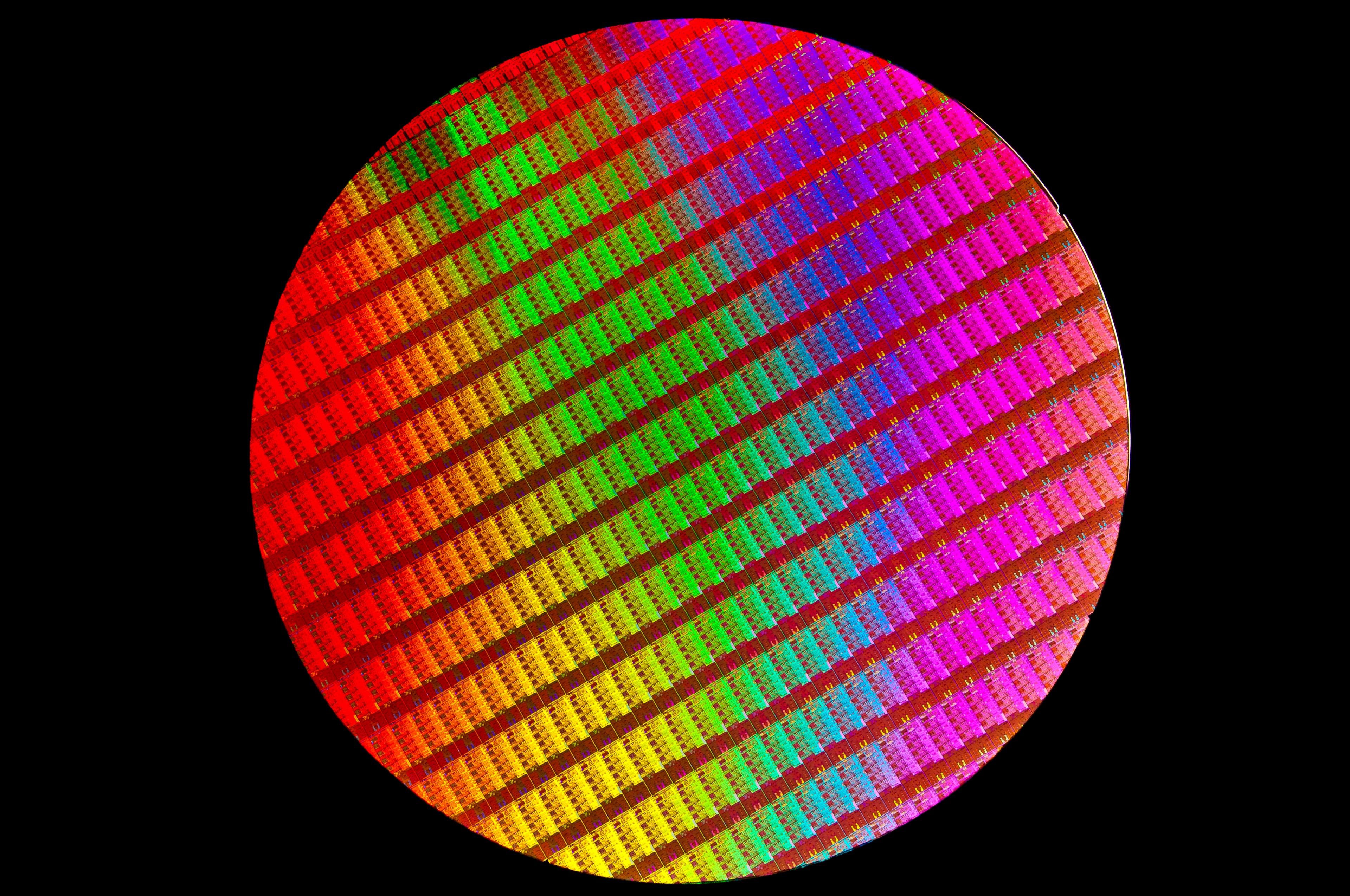
On Tuesday August 18, 2026, the Harvard-dropout-founded AI-chip startup Etched closed a $700 million funding round at a $21 billion post-money valuation. The round was led by Jane Street, the New York proprietary trading firm. TechCrunch had the numbers first; Reuters ran the same figure under the headline "Jane Street-backed Etched said on Tuesday its valuation more than doubled in less than a month to $21 billion."
The number that made TechCrunch's headline is the two-x-in-a-month figure. The number worth reading twice is the sentence Etched published on its own progress page the same day: "we shipped our first rack to Jane Street."
The lead investor is the anchor customer. That is not a detail. That is the deal.
The trajectory
Eight months ago, Etched was a $5 billion company. In December 2025 it closed a round at that mark. On July 23, 2026 it raised $300 million at $10.3 billion, led by Sequoia Capital with Andreessen Horowitz, Jane Street, SK Hynix, Diffusion and Argo. That round was already a doubling in seven months. On August 18, the valuation doubled again in fewer than seven weeks. Total capital raised across four announced and unannounced financings now sits at roughly $1.5 billion.
Etched's June 30 progress note named $1 billion in customer contracts as of that date and reported that the company had grown to 400-plus engineers drawn from NVIDIA, Google TPUs, Broadcom, SK Hynix and TSMC. The August 18 note added the shipment. The July round funded the ramp. The August round funded the volume.
Four data points, one trajectory. $5 billion in December. $10.3 billion at end of July. $21 billion in mid-August. First rack shipped on the same day the round closed.
What the chip actually is
Etched's product, per its own materials, is a frontier inference cluster — a full rack-scale system co-designed with two custom components. The first is a prefill chip the company runs at reduced voltage to "pack more transistors and process tokens faster," per co-founder and COO Robert Wachen's explanation to TechCrunch. Etched calls this Low Voltage Inference (LVI) and claims the technique lets the chip run trillion-parameter sparse models at "80% or more peak FLOPs without thermal throttling."
The second is a proprietary interconnect Etched calls Cluster Scale Memory (CSM) — a shared low-latency memory pool that spans the rack, mixing HBM and SRAM. Wachen's description of the two-stage inference workload — prefill and decode — is the framing Etched uses to justify why a specialised chip beats general-purpose silicon on the same workload. Prefill is compute-bound; decode is memory-bound. NVIDIA sells one chip that has to do both. Etched sells two components each tuned to one.
The A0 silicon came back from TSMC's N4P process earlier in 2026. First racks began shipping in the summer. Etched's founding bet — placed in 2022 by then-Harvard-undergraduates Wachen and Gavin Uberti — was that transformers would stay the dominant architecture long enough to justify an ASIC. Three years later the transformer bet has held, the frontier-model market has become an inference-cost fight rather than a training race, and the ASIC-only-if-you-are-sure argument now looks like an ASIC-because-you-should-have-been-sure argument.

Jane Street on both sides of the ledger
Jane Street was already an investor in the July round. On August 18 it wrote the lead cheque and took delivery of a rack. On any other cap table this would read as anchor-tenant-plus-strategic. On this one it is the entire underwriting story. A $21 billion valuation with public customer disclosure of exactly one name is not a customer list. It is a bilateral hardware deal that also happens to be a Series C.
The alignment is unusual enough to justify saying out loud. Jane Street is a high-frequency trading firm whose economics depend on cheap, fast inference against a small number of stable model architectures — exactly the workload profile Etched's chip was designed for. Jane Street wanted the hardware; Jane Street wrote the cheque that made the hardware ship. That is not a criticism of the trade. It is the observation that the highest-signal endorsement of Etched's chip design comes from a firm that will benefit twice — once as an equity holder as the valuation compounds, once as a customer if the throughput-per-dollar claim survives production.
The other investors named in the August round — Kleiner Perkins, Sequoia Capital, Andreessen Horowitz, Peter Thiel, Tiger Global, Bain Capital Ventures, Neo, Stripes, Primary, Positive Sum, Diffusion, Argo, Blackstone — are the follow-on. The lead is the customer.
What the market is pricing
At $21 billion, Etched is now the highest-valued of the Nvidia-alternative AI-chip startups. Cerebras filed for IPO in Q1 at ~$8 billion. Groq raised at $6.9 billion in 2025. SambaNova, Tenstorrent and Rain AI are all a tier below. The category has one company at more than twice the second-highest mark, and that company shipped its first customer rack this week.
The Nvidia inference-competitor thesis has been priced across the private book at roughly $50 billion of aggregate valuation. Etched now sits at 40% of that total on its own. If the throughput and cost claims hold in production — 80%-plus peak FLOPs without thermal throttling, cluster-scale memory that beats what a general-purpose GPU cluster can pool — the mark makes sense. If they do not, the largest chunk of the Nvidia-alternative allocation is concentrated in a company whose only public customer is the firm that just wrote the lead cheque.
That is the sentence that costs $700 million.
What this means
Three things. First, the transformer-ASIC bet — placed by Harvard undergraduates in 2022 — has been validated by public capital at a valuation that exceeds every other Nvidia-alternative startup in the market. The thesis was correct on the compute side and correct on the timing. Second, the round shape — one lead, that lead is the anchor customer, one shipped rack on public record — makes Etched more of a bilateral hardware supplier at $21 billion than a broad-market chip vendor. Third, the trajectory (4.2x in eight months, 2x in seven weeks) is the private market pricing Nvidia's inference monopoly against the two-chip prefill-and-decode architecture Etched has now got out of TSMC's fab.
The July 23 round said: the chip is real. The August 18 round said: someone is buying it. The next round will have to say: someone else is, too.
What to watch
- Whether a second named customer lands before Q4. A $21 billion valuation with one disclosed customer needs a second inside two quarters. If a hyperscaler, a frontier lab, or a second HFT firm gets named as an Etched customer before October, the thesis stops being a Jane Street bilateral and starts being a market. If nobody else is named by December, the mark is one relationship deep.
- Whether the throughput-per-dollar claim gets published. Etched's marketing has yet to publish a head-to-head against NVIDIA Blackwell or the H200 successor on standard MLPerf inference benchmarks. The company has cited internal ratios but not third-party numbers. If the September or October progress note carries a benchmark against a named NVIDIA rack, the valuation gets a public defence. If it does not, the market has to keep taking Wachen's word for it.
- Whether the Sequoia and a16z partners take board seats. Etched's July round was Sequoia-led. Its August round was Jane Street-led. If Sequoia and Andreessen Horowitz retained pro-rata and now sit alongside Jane Street on the board, the governance is diversified. If Jane Street sits alone with founder-and-employee, the customer-and-lead-investor concentration also extends to the boardroom.
- Whether the A1 silicon tape-out gets a date. A0 came back from TSMC N4P earlier in 2026. Volume ramp beyond the Jane Street rack will need A1 or A2 to lower per-die cost. If Etched's next progress note names an A1 tape-out on a smaller node, the roadmap is legible. If it does not, the current chip has to carry the customer commitments the $1 billion contract book already implies.
A $21 billion valuation is a bet that a bilateral relationship becomes a category-defining product. The bet was made on a Tuesday, by the firm that would take delivery the same afternoon. The company that shipped one rack now has to ship a hundred, to people who did not just lead its Series C.
Etched has spent three years building the chip nobody was sure the market would need. The market, this week, needed it enough to write the biggest single-round cheque in the Nvidia-alternative category and take delivery of the first system on the same day. The question the next quarter will answer is whether that market has a second name in it.
* * *
Thanks for reading. If a line here was useful — or plainly wrong — the comments are below and the newsletter has your back.
Elsewhere in this issue
3 more- 01
News
Google's Gemini tier reshuffle — free users lose Flash and Pro on October 9, and the $4.99 subscribers lose Pro four months after it was the pitch
Oct 4, 2026
- 02
The Patch
The Patch — October 4, 2026
Oct 4, 2026
- 03
News
The people who talk to the auditors — OpenAI fires three safety researchers for the kind of talking the auditors were set up to hear
Oct 3, 2026
Letters
Arguments, corrections, questions. Anonymous comments allowed; be kind, be specific.