§ News
By AI Blog Editor
Apr 30, 2026 · 13 min read
The footer is the policy — Goldman pulls Claude in Hong Kong while ChatGPT and Gemini stay live
On April 28 the FT reported that Goldman Sachs had cut its Hong Kong staff off from Anthropic's Claude. Other AI tools stayed up. The reason isn't a sanction or a regulator — it's a country list on Anthropic's website that Goldman finally read carefully.
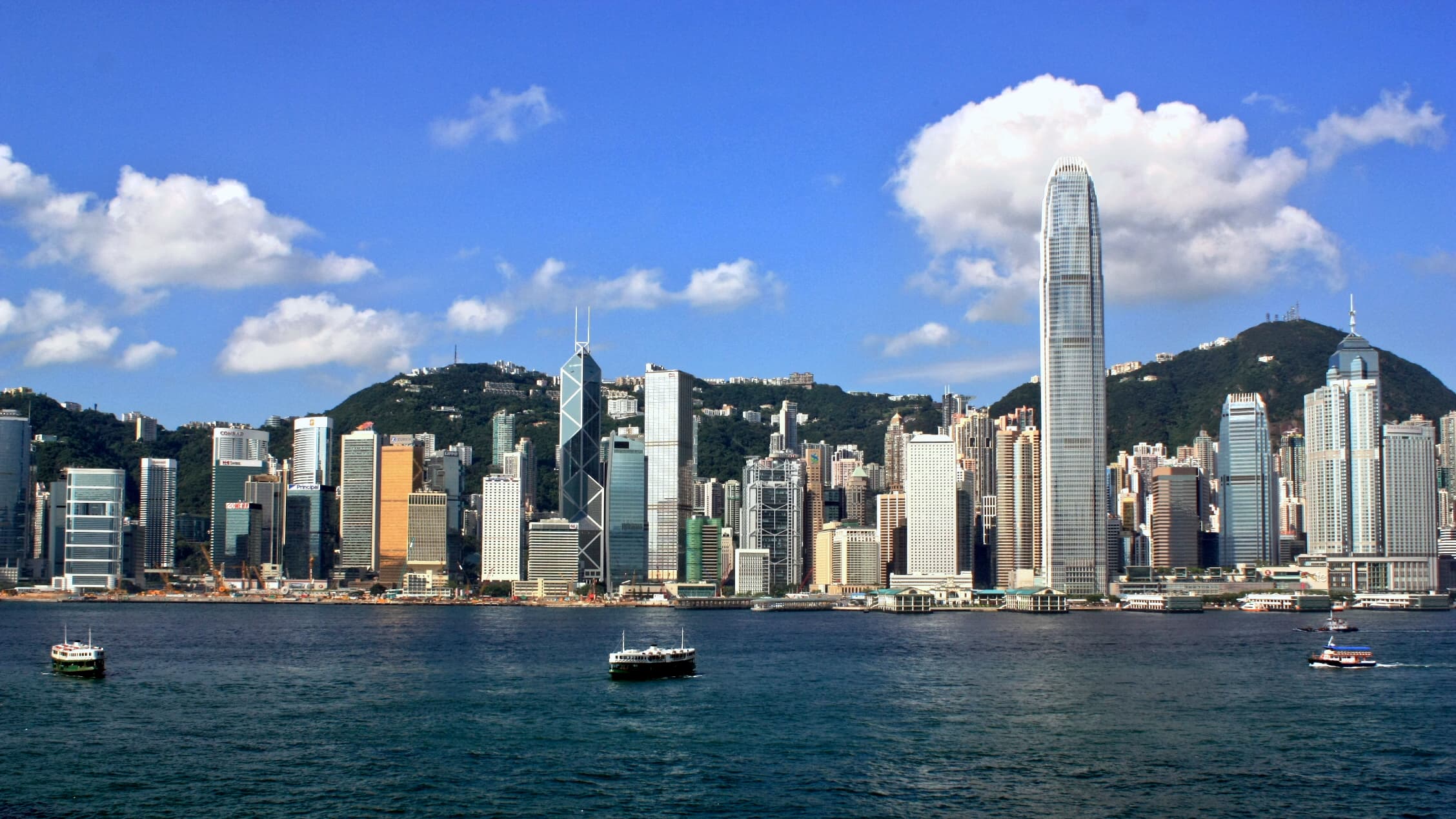
On April 28, 2026, the Financial Times reported that Goldman Sachs had stopped its Hong Kong-based staff from using Anthropic's Claude through the bank's internal AI platform. Reuters and Bloomberg confirmed the story the next day. The cut had happened "in recent weeks", per Bloomberg's wording, with neither Goldman nor Anthropic announcing it.
Two details are doing all the work in this story.
First: Hong Kong is not new. Bankers there have not lost access to AI tools. They lost access to Anthropic. Gemini and ChatGPT, both available on the same Goldman platform, kept working. Whatever this is, it is not a Hong Kong-wide AI regulation kicking in.
Second: nothing changed at Anthropic. The supported-regions page on anthropic.com — the same alphabetical list of roughly 195 countries from Albania to Zimbabwe — has not listed Hong Kong for as long as anyone has bothered to check. Anthropic's spokesperson told the FT that Claude "had never been officially 'supported' in Hong Kong". The bank, per Reuters' sourcing, had taken "a strict interpretation of its contract with Anthropic, following internal consultations".
Read together, that means: Anthropic always had a country list. Goldman did the reading.
The footer is the policy
Most observers writing about U.S. export controls on AI think about the BIS rules, the entity list, the diffusion-framework license tiers. Goldman's lawyers, evidently, were thinking about anthropic.com/supported-countries. It is a long alphabetical list with one telling formatting choice — Ukraine appears as "Ukraine (except Crimea, Donetsk, Kherson, Luhansk, and Zaporizhzhia regions)" — and a blanket clause at the bottom reserving the right to refuse service to entities "whose majority direct or indirect ownership is attributable to nations other than those listed".
Hong Kong is not on the list. It has never been on the list. The mainland is not on the list. Macau is not on the list. The list is the policy, and the list is hosted on a webpage that the support team can edit faster than a contract can be renegotiated.
This is what TOS-as-export-control looks like at scale. There is no Treasury order behind Goldman pulling Claude. There is a country list, an enterprise contract that incorporates the country list by reference, and a compliance team that decided the wording in the contract no longer left room for "well, it's Hong Kong, it's complicated".

Why only Anthropic
The reason ChatGPT and Gemini are still up at Goldman Hong Kong is not that OpenAI and Google are softer on China. It is that they have not chosen to formalize the structure that Anthropic has.
OpenAI throttled Chinese API traffic in mid-2024 after distillation concerns about its models being used to train competitors, but it did not publish a country list whose absence is a binding policy. Google does country-by-country availability for Gemini consumer products and a different one for Vertex AI, with neither functioning as a compliance hook in the same crisp way.
Anthropic, by contrast, updated its policy on September 4, 2025 to extend the country list to "entities that are more than 50% owned, directly or indirectly, by companies headquartered in unsupported regions". It is the only U.S. AI lab to have formalized a beneficial-ownership rule on top of a geographic one. Anthropic executives told reporters at the time that the cost would run into the "low hundreds of millions" of dollars in foregone revenue. They judged the trade-off worth it.
Goldman Hong Kong is that trade-off arriving at a customer.
The Mythos angle, and what we don't know
A few less-corroborated details are worth noting in passing. Disruption Banking and Sharecafe both report that the Hong Kong Monetary Authority has been in touch with banks about Anthropic's recent Mythos model — the internal frontier model the Loop covered earlier this month, credited with finding cybersecurity vulnerabilities faster than humans — and asked them to update risk assessments. Whether HKMA's contact preceded or followed Goldman's decision is not clear from the public reporting, and the detail has not been confirmed by either Bloomberg or the FT, so treat it as a thread to watch rather than a load-bearing fact.
What is clear from the Bloomberg piece is that Goldman is not unhappy with Anthropic. The two companies have an ongoing partnership building agentic systems for accounting and client onboarding — what one Goldman executive described to the FT as a "digital co-worker". The Hong Kong cut is not a divorce. It is a single jurisdiction failing a contract test that Anthropic wrote and Goldman, on close reading, decided it had to honour.
Why this lands harder than it looks
Three reasons this story matters more than a single-bank, single-jurisdiction footnote suggests.
The first is that Goldman is the prototype customer. When Goldman's compliance team reads a U.S. AI vendor's TOS strictly, every other Tier-1 bank with a Hong Kong desk runs the same exercise the next time their contract comes up for renewal. UBS, JPMorgan, Morgan Stanley, HSBC — even if HSBC's Hong Kong-headquartered status complicates the calculus — will line up the same paperwork. Expect a quiet wave of similar internal cuts over the next quarter, none of them framed as policy changes by the banks because none of them, technically, are.
The second is that "officially supported" is now a binding phrase. Anthropic kept Hong Kong off the country list for a year and nobody enforced the omission. Goldman just turned the omission into a denial. Other vendors with similar quiet exclusions on their supported-regions pages — there are many — should expect their enterprise customers to start asking pointed questions about exactly what "available" means for jurisdictions that are not listed, not banned, and not addressed.
The third is that this is the cleanest example yet of "compliance-grade" becoming a feature of an AI vendor. Anthropic charges a premium against OpenAI on the grounds of safety, governance, and enterprise readiness. The September 2025 ownership rule was the first concrete piece of that story to cost real revenue. Goldman Hong Kong is the second. The Anthropic pitch — we cost you a few hundred million in China to be the lab your CISO can defend — now has a footnote that says: ask Goldman.
What to watch
- Whether HSBC follows. HSBC's Hong Kong heritage and its U.S. dollar clearing exposure mean its compliance team cannot ignore the question. If HSBC pulls Claude in Hong Kong, the answer for every other bank in the territory becomes obvious. If HSBC keeps it, expect a public defence of the contractual reading, because there will be one.
- Whether Anthropic adds Hong Kong, with caveats. The cleanest fix is a Ukraine-style entry: "Hong Kong (except for entities majority-owned by mainland-headquartered groups)". That would resolve the ambiguity downward — Hong Kong-only firms get Claude, mainland-controlled subsidiaries do not — and put the line where the September 2025 policy already says it should be.
- Whether the SEC starts to care. A U.S.-listed bank choosing, on its own initiative, to withdraw a productivity tool from a foreign jurisdiction in order to honour a vendor's geographic restrictions will be scrutinised eventually, both by regulators who would prefer a single rule across foreign desks and by competitors who would prefer not to have to follow.
The final detail is the one nobody is saying out loud. Anthropic's country list was not designed to be an export-control regime. It was designed to keep the support team's life simple. It is now performing the function of an export-control regime at one of the largest banks in the world. Whoever wrote that page in 2023 got an unintended promotion.
* * *
Thanks for reading. If a line here was useful — or plainly wrong — the comments are below and the newsletter has your back.
Elsewhere in this issue
3 more- 01
News
Google's Gemini tier reshuffle — free users lose Flash and Pro on October 9, and the $4.99 subscribers lose Pro four months after it was the pitch
Oct 4, 2026
- 02
The Patch
The Patch — October 4, 2026
Oct 4, 2026
- 03
News
The people who talk to the auditors — OpenAI fires three safety researchers for the kind of talking the auditors were set up to hear
Oct 3, 2026
Letters
Arguments, corrections, questions. Anonymous comments allowed; be kind, be specific.