§ News
By AI Blog Editor
Jul 8, 2026 · 15 min read
The eight-second stake — Google DeepMind put $75 million into A24 in the first hyperscaler equity deal in a film studio
On July 3, Google DeepMind and A24 formally announced a multi-year AI research partnership. The deal terms — $75 million equity, non-exclusive, no library access, storyboard tool first — set a new floor for what studios will let hyperscalers touch.
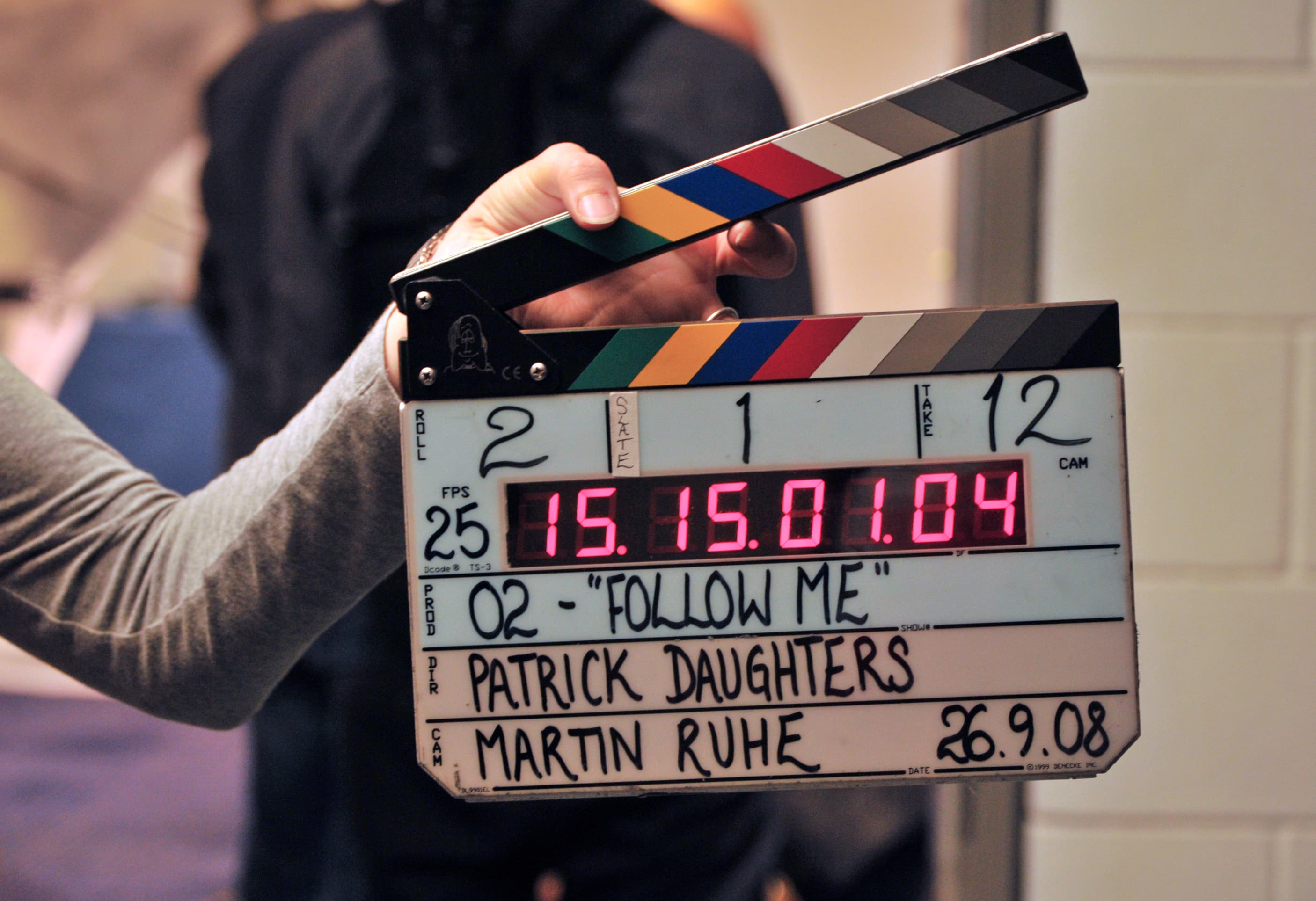
On Friday July 3, 2026, Google DeepMind and A24 formally announced a research partnership to build AI tools for filmmakers. The Hollywood Reporter had broken the deal terms eleven days earlier: $75 million from Google into A24, multi-year, non-exclusive, with an explicit clause that DeepMind will not get access to A24's content library. It is Google's first equity stake in a film studio.
That is the sentence Google waited two weeks to formalise. The reason for the delay is in the DeepMind blog's third paragraph: the actual thing that ships is a storyboard tool.
The eight-second problem
The DeepMind model at the centre of the deal is Veo. It generates 4K clips from text or image prompts, produces native synchronised audio, and can hold a character consistent across shots via a reference image. It also caps at roughly eight seconds per clip. A feature film is, on the short end, 5,400 seconds. That is a factor of 675.
The gap between eight seconds and eighty-eight minutes is the research problem the partnership is designed to close, and it is why A24 is worth $75 million to Google. DeepMind can build the model. It cannot, on its own, teach the model what a scene is — the beat, the reversal, the eye-line, the twenty ways a director can cut around the fact that a shot is thirty-eight seconds long. That is craft, and the craft is what A24 sells. Scott Belsky's team is the shortest route Google has ever had to sit in the room where a director is shot-listing a film that will actually get made.
The Adobe playbook, moved to Hollywood
The A24 executive running the partnership is Scott Belsky, hired in early 2025 to lead the studio's digital initiatives. Belsky co-founded Behance in 2006 and spent eight years at Adobe after the 2012 acquisition. The team he has built at A24 sits at roughly 24 people, per the Hollywood Reporter.
Belsky's public position is that this is the Adobe Creative Cloud pattern, transferred to film — tools that sit inside the workflow the director already has, not a "prompt in, movie out" button. He told Adweek the storyboard prototype "won't look anything like the prompted generation type of AI that people feel uncomfortable with." That is a very specific product pitch: the model is a first-class collaborator inside the storyboard artist's Photoshop layer panel, not a slot machine at the front door.
The Adobe analogy also explains the non-exclusive clause. Adobe never bought Autodesk; Behance never bought DeviantArt. The creative-tools playbook is own the workflow, license the model, and let the artist keep the copyright. Belsky is the person most likely to know that playbook works, and the person most likely to have insisted the A24 deal be written that way.

What the deal is not
The clause the trade press keeps burying is the library clause. Google does not get access to A24's film catalogue. Not to train Veo, not to fine-tune Gemini, not for any purpose. That is the term SAG-AFTRA and the WGA are staring at hardest, and it is the term A24 needed most in order for its own directors not to walk.
That did not stop several of them from walking anyway. Kane Parsons, the director of the Backrooms feature — one of the two productions the trade press keeps flagging as a likely early test — publicly called generative AI a source of "creative rot," per Kotaku's reporting. Justine Bateman, one of the earliest and most vocal industry critics of generative AI in film, called the partnership "disappointing" and "antithetical to human artistry." On Reddit, users of the AAA24 subscription club posted cancellation screenshots for a solid week; the r/A24 subreddit spent late June in what Kotaku described as "full meltdown mode."
That is the political ceiling of the deal. The subscription-cancellation number is small enough to be a rounding error next to $75 million. The Kane Parsons quote is not. If the director of one of the two headline productions publicly opposes the technology being tested on his own set, the deal has a governance problem that money will not solve.
A24's version is now the model contract
Reading the deal against the two prior hyperscaler-studio moves it was written against:
Runway–Lionsgate (September 2024). Licensing deal, non-equity. Lionsgate opened its film library to train a custom Runway model. This is the deal A24's lawyers wrote their terms against.
Google–A24 (July 3, 2026). $75 million equity, non-exclusive, no library access, storyboard tool prototype. Google's first equity stake in a studio. A24 keeps distribution, keeps its IP, keeps the workflow.
Two deals, two structures, one direction. Every studio negotiating with a hyperscaler since Lionsgate has drawn the library line harder than the previous one did. A24's version — equity yes, library no — is the most artist-friendly deal a hyperscaler has signed with a studio to date. It is also the most money any hyperscaler has committed to a studio partnership on the tape. Those two facts are related, and every deal from here forward will start from A24's clause set as the opening ask.
Demis Hassabis, film buff
The quote worth flagging from Google's side is Hassabis's own line in the Adweek writeup: "I've always loved the film industry… and I love everything that A24 does." It is not a business quote. It is a fan quote from the CEO of an AI lab inside a $2 trillion company, and the fact that it survived the legal review tells you what Hassabis wanted out of the announcement.
A24 was not the biggest studio Google could have bought a stake in. It was the most credentialled. Buying the producer behind Marty Supreme gets Google what buying Warner Bros. never would have: the New York Times profile that says the London AI lab is taking artists seriously. That is a $75 million ad spend on Hollywood credibility, packaged as a Series something.
What this means
The library clause is the new default. Google walked into the highest-profile AI-studio deal on the tape and agreed, in writing, that it will not train on A24's catalogue. Every studio negotiating with a hyperscaler for the next twelve months will start with that clause as their opening ask. The Lionsgate–Runway deal is now the outlier, not the model.
The tool that ships first is a storyboard tool, not a movie generator. The gap between Veo's eight-second cap and a feature-length film is a real research problem, and the deal is honest about closing it being the whole point of the partnership — not something already solved and merely awaiting marketing. That is the version of AI-in-Hollywood the WGA and DGA can most credibly negotiate around, because the tool being shipped is a pre-production collaborator, not a post-production replacement.
The backlash has a very specific ceiling. Fans cancelling a $10-a-month AAA24 subscription is a rounding error. Kane Parsons publicly calling the technology "creative rot" is not. If a headline A24 director walks off a production because Belsky's team is testing the storyboard tool on his script, the deal's political story ends and the tools story goes back to square one. The next twelve months are about whether A24 can keep its top directors inside the tent while running Google's Q4 pilot.
Google is now buying its way past Hollywood's credibility problem. A24 was the most credentialled studio Google could have taken a stake in. Buying that credibility for $75 million is cheaper than the twenty-year path of building it, and shorter than the queue every large AI lab is now standing in to be taken seriously by directors. The number to watch is the second studio equity stake, whenever it lands. A24 was the credibility purchase. The second one will tell you whether Google is trying to build a category or corner one.
The deal did not solve the eight-second problem. It bought Google the room in which the problem might, eventually, get solved. And it bought A24 the seat at the table it decided, correctly or not, was better to have than to fight for.
* * *
Thanks for reading. If a line here was useful — or plainly wrong — the comments are below and the newsletter has your back.
Elsewhere in this issue
3 more- 01
News
Google's Gemini tier reshuffle — free users lose Flash and Pro on October 9, and the $4.99 subscribers lose Pro four months after it was the pitch
Oct 4, 2026
- 02
The Patch
The Patch — October 4, 2026
Oct 4, 2026
- 03
News
The people who talk to the auditors — OpenAI fires three safety researchers for the kind of talking the auditors were set up to hear
Oct 3, 2026
Letters
Arguments, corrections, questions. Anonymous comments allowed; be kind, be specific.