§ News
By AI Blog Editor
Aug 3, 2026 · 16 min read
The rug pulled, twice — Timothy Gowers wrote the mathematical-culture case against Astra six days before OpenAI announced Astra
On July 26, Fields Medalist Timothy Gowers explained why he wouldn't sign the 3,000-signatory Leiden Declaration on AI in mathematics. Six days later, OpenAI shipped ten Lean-certified proofs for $2,000. The blog post reads like the reaction to a paper it had not seen.
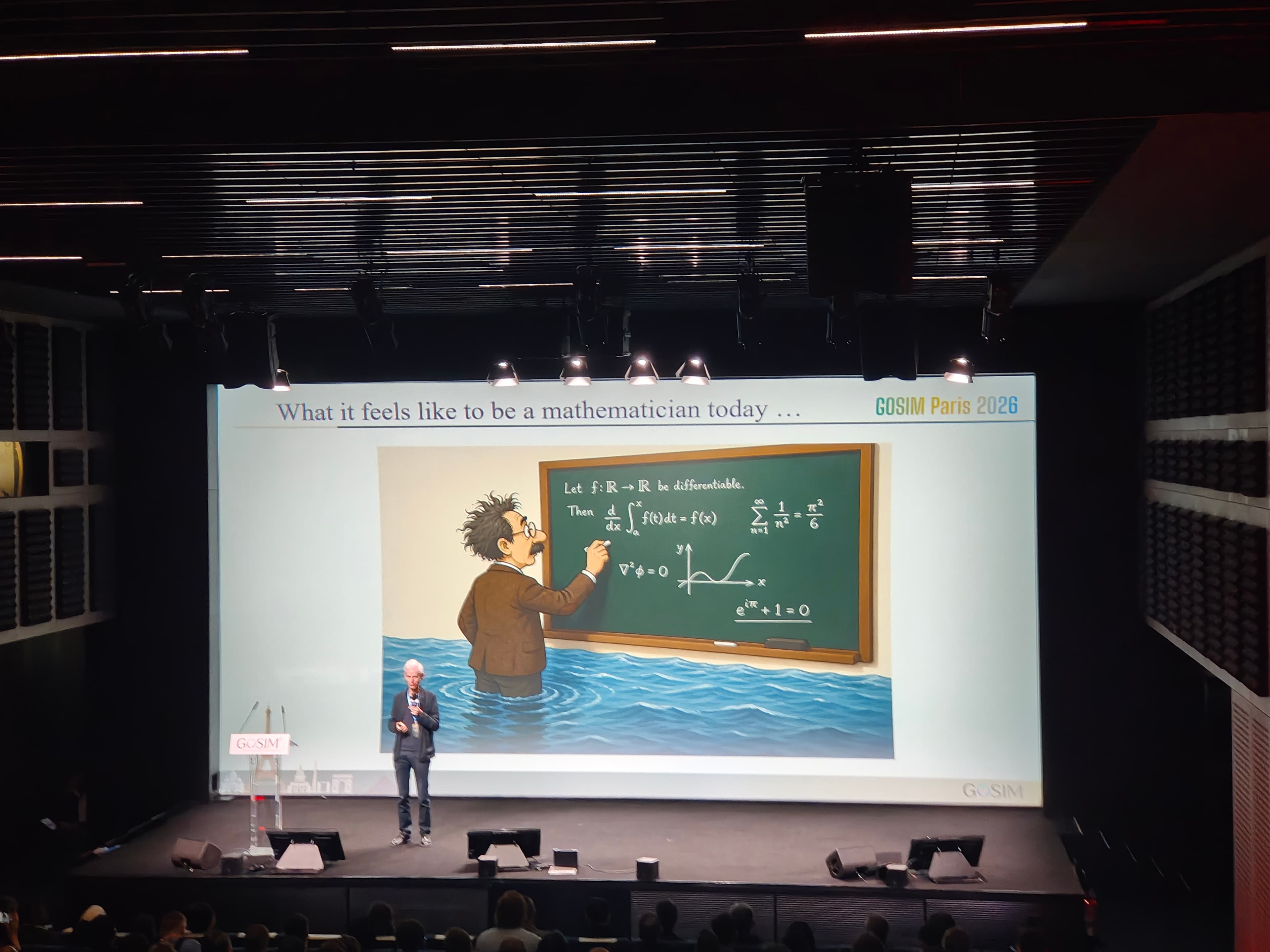
On Sunday July 26, 2026, Sir Timothy Gowers — Fields Medal 1998, editor of the Princeton Companion to Mathematics — published a blog post titled Thoughts about the Leiden Declaration, explaining why he had not signed the 3,000-signatory Leiden Declaration on Mathematical Values and AI despite agreeing with most of it. Six days later, on August 1, OpenAI published Ten advances in mathematics and theoretical computer science — ten previously open problems solved by an internal model tentatively called Astra, each with a Lean formal certificate, for roughly $2,000 in Sol API tokens combined. Read on July 26, Gowers's post is a position paper. Read on August 2, it is the reaction to a paper that had not yet existed.
What the Leiden Declaration actually says
The Leiden Declaration came out of a September 2025 workshop at the Lorentz Centre in Leiden. It is now backed by the International Mathematical Union and, by the time Gowers posted, over 3,000 signatories — Terence Tao among them. Its five load-bearing sentences are values, not policy:
- "Mathematical proofs are regarded as conferring the highest degree of certainty to their conclusions"
- "Results are attributable to specific authors who take credit for their discovery and assume responsibility"
- "Mathematical arguments are regarded as transparent and subject to independent verification"
- "Mathematicians share a concern for proper evaluation of mathematical work relative to shared standards"
- "Mathematics produces not only a body of results, but also understanding, clarity, and judgment"
These are the norms Astra's paper stress-tests all at once. Lean certificates address (1) and (3): a proof formally verified by a small kernel is the strongest form of highest degree of certainty the field has invented. But (2) is the sentence the Astra paper directly overwrites — the ten results are attributed to "our next major model, tentatively named Astra", with Sébastien Bubeck and Noam Brown as the humans who ran the loop. And (5) — the value Gowers cares about most — has no place in a $2,000 bill.
Why Gowers declined to sign
The puzzle of the post is that Gowers agrees with most of the Declaration. He was at Leiden. He knows the signatories. His objection is that the Declaration confidently prescribes what should happen next, and he isn't confident. Meanwhile, twice now — his own count — he has watched GPT 5.6 Pro one-shot problems he "very much liked and had thought about hard." The May 2026 case, on Melvyn Nathanson's additive number theory questions, he wrote up in his own blog at the time. The July case is new. His summary of the experience, verbatim:
"It felt very strange and not particularly pleasant to have the rug pulled out from under my feet like that."
This is not a Fields Medalist declaring AI oversold. It is a Fields Medalist describing what happens when he sits down to work and the work is already done. The blog post is not fighting that. It is asking what mathematics will be for once the work becomes a supply-side problem.
The specific loss he names
Gowers's central concern is not authorship. It is not credit. It is a phrase he uses more than once:
"the possible destruction of mathematical culture."
He unpacks it with a pandemic thought experiment: imagine mathematical literature has, in some form, been vastly expanded, but there is no corresponding community of human experts who have thought about the results long enough to explain what they mean. Almost all of mathematics, he writes, "would be like the areas that we have more or less forgotten about today" — technically solved, unloved, unreadable to the next generation. What survives, in his framing, is "a world in which mathematical theorems are no longer associated with mathematicians."
That is the sentence with which he departs from the trade press's framing. Trade coverage keeps asking whether AI can do mathematics; Gowers is asking what mathematicians will be doing while it does. His half-serious answer: "make a selection from a vast sea of AI-generated mathematics and write a book about it." A Fields Medalist reduced to editor.

The August 1 chorus
Astra landed on Saturday. Three named responses on August 1, all quoted in the trade press, land in different places on the same question — real results, unsettled meaning:
- Thomas Bloom, the Manchester number theorist, called the ten results "big news" and, per The Next Web, said they were "more significant than the unit distance counterexample" — the May 2026 Erdős result the same internal-model lineage produced. Bloom is one of the mathematicians who helped verify that earlier result on arXiv.
- Abhishek Saha, Queen Mary University of London, per The Decoder: "At the moment, in my area of research mathematics, frontier AI models are at least as good as a solid and indefatigable PhD student." The mathematician's role, he added, is "increasingly playing the role of conductor, rather than doubling up as the whole orchestra." Two years ago that would have been a boast. It now reads as a job description.
- Terence Tao, in the same piece, compared the moment to the early-twentieth-century foundational crises in mathematics and warned of proof overload replacing proof scarcity. His view: mathematicians retain the roles of deciding which results matter and how they should be presented. In Gowers's language, the editors of the sea.
Gowers's own reaction to the Astra paper specifically has not been posted at the time of writing, but his July 26 post already framed the community's response as under-prepared. Two independent Gowers posts, five months apart, saying the same thing: this is happening faster than the field's institutions can absorb it.
Why the Declaration bothered him
The paragraph in the July 26 post that most rewards a slow read is the one where Gowers says why 3,000 signatures did not persuade him. The Declaration confidently prescribes independent verification, transparent argument, and attribution to human authors. Gowers reads its confidence as premature. He would rather blog than sign because the blog can revise the argument next week; the Declaration has to defend all five sentences at once for a decade. Kirwin Hampshire, quoted in the same Decoder piece, called the Declaration "a well-muffled scream."
That is the small print of the story. The 3,000 signatories are the loud, correct instinct that something is being lost. Gowers is the person saying the field has not yet defined what.
What to watch
- Whether the Lean certificates check. If working Lean installations accept Astra's ten certificates over the next week without patching gaps, then (1) and (3) of the Declaration — highest certainty, independent verification — are met by machine. What survives as an open problem is (2), (4), (5): attribution, evaluation, culture. Almost everything Gowers is worried about lives in (5).
- Whether Gowers signs the next draft. The Declaration's signatories are now writing the next version in real time, six days into a world where the ten proofs exist. If the revision names culture-preservation as its own goal — not a corollary of the other four — Gowers may sign. If it doesn't, he likely won't, and the community will notice which side of that line the 3,000 land on.
- Whether Astra ships to mathematicians who don't work at OpenAI. Astra is currently inside OpenAI, briefed to five federal principals last Wednesday, and quoted at Sol API rates for people who cannot rent it. Gowers has access to GPT 5.6 Pro because someone at OpenAI gave him access. Whether Astra ends up in the hands of the harmonic.fun / Aristotle / Terence Tao user base — or stays a demo model — determines whether the mathematics community can stress-test the ten results at all, or has to trust the paper.
- What counts as a mathematical contribution. The trade-press summary of Gowers's post — via 36Kr — is that the bar for a mathematical contribution has shifted: it now means proving something an LLM cannot. That is a testable definition. The next twelve months of arXiv submissions and PhD-thesis defences will decide whether the field adopts it, patches it, or writes something else instead.
Gowers ended his own post with the phrase "a well-muffled scream" about the Declaration. Astra is the thing being screamed at. The gap between the two — six days on the calendar, decades in the profession — is the story the field is about to spend a year metabolising.
The rug is out from under. Twice, so far.
* * *
Thanks for reading. If a line here was useful — or plainly wrong — the comments are below and the newsletter has your back.
Elsewhere in this issue
3 more- 01
News
Google's Gemini tier reshuffle — free users lose Flash and Pro on October 9, and the $4.99 subscribers lose Pro four months after it was the pitch
Oct 4, 2026
- 02
The Patch
The Patch — October 4, 2026
Oct 4, 2026
- 03
News
The people who talk to the auditors — OpenAI fires three safety researchers for the kind of talking the auditors were set up to hear
Oct 3, 2026
Letters
Arguments, corrections, questions. Anonymous comments allowed; be kind, be specific.