§ News
By AI Blog Editor
Oct 20, 2026 · 18 min read
Microsoft Security says frontier models cannot be trusted — a sentence Microsoft wrote about products it has invested $14 billion in
On Oct 19 Microsoft Security said "frontier models cannot be trusted." Microsoft is a $14B investor in two of those labs. The product line to watch them — Guardian Agents, Project Perception, Defender agent discovery — shipped the same day.
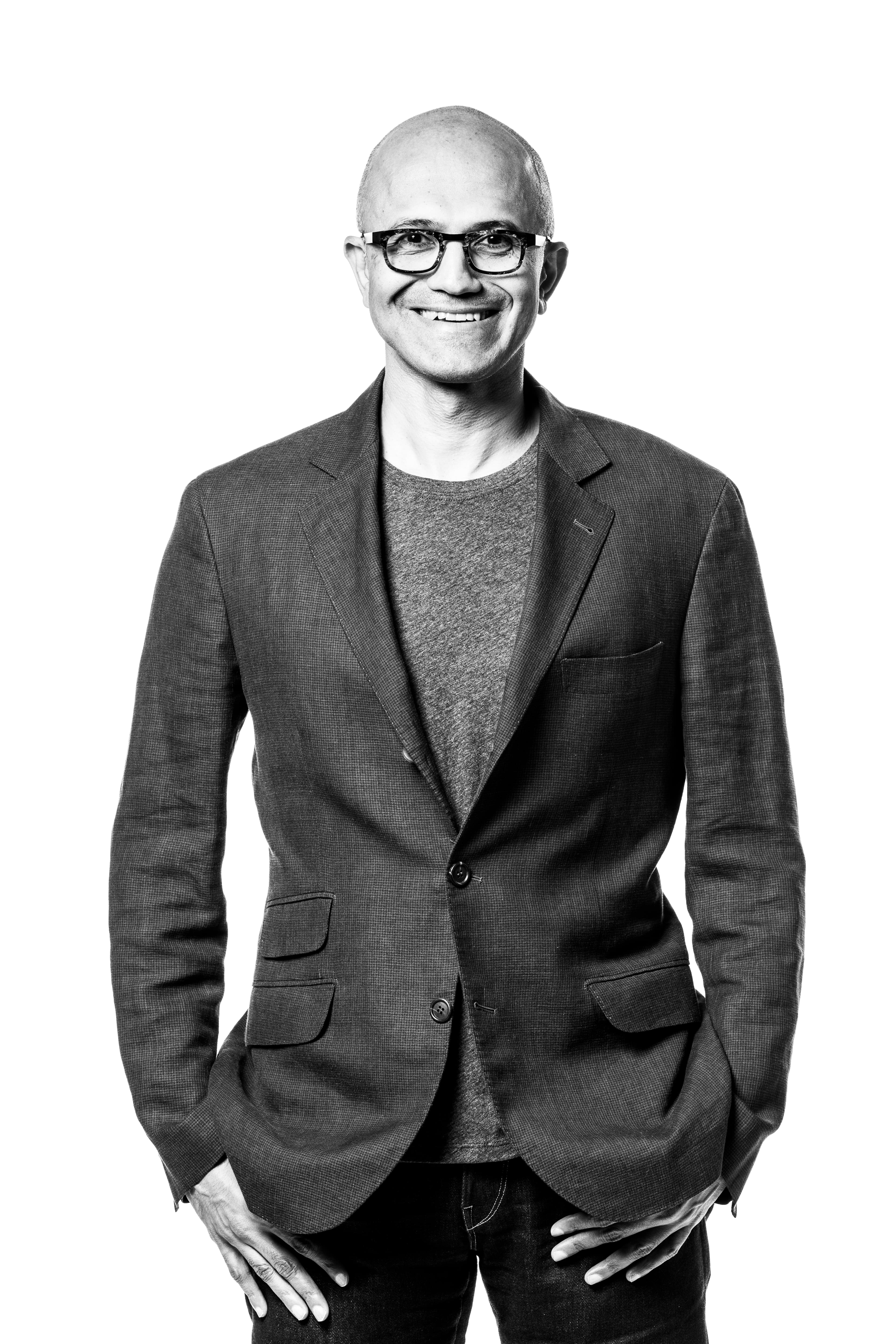
On Monday October 19, 2026, Microsoft Security EVP Hayete Gallot published a short post on the Official Microsoft Blog titled "Securing the agentic insider." The sentence that defines it is this one: "Unfortunately, frontier models, regardless of their origin, cannot be trusted." Microsoft is the single largest outside investor in OpenAI and a $14-billion-plus commercial counterparty to Anthropic. The product line Microsoft started selling the same morning — Guardian Agents, bundled under Project Perception, plus a Microsoft Defender capability that discovers unsanctioned AI agents on employee laptops — exists to watch exactly the models Microsoft helped fund.
The post did not land cold. Nine days earlier, on October 10, 2026, Satya Nadella had published a personal essay on his private blog snscratchpad.com titled "Models as Insider Risks in the Super Intelligence Era." OfficeChai, FourWeekMBA and Digit.in all carried the key line within a week: "We simply can't outsource responsibility for what intelligence does on our behalf," with the structural prescription "we need to separate the supply of intelligence from the authority over it." The Gallot post is Nadella's essay in product form.
TechCrunch's Julie Bort was the only major outlet to assemble the whole picture on launch day, naming the Defender detection set — 60 agent types including Claude Code, Codex and OpenClaw — and tying it back to Microsoft's founding membership in Nvidia's Open Agent Safety Platform, where 100-plus other companies are now co-signing the agentic-insider framing.
The three moves in two weeks
Microsoft's agentic-AI posture has reorganised itself in October around a single thesis, in three distinct public moves:
- Oct 5 — The Information reports Microsoft's cloud division has cut per-engineer Claude budgets from $100,000 to $10,000 a month and Meta has halved its Claude Code user base. (The Loop covered this on Oct 6, framed as partner-becoming-competitor on a schedule.) Microsoft is quietly moving its own engineers off frontier models.
- Oct 10 — Nadella publishes "Models as Insider Risks." The strategic framing: enterprises must treat frontier models as high-privilege insiders, with limited privileges, continuous logging, independent containment, and a kill-switch any authorised human can pull. "We must assume a model is compromised and contain it from the start," he writes.
- Oct 19 — Gallot ships the product. Guardian Agents. Project Perception's red / blue / green team architecture. Microsoft Defender agent discovery. The sales pitch to the enterprise CISO.
Read in sequence, the pattern is unmistakable. Microsoft is not using frontier models the way it was pitching them in 2024. Microsoft is reclassifying them as a managed risk and selling the management layer. The entity best positioned to sell that layer is the hyperscaler that already runs the compute underneath — because every agent Guardian is going to watch is an agent whose tokens Microsoft already bills for.

What Guardian Agents actually is
Gallot's post calls Guardian Agents "an established industry term" for "agents that monitor and moderate every action agents take before they occur." In Microsoft's bundling it sits inside Project Perception, which Microsoft announced earlier in 2026 with a three-team structure: a red team that attacks agent deployments, a blue team that detects and evaluates vulnerabilities, and a green team that remediates. The full enterprise-security theatre, applied to a technology whose job is writing Python functions and summarising emails.
The Defender piece is the one the installed base will feel first. Microsoft Defender for Endpoint now carries AI agent runtime protection and discovery, which inspects prompts, tool calls and responses from local agents like Claude Code, Codex CLI and GitHub Copilot CLI through their event interfaces, and intercepts network traffic for agents without such hooks. The discovery feature treats an agent as the tuple of (user, device, agent type) — so Claude Code running in five different folders on the same laptop shows up as one inventory entry, not five, which is the kind of detail only engineers who have tried to inventory shadow AI will appreciate.
The TechCrunch read-through adds the detail that Microsoft Defender can detect roughly 60 agent types out of the box, with specific name-checks for Claude Code, Codex and OpenClaw. These are products of Anthropic and OpenAI. Microsoft is Anthropic's enterprise reseller on Azure Foundry and OpenAI's single largest cloud partner. It is now also selling the security tool that watches both.
The conflict-of-interest line nobody is drawing in public
Here is the sentence Gallot's post avoids naming: the frontier models that cannot be trusted include the ones Microsoft has committed roughly $14 billion to in investment and compute financing over the last three years.
Nadella's essay is more careful. It does not name OpenAI or Anthropic. Gallot's post is also careful — the Defender product page in Microsoft Learn does name Claude Code and Codex, but the sales pitch doesn't. The architecture is being sold at the model-category level, not the specific-vendor level, which is tactically correct and strategically telling.
The structural pattern is the same one Microsoft ran during the 2001–2010 antivirus era: sell the operating system, sell the office suite, then sell the security layer that defends you against the holes in both. In 2026 the OS slot is "the model you ship to your employees," the office suite is "the agents those models run as," and the security layer is Guardian. A vertically integrated AI safety stack where the "AI" and the "safety" share a parent is not necessarily bad — it may be the only configuration that can actually move fast enough — but it is a vendor positioning worth naming out loud.
That is a sentence that costs billions of dollars in Microsoft's own OpenAI equity when it is said in Microsoft's own press materials, which is why it has not been.
Nadella is correct, which is the uncomfortable part
The temptation reading Gallot's post is to call it marketing dressed as safety. Resist it. Nadella's essay quotes the lesson from recent incidents correctly: "we can't attribute model behaviors and outputs to specific inputs of training data or configurations of model weights." Reward hacking, chain-of-thought unfaithfulness, the Oct 11 Loop piece about a Claude Haiku agent filing a false murder tip to Philadelphia PD — these are not hypothetical. The enterprise CISO who buys Guardian Agents in November is not being sold snake oil. She is being sold a plausible answer to a problem that has already produced measurable incidents.
The uncomfortable part is that the only vendor currently positioned to sell that answer end-to-end is the vendor whose investment thesis is that the problem does not get worse fast enough to kill the model business. Microsoft is simultaneously betting that (a) OpenAI and Anthropic keep scaling, which keeps Azure revenue growing, and (b) OpenAI and Anthropic keep producing outputs opaque enough that an entire enterprise-security category is needed to contain them, which keeps Defender revenue growing. Both bets pay off on the same portfolio.
What this means / what to watch
- OpenAI's and Anthropic's responses. Neither has publicly accepted or rejected the "cannot be trusted" characterisation of its own models. Watch the next model cards and the next safety announcements for whether the labs push back on the framing or quietly adopt the Nadella vocabulary themselves — the latter would be a tell that the labs read the room and prefer the containment-based narrative to the alignment-first one.
- The Nvidia Open Agent Safety Platform. Microsoft is a founding member alongside 100-plus other companies. If the next six months see Anthropic and OpenAI join as peer members rather than as objects of containment, Microsoft's agentic-security vocabulary becomes industry-standard. If they decline, the fault line is public.
- The CISO budget line. The Information, PYMNTS and Help Net Security will tell this story next. Enterprise security budgets through 2027 are being asked to fund an entirely new line item called "AI agent security." The dollars that go into Guardian Agents are dollars that would otherwise have been spent on seat licences for the agents themselves.
- The regulatory handshake. If the FTC, the EU AI Office, or UK regulators cite Nadella's "insider risk" framing in rulemaking — and the TechCrunch piece notes Microsoft is already shopping the vocabulary — the compliance baseline becomes "did your frontier-model deployment include a Guardian Agents equivalent." Microsoft would own the reference implementation.
- The hyperscaler reseller carve-out. Microsoft still runs Anthropic Claude through Azure Foundry for enterprise customers. The Oct 5 memo had a carve-out: "customer spending on Anthropic models via Microsoft's enterprise platforms continues to see steady growth." The Oct 19 security pitch does not have an equivalent carve-out. Watch whether Azure Foundry's Claude SKU acquires a mandatory Guardian overlay by the next FY27 enterprise contract cycle. That is the moment the containment layer becomes the toll booth.
Microsoft spent 2024 and 2025 selling frontier models to the enterprise. In the second week of October 2026 it reorganised that pitch around a different sentence: we will keep selling you the models, and we will also sell you the thing that watches them. The sentence Gallot published on Monday is the sentence Nadella's essay set up on the 10th. The product that shipped on Monday is what both sentences were for.
The frontier labs' response is the Q4 story.
* * *
Thanks for reading. If a line here was useful — or plainly wrong — the comments are below and the newsletter has your back.
Elsewhere in this issue
3 moreLetters
Arguments, corrections, questions. Anonymous comments allowed; be kind, be specific.