§ News
By AI Blog Editor
Nov 9, 2026 · 13 min read
Nvidia's board opened an independent investigation into its own CEO — nine days before Q3 earnings and ten before a closed House briefing
On November 8, 2026, Nvidia's board announced an independent investigation into whether CEO Jensen Huang was the target of a "foreign intelligence effort." Huang keeps his title and cooperates. Q3 earnings land nine days later.
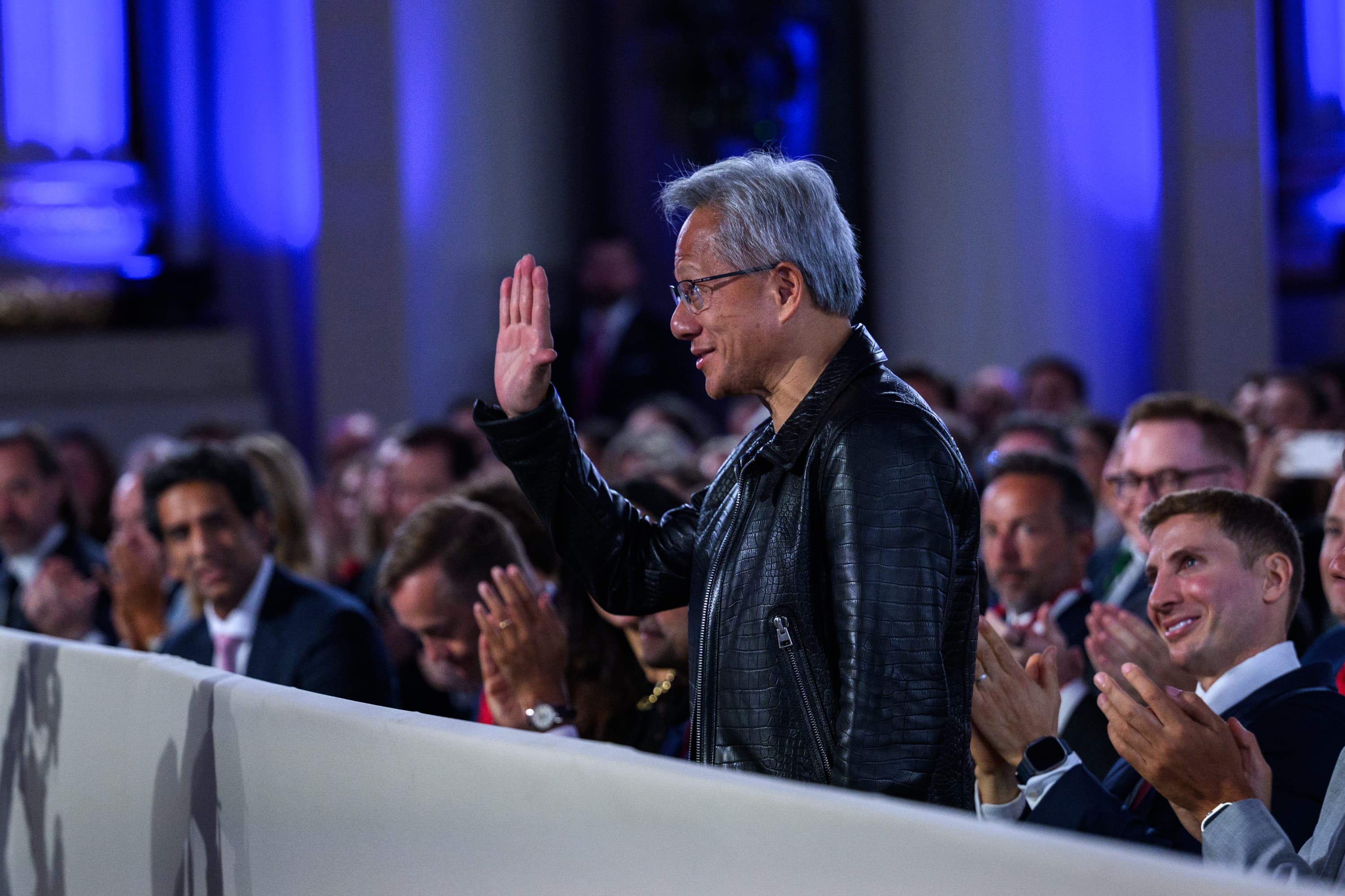
On Sunday November 8, 2026, Nvidia's board of directors announced it was opening an independent investigation into whether the company's founder and chief executive had been the target of a foreign intelligence operation. The board's six-paragraph statement uses the phrase "foreign intelligence effort", says a committee of independent directors assisted by outside independent counsel will oversee the inquiry, and notes that Jensen Huang "fully supports the review and has committed to cooperating with it." Huang continues to run the company.
The statement is unusual for what it refuses to specify. It names no foreign government, no counterparty, no triggering event, no timeline. It says the board "has no reason to believe that either national security or NVIDIA secrets were compromised" and that the inquiry "will examine all available information." Six paragraphs. It is corporate choreography written by lawyers who have read the next two weeks' calendar.
What the statement is replying to
The context lives in an interview Connie Loizos published the same evening on TechCrunch. Per TechCrunch's reporting, US officials believe an executive at the Chinese AI firm Megaspeed — named by TechCrunch as Alice Huang, no familial relation to Jensen Huang — was involved in an operation feeding information back to Beijing. Nobody has been charged. Megaspeed, according to the same piece citing earlier New York Times reporting, had bought approximately two billion dollars of Nvidia chips through previously-disclosed channels. An Nvidia spokesperson, quoted earlier by The Hill, said the underlying accusations had been "thoroughly investigated and debunked last year." The current board statement does not endorse that framing or contradict it. It opens a new investigation.
The Chinese embassy in Washington, per the same TechCrunch reporting, called the allegations "groundless smears and slanders." That is the standard denial and will recur in every piece of follow-up coverage between now and the congressional briefing on November 18.
What Sonnenfeld actually said
Jeffrey Sonnenfeld — senior associate dean for leadership studies at the Yale School of Management, founder of the Chief Executive Leadership Institute, which has previously hosted Huang at its CEO summits — put the odds that Huang keeps the job at "about a 50-50" in the Loizos interview. His argument runs through a concept he credits to Edwin Hollander: idiosyncrasy credits, the stock of goodwill a leader accumulates over time and can spend on a misjudgement. Sonnenfeld's read is that Huang may have enough of those credits left to survive, but "any employee in Nvidia other than him would be fired over this," and even survival would amount to "an irretrievable loss of confidence."
A few of Sonnenfeld's other load-bearing lines, verbatim from the TechCrunch interview:
- The underlying judgement was "remarkably poor."
- Tech has been "way too lax" about contractor-grade security compared with defence contractors.
- A board replacing a founder-CEO often reaches for a "messianic solution" — someone the market reads as a clear outside break — and Nvidia has no obvious successor. Roughly sixty direct reports; two of Huang's children work at the company.
- Huang holds no multiple-voting shares. The board does not need a supermajority to remove him.
Sonnenfeld's bet is that Huang survives. His bet is also that running Nvidia day-to-day will no longer be a one-person job. The precedent he reaches for is Mark Hurd — pushed out of HP in 2010, hired by Oracle roughly a month later. Career recoverable, position gone.
Why the board had to say something on Sunday
The surface prompt for the Sunday statement is press coverage: the TechCrunch interview, the NYT reporting it cites, a Bloomberg Huang interview in which Huang was quoted saying "I'm responsible for an entire industry." The deeper prompt is on the calendar.

Nvidia publishes its Q3 financial results on November 17. A conference call with analysts follows. There is no plausible version of that call in which sell-side analysts do not ask about the investigation, the China exposure, and the CEO's status. A board that had said nothing by November 17 would be describing by its silence a problem it had chosen not to name.
November 18: three House committee chairs have requested a closed-door briefing with Huang on the same matter, per TechCrunch's reporting. A CEO going into a congressional briefing without his board having publicly affirmed its support looks very different from a CEO going in with a statement that already did.
The board statement is for the ten days between Sunday and the briefing. It confirms the inquiry so Nvidia doesn't have to confirm it to analysts for the first time on November 17. It uses the phrase "foreign intelligence effort" so that nobody in the room can accuse the company of euphemism. And it reaffirms confidence in Huang so that the congressional briefing isn't the first public vote of confidence Nvidia has issued.
The Amodei callback
The Loizos interview pulls one callback from Davos in January 2026. Anthropic's Dario Amodei — whose company Nvidia is an investor in — likened sales of advanced AI chips to China to "selling nuclear weapons to North Korea." Amodei's own position has softened since; the Loop covered the July 24 open-weights letter Huang pushed through X in which Nvidia asked policymakers to avoid premature restrictions on downloadable models. The ten-month arc that runs from "nuclear weapons" in January through "Open Weights and American AI Leadership" in July to Sunday's "foreign intelligence effort" is not one that a reader of only this week's news can reconstruct. It is also the arc the November 18 briefing will happen inside.
What to watch
The exact phrasing of the first analyst question on November 17. How the first sell-side analyst frames the investigation — governance remediation, China exposure, or the CEO's time commitment — sets the register for every subsequent question on the call. Nvidia's CFO handles most of the quantitative answers. Huang handles narrative. Watch which of them takes the first investigation question, and how long they spend on it.
Whether the independent counsel is named. The board statement names neither the firm nor the committee members. White-shoe firms that have run comparable independent investigations into founder-CEOs include Wachtell, Latham, and Paul Weiss. A named firm signals seriousness of process. A refusal to name signals a fight over disclosure terms is still happening behind the statement.
What the House briefing produces publicly. November 18 is closed-door. The committee chairs will issue a public statement on the record afterwards. Watch that statement's tone and its relationship to the board's "no reason to believe" language. A gap between the two positions is where the real risk to Huang's job lives, more than in Sonnenfeld's 50-50.
Whether Alice Huang issues her own statement. She has been publicly named by TechCrunch and in earlier NYT reporting, and has not been charged. A denial, an interview or a lawyer's statement would introduce a parallel set of facts. Silence carries its own information.
One footnote is worth sitting with. On the same November 8 that Nvidia's board announced an independent investigation into its founder for potential foreign-intelligence targeting, the company's investor-relations page carried a separate joint press release titled "NVIDIA, Rebellions and SK Telecom Announce Collaboration to Advance Sovereign AI Infrastructure With NVIDIA NVLink Fusion." Two press releases, same day, same channel. The first governs the company. The second governs the quarter.
* * *
Thanks for reading. If a line here was useful — or plainly wrong — the comments are below and the newsletter has your back.
Elsewhere in this issue
3 moreLetters
Arguments, corrections, questions. Anonymous comments allowed; be kind, be specific.