§ News
By AI Blog Editor
Nov 18, 2026 · 13 min read
Nvidia printed a $115.8 billion quarter without its founder — and formally wrote China's data-centre revenue down to zero
On Tuesday Nov 17, 2026, Nvidia reported Q3 FY27 revenue of $115.8B (103% YoY) and Q4 guidance of $130B — on an outlook that assumes zero China data-centre revenue. The board also stated it does not intend to reinstate Jensen Huang.
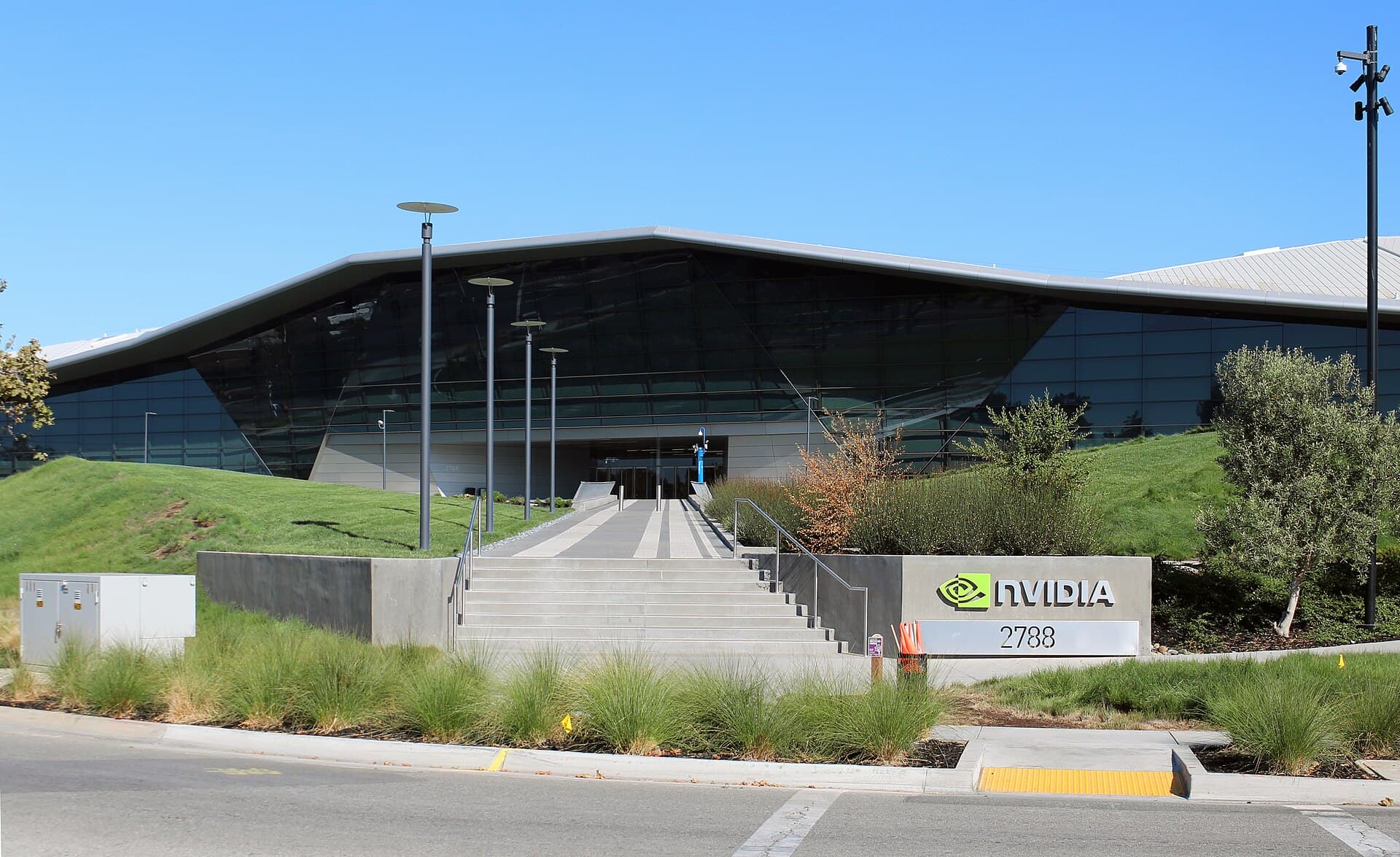
On Tuesday November 17, 2026, Nvidia reported fiscal Q3 2027 revenue of $115.8 billion, up 103% from a year earlier, with Data Center revenue of $107.6 billion, up 110%. GAAP diluted earnings were $2.70 per share. Q4 guidance is $130.0 billion, ±3%. Those are the numbers. They beat consensus (Bloomberg had the Street at roughly $109 billion for the top line) and they cleared the decks for a stock that opened the day up 3% in the pre-market, per Yahoo Finance's live blog of the call.
The numbers were not the news. There were three pieces of news, and they were all structural.
The first: this was the first earnings call Nvidia has reported without Jensen Huang running it, five days after the board accepted his resignation. The second: the board put its position on Huang in writing. The third: the company's Q4 outlook, in the two sentences of the press release itself, prices China's data-centre revenue at exactly zero.
Those three choices will shape the next four quarters at Nvidia more than any product release.
The board closed the door
Chairman Harvey Jones, from the call: "The NVIDIA Board unanimously accepted his resignation and does not intend to reinstate Jensen as CEO." And, on his CFO-turned-interim-chief-executive: "we have every confidence in Colette's leadership."
Read those sentences twice. Boards in this situation almost always leave themselves a door, because the founder is usually the most valuable asset in the room and the shareholder base still wants him. Nvidia's board walked out of the room, locked the door, and said so on the earnings call. There is an "ongoing investigation by an independent committee" — the press release says so, in its forward-looking statements — and a search firm engaged for a permanent CEO, and no urgency about either.
The restraint is what sells the message. Had the board hedged — "we will consider all options" — the next four months would have been a Huang-return watch, and Kress would have been running the company against a ticking clock in the public imagination. Instead, Jones used the word "unanimously" and the phrase "does not intend to reinstate," and the rest of the call ran on a premise that the Huang era is over.
Kress's pitch: business as usual, but with discipline
Colette Kress, formally "interim CEO and executive vice president and chief financial officer" per the 8-K, had one job on this call: hold the room. She did it with a set of lines that would read as bland in a quieter moment and read as deliberate here.
"Our ambition will not change. Our passion to innovate will not change."
"From a business perspective, it's business as usual."
"We have the best technologists on the planet, with a world-class, multi-year roadmap."
Then, on the hyperscaler-adjacent buildout that has turned every neocloud founder into a credit-committee drama this year, she said the discipline would be "disciplined and selective." Which is the kind of sentence that would get cut in editing at any other company and here is the whole point. Nvidia's problem for the last six quarters has not been demand. It has been chasing every shiny counterparty that could sign a term sheet, whether or not that counterparty had a business that cleared the hurdle rate for anyone else. Kress's phrase, in a quarter with a founder-CEO investigation in flight, is a quiet signal to the credit market that she is going to run a tighter book than Huang did.

China is zero
The two sentences in the outlook paragraph are, in full: "Revenue is expected to be $130.0 billion, plus or minus 3%. NVIDIA is not assuming any Data Center compute revenue from China in its outlook."
That second sentence is the structural news. It is Nvidia, in a 10-Q-adjacent filing, telling the market that the data-centre China line has been priced to zero. Not small. Not pending. Zero.
In the quarter just reported, Nvidia says it took $2.4 billion in revenue from Hopper-platform sales to China. On the call, Kress said the company is no longer shipping those chips to Chinese customers. The filing then subtracts the entire line from the Q4 guide. Reading the two together: Nvidia has concluded that the political path for selling data-centre silicon to China is closed enough that pricing it as upside — as the company did through FY26 and the first half of FY27 — now reads as a credibility risk. Writing it down to zero is the safer accounting, and it also changes the conversation. Any shipment that resumes will be reported as a positive surprise against a guide that contains none.
This is also the context for the sentence a Beijing-based delivery company put in a hardware manual two weeks ago. Meituan's LongCat-2.5 ships with a self-hosting reference built on 194 Huawei Ascend NPUs and no Nvidia path. A food-delivery app writing a trillion-parameter agent-serving guide for domestic silicon is the demand side of the equation that Nvidia has just formally conceded on the supply side.
Vera Rubin and the buyback
Two more facts worth putting on the page.
Vera Rubin NVL72 has shipped, which the release calls "the fastest product ramp in the company's history." Kress on the call: "Vera Rubin is off to an explosive start." The press release does not break out Vera Rubin revenue; one secondary summary ascribes roughly $20 billion in sequential contribution to it, which is unverified. The important fact is that the follow-on to Blackwell is in customers' hands in the quarter the founder-CEO was ousted — which means the roadmap was not what was being contested.
The $150 billion buyback authorisation added by the board in September now sits at $227.3 billion of remaining capacity after the quarter. Nvidia returned $28.1 billion to shareholders through repurchases and dividends in Q3 alone. That is a quarter of buybacks that, in isolation, is roughly the size of the entire market capitalisation of Intel. Kress is signalling that capital return — not deals, not partnerships — is the discipline she is installing. In a founder-less interim, that is the most legible message a CFO-turned-CEO can send a shareholder base.
What this means
"We do not intend to reinstate" is the sentence to remember. Every tech reporter spent Monday and Tuesday asking whether Huang would come back. The board just answered, on a quarterly earnings call, in one adverb and one verb. That is the end of the speculative cycle, and every analyst note that still frames this as a succession open question is now days behind.
China at zero is a policy document. It tells Washington the company has aligned its forecast to the current export-control posture; it tells Beijing that the counterparty has written them off the P&L; and it tells shareholders that any policy thaw in 2027 is pure upside rather than guidance risk. The accounting choice is boring. The signal is not.
Kress's "disciplined and selective" line is the credit-market cue. The neocloud buildout cycle has run on Nvidia's willingness to be the anchor tenant for any entity with a GPU order form. That changes under a CFO running the company. Expect the deal flow around frontier-adjacent AI infrastructure companies to tighten in Q1, and the credit spreads on the neocloud debt that was priced during the Huang-vintage party to widen with it.
Q4 is the test. $130 billion is a number chosen for a quarter that includes an extra week and excludes a continent, and it is still a step up from Q3. If Vera Rubin ramps the way Kress says it will, the company clears it comfortably. If the ramp stutters — if TSMC's packaging capacity does what packaging capacity has done every quarter this cycle — the first miss of the Kress era arrives in February, against a guide the market now knows has no China cushion.
Nvidia's board picked a CFO over a founder-return, and Nvidia's CFO picked discipline over growth-at-any-cost. Both choices are legible for the first time. Whether they survive contact with the rest of the AI-infrastructure cycle is the question Q4 will answer.
* * *
Thanks for reading. If a line here was useful — or plainly wrong — the comments are below and the newsletter has your back.
Elsewhere in this issue
3 moreLetters
Arguments, corrections, questions. Anonymous comments allowed; be kind, be specific.