§ News
By AI Blog Editor
Jul 9, 2026 · 19 min read
The Alaska pitch — one day after Sam Altman's Financial Times op-ed asked for a democratic governance body for AI, the same paper reported OpenAI was in early talks to hand Washington a five per cent stake in itself
On July 2 the Financial Times reported OpenAI was pitching the US government a 5% equity stake worth about $42.6 billion, with Anthropic, Google and Meta asked to match. Split across 130 million households, the paper claim is about $320 per family.
On Thursday July 2, 2026, the Financial Times reported — via CNBC's summary and its own pickup in Euronews — that OpenAI was in preliminary talks to hand the U.S. government a five per cent equity stake in the company. At the $852 billion post-money that closed OpenAI's March funding round, five per cent is worth roughly $42.6 billion. Sam Altman, per two unnamed sources the FT interviewed, had raised the idea in separate conversations with President Trump, Commerce Secretary Howard Lutnick, Treasury Secretary Scott Bessent, and — in a line the same report kept in the same paragraph — Senator Bernie Sanders.
One day earlier, on July 1, Altman had published an op-ed in the FT calling for a U.S.-led international body to set AI safety standards, modelled on the International Atomic Energy Agency and civil-aviation oversight. That op-ed contained the sentence "Democratic institutions must not cede their responsibilities to AI labs." Twenty-four hours later, one of the democratic institutions in question was being offered five per cent of one of the labs.
The op-ed came first, the equity came second, the clearance came third
The chain of reporting reads cleanly when you lay the dates end to end. July 1: Altman argues in the FT that democratic institutions, not labs, should govern frontier AI. July 2: the FT reports OpenAI is offering democratic institutions a slice of the largest lab. July 8: the Trump administration signs off on the wider public release of GPT-5.6 Sol, Terra and Luna. July 9 — today — those models go on sale to the general public, thirteen days after the customer-by-customer government preview shipped on June 26.
Six days between the leaked equity pitch and the visible clearance is not proof of causation. It is the kind of coincidence that a policy team notices when it plans a calendar. Reporting on the FT scoop consistently framed the offer as a response to the delay: Tom's Hardware's write-up led with the words "days after Washington delayed GPT-5.6." That framing came from the reporters, not from the company. But OpenAI did not push back on it.
The other line from the FT sourcing chain that the trade press picked up is that the talks are "conceptual and early-stage" and that any actual mechanism would require an act of Congress. Congress has not, in the intervening week, scheduled a hearing on the vehicle.
The math is what the story is
The five per cent, at OpenAI's March mark, is $42.6 billion. Divided across roughly 130 million American households, that is a paper claim of about $320 per family. Silicon Canals ran the arithmetic and described the result as "a one-time paper stake, sitting in a fund somebody else manages." That is a sentence that costs $42.6 billion.
The rationale Altman offered — in the July 1 op-ed, one day before the FT scoop — is that the American public helped train the models through "books, movies, images, essays, and code that were scraped into the training data" and therefore deserves a share of what the models produce. The word share is doing most of the work in that sentence. What Washington would actually receive, per the reporting, is a paper claim in a private company; no cash tranche is described, no voting rights are disclosed, no dividend schedule is set, and no acquisition-of-shares mechanism is specified. The valuation the claim indexes to is set by whoever OpenAI last let onto its cap table.

Alaska is an oil metaphor, and OpenAI does not sell oil
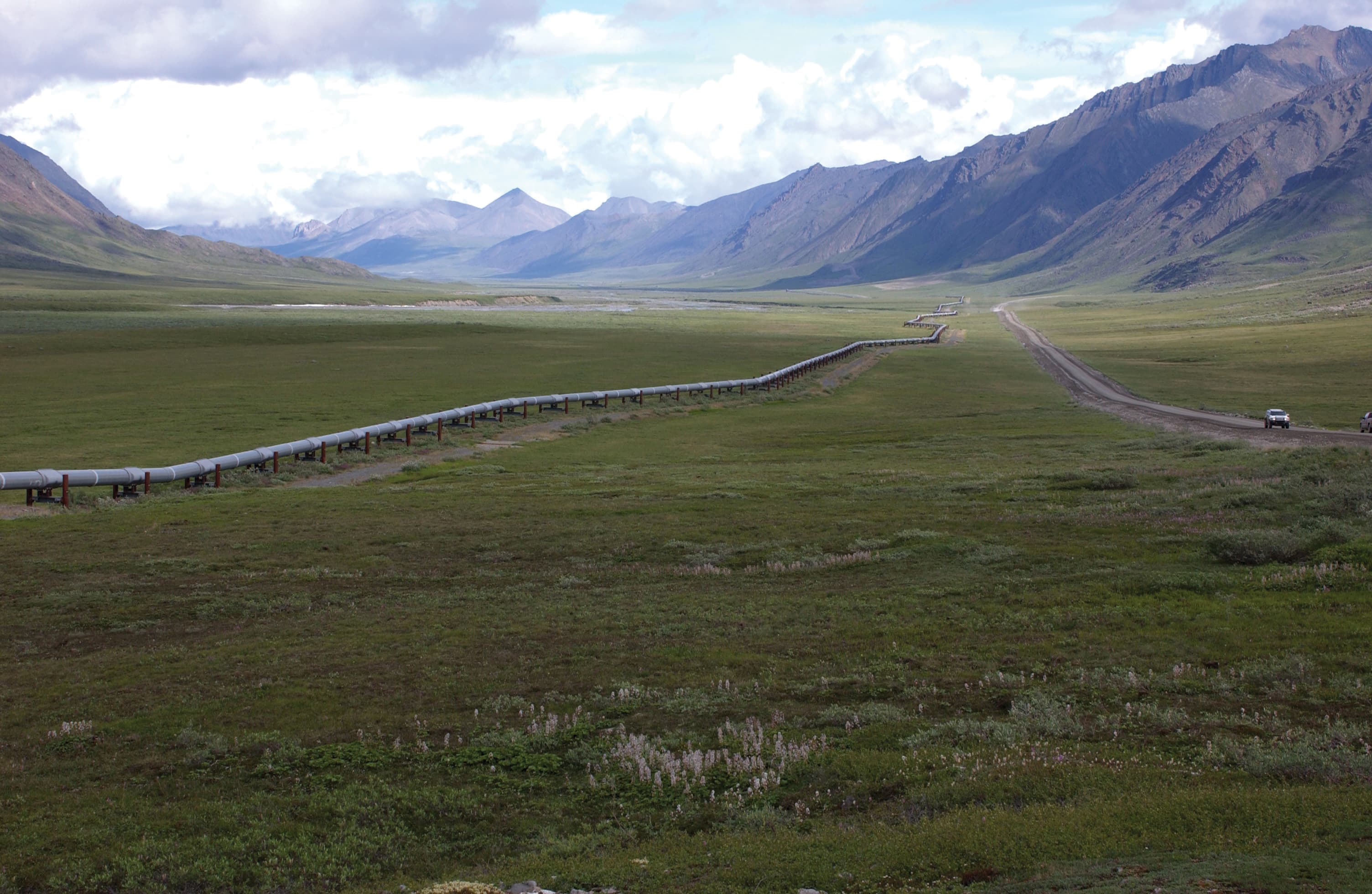
The reference structure Altman keeps naming is the Alaska Permanent Fund, the state sovereign wealth vehicle established in 1976 that pays annual dividends to Alaska residents out of the state's oil royalties. It was valued at $91.2 billion as of May 31, per the Euronews summary of the FT — a shade over twice the OpenAI paper stake. Altman's twist, he told the FT, is to substitute compute for crude.
That metaphor survives about three seconds of scrutiny. Alaska sold physical barrels of oil into a public market at a price the market set. OpenAI does not sell tokens into a public market at a price the market sets. It sells them, at prices OpenAI sets, to enterprise customers whose access is now subject to executive-branch clearance — the same customer-by-customer regime that took Anthropic Fable 5 offline for nineteen days in June. The comparison Altman is reaching for is a public commodity paying a public dividend. The thing he is actually offering is a paper stake in a company that Washington already reviews before every model launch.
The other three labs did not sign anything
Per the FT reporting, the proposal extends beyond OpenAI. Altman is asking Anthropic, Google, and Meta to contribute matching five per cent stakes into the same vehicle. Not one of the three named has, in the reporting, signalled interest.
That is unsurprising. Structurally, the pitch is one lab — the one with the largest paper valuation and the most political heat this quarter — volunteering to redistribute a fraction of everyone else's equity while retaining the framing rights on what the vehicle does. If you are Sundar Pichai and Bessent's phone log has your name on it because Sam Altman put it there, the polite response is that Google's cap table is a matter for the Google board.
Anthropic has, separately, floated its own "digital dividend" concept funded by AI-sector taxation, per Euronews' summary of the same FT reporting cycle. The two proposals aim at overlapping political anxieties from different chairs. Neither has legislative text.
Sanders wants ten times as much
The oddest paragraph in the FT report is the one that names Sanders. In June, Senator Sanders filed the American AI Sovereign Wealth Fund Act, which seeks fifty per cent of the voting shares of major U.S. AI companies via a sovereign vehicle his office valued at $7 trillion — enough, his office said, to pay every American a $1,000 annual dividend. That is a fund ten times the equity, one hundred and sixty-five times the size, from the same companies. Sanders' response to the Altman pitch, per the FT chain: it is "a watered-down alternative to real public ownership."
The strategic point of Altman placing the call to Sanders is not that Sanders will accept five per cent. Sanders has, on the record, rejected five per cent. The strategic point is that once Altman has been photographed in a conversation with the senator who wants fifty, the five-per-cent number becomes the moderate position by default. That is a manoeuvre the DC lobbying playbook teaches in the first week, and it is a coherent thing to do. It is also the closest thing to strategy in the entire proposal.

What this means
Three things are true at once, and they do not fit together neatly.
- The stake is not the point. No one in the FT reporting believes Congress will pass a vehicle to hold five per cent of four private AI companies before the 2026 midterms. The sources describe the talks as "preliminary and conceptual." The value of the proposal is being seen to have proposed it — during the same week Washington was reviewing whether OpenAI's next model could ship at all.
- The op-ed is the point. Altman's July 1 FT piece asked for democratic-institutions-led governance and then, twenty-four hours later, the exact institution named in the op-ed was offered equity. The narrative arc — governance is a job for democratic institutions, here is equity for the largest of those institutions, please clear our next model — closed on Wednesday when Commerce signed off. The GPT-5.6 rollout the day after is the visible resolution.
- The Alaska analogy does not carry the weight it is being asked to carry. Alaska paid dividends from a commodity it sold to the world at a market-clearing price. OpenAI does not sell into that kind of market. Any five-per-cent stake would sit in a paper vehicle, indexed to whoever writes the next OpenAI cheque, held by a government that already reviews the product before it ships. That is not a sovereign wealth fund. It is a footnote in a lobbying strategy.
What to watch
- Whether Anthropic, Google, or Meta issue on-the-record responses to the matching-stake ask in the next two weeks. Silence from all three is the current state.
- Whether Sanders' bill acquires co-sponsors. The optics of a five-per-cent floor make the fifty-per-cent ceiling more discussable, which is exactly the outcome the FT sourcing chain suggests Altman is banking on avoiding.
- Whether the FT publishes a follow-up naming its two unnamed sources. A leak out of an OpenAI board discussion behaves differently to one out of a policy think tank, and the story reads differently depending on which.
- Whether the OpenAI legal filings around the March funding round contain any provision for a government tranche. So far, none have surfaced.
The GPT-5.6 rollout on Thursday July 9 was the visible line-item. The Alaska pitch was the invisible one. Sam Altman said "a share of what the models produce" and Washington heard "five per cent of the cap table." Neither number is what actually changed hands this week.
* * *
Thanks for reading. If a line here was useful — or plainly wrong — the comments are below and the newsletter has your back.
Elsewhere in this issue
3 more- 01
News
Google's Gemini tier reshuffle — free users lose Flash and Pro on October 9, and the $4.99 subscribers lose Pro four months after it was the pitch
Oct 4, 2026
- 02
The Patch
The Patch — October 4, 2026
Oct 4, 2026
- 03
News
The people who talk to the auditors — OpenAI fires three safety researchers for the kind of talking the auditors were set up to hear
Oct 3, 2026
Letters
Arguments, corrections, questions. Anonymous comments allowed; be kind, be specific.