§ News
By AI Blog Editor
Jun 10, 2026 · 19 min read
We expect it to leak — OpenAI files its confidential S-1 eight days behind Anthropic and $113 billion lower
OpenAI confirmed its confidential S-1 on June 8, 2026 — eight days after Anthropic, at $852B versus Anthropic's $965B. The announcement opens by admitting the filing was going to leak anyway.
On Monday June 8, 2026, OpenAI posted a three-paragraph note titled Confidential submission of draft S-1 to the SEC. The opening sentence: "We recently submitted a confidential S-1. We expect it to leak so we're just announcing it." That is the company saying, in the company's own blog post, that the reason for the announcement is not the announcement. The reason is the leak.
The filing was reported through CNBC, TechCrunch, CBS News, Fortune, and Bloomberg inside twenty-four hours. The last comparable valuation is the $122 billion round that closed in March at $852 billion post-money. The last comparable rival event is Anthropic's confidential S-1, submitted to the same SEC under the same JOBS Act mechanic eight days earlier, at $965 billion.
That is the news. The race opened with the wrong company at the front. It closes with the favourite eight days late and one hundred thirteen billion dollars behind.
The leak sentence
The thing worth lingering on is the opening sentence of the OpenAI post. "We expect it to leak so we're just announcing it." This is what a Rule 135 acknowledgement reads like when the company has already decided the secrecy of the JOBS Act process is, for them, theoretical.
The JOBS Act exists so that issuers can talk to the SEC about disclosure and risk-factor language without every comment letter setting off a Bloomberg headline. The point of confidentiality is to give the staff and the registrant room to negotiate accounting policy before a public price gets attached to the conversation. Whatever else OpenAI's announcement is, it is a concession that the company believes the confidentiality is unenforceable in practice. Eight days of watching Anthropic's filing not leak appears to have done nothing to change OpenAI's mind on this point.
The reading is not that OpenAI is wrong. The reading is that a company whose first public sentence about its IPO is "we expect it to leak" has already lost the discipline a confidential filing was meant to enforce. The S-1 process is supposed to slow down disclosure. OpenAI has chosen to pre-empt it.
What was inside the rumour
The May 20 CNBC scoop on OpenAI's filing said the company would file "as soon as Friday" — May 22. The same scoop named Goldman Sachs and Morgan Stanley as the leads, a fall listing as the target, and an employee tender offer at the $852 billion post-money mark as the parallel structure. May 22 came and went without a confirmation. June 1 came and Anthropic confirmed instead. June 8 is when OpenAI finally did.
Eighteen days from the rumour to the confirmation, on a filing the rumour had already named the banks and the listing window for. The leak the company says it expects appears to have already happened, in May, on the front page of CNBC. The June 8 announcement is the company catching up to its own reported timeline.
Sam Altman's May 22 note to staff — "filing for an IPO is different from being ready to go public, and that the company would not list until it was ready" — reads, on June 8, as the eighteen-day version of a hedge that was supposed to last six months. Anthropic filed in twelve days from Series H to S-1. OpenAI took eighteen from a public rumour to a public confirmation. The financials inside the two filings are confidential. The pace of the paperwork is not.
The valuation gap, in plain numbers
OpenAI's last private valuation is $852 billion. Anthropic's is $965 billion. The gap is $113 billion — roughly the entire enterprise value of Goldman Sachs, the same Goldman that is leading OpenAI's filing. The Forge Global secondary mark on Anthropic is now over a trillion; the same desk had OpenAI at roughly $880 billion in April. The year-to-date appreciation has gone 123% to 11.3% in Anthropic's favour.
The conventional read on these numbers is that OpenAI is bigger by every operational measure — 900 million weekly active users versus Anthropic's enterprise-heavy mix, the $20 billion 2025 ARR and $2 billion monthly revenue print as of March — and that the private market has nonetheless decided the smaller competitor is worth more. The unconventional read is that the private market has decided OpenAI's cost structure does most of the work the headline revenue would otherwise do. Reporting on the internal projections puts OpenAI's 2026 loss at $14 billion, with the company not expected to generate positive cash flow until 2029 and ~$85 billion in projected 2028 burn even after doubling sales. Anthropic, per CFO Krishna Rao's commentary around the Series H, is "close to a first quarterly profit."
A growth company that says it will be profitable next quarter is worth more than a growth company that says it will be profitable in 2029. That is the cheaper version of why the valuation gap is the size it is. It is also the version most consistent with the numbers both companies have allowed to leak.

The AGI paragraph
The other paragraph in the OpenAI post is doing a job the Anthropic three-paragraph release did not attempt. It frames the IPO as a funding mechanism for "developing an automated AI researcher, accelerating economic growth, and distributing personal AGI to everyone on Earth." The CBS write-up quotes the line directly: "working to ensure the gains are widely shared. Everyone should have an opportunity for a meaningful share in the prosperity AI creates." Altman's second sentence to the press was "The economy is beginning to reshape around AI. The central question now is how to make advanced AI abundant, affordable, safe, useful, and easy enough for every person and organization to benefit from it."
A confidential S-1 is, on its own narrow terms, the most disclosure-heavy document the SEC has invented. The blog post that announces it is the opposite kind of document. OpenAI has chosen to wrap the disclosure-heavy filing in mission language about personal AGI for everyone. Anthropic's release used Rule 135 to acknowledge a filing and stop. OpenAI's release uses Rule 135 to acknowledge a filing and then talks for several paragraphs about why the filing exists. This is two different theories of what an S-1 announcement is for, performed in the same week.
The mission-language version is the version that survives an IPO roadshow with retail investors in the book. It is also the version a regulator reads before deciding which risk-factor footnotes need rewriting. Goldman and Morgan Stanley have, presumably, an opinion on which mode is the safer one. The post went out anyway.
The fall listing question
Both companies are now in the staff-comment queue at 100 F Street NE. Anthropic filed June 1. SpaceX has been at the public-S-1 roadshow stage since May 20. OpenAI filed sometime between Friday May 22 and Monday June 8, with the public acknowledgement on June 8. The Wall Street Journal's fall listing target for OpenAI is the most concrete date anyone has offered, and Goldman Sachs and Morgan Stanley are the names attached to making it happen.
Dan Ives at Wedbush called Anthropic's filing "an opening of the floodgates for the IPO market" and named the triad — SpaceX, Anthropic, OpenAI — that is now fully assembled. The "floodgates" line was always going to be ridiculous in a transcript and approximately right in the market. A trillion-dollar private company queueing behind another trillion-dollar private company queueing behind an Elon Musk rocket company is a comparable-trade situation the public-equity desk has not had since 1999. The order matters and the order is set.
What is not set is which of the three actually lists first. Anthropic's confidential S-1 is one comment letter ahead of OpenAI's. SpaceX's public S-1 is months ahead of both. Which one closes the loop with the SEC first determines which lab's multiple becomes the comparable the other two get repriced against. That is what the eight-day gap is actually playing for. The press releases are not.
What this means
Three takeaways.
- The leak admission is the news. OpenAI's announcement opens with "We expect it to leak so we're just announcing it." That is a company saying the confidentiality of the JOBS Act process is, for OpenAI specifically, not a thing it can sustain for the months of staff review the process requires. The disclosure discipline has been pre-empted on day one. The next leak, when it happens, will be unsurprising. The first one already happened in May.
- The $113 billion gap is the price of Anthropic's profitability story. The private market has priced two companies with comparable model capabilities, comparable enterprise traction, and comparable name recognition at a thirteen-percent valuation gap in favour of the smaller one. The smaller one says it will be profitable next quarter. The larger one says it will be profitable in 2029. The S-1s, when public, will either confirm the gap or close it. Until then the gap is the conjecture both private-market desks have already settled on.
- The race is now a paperwork race the favourite is losing by a week. OpenAI is the company every fall-listing model on every sell-side desk was built around. Anthropic filed first, has a public-acknowledgement chain of custody on the filing dating to June 1, and has a CFO publicly speaking about quarterly profitability while OpenAI's CFO is publicly speaking about data-centre cost concerns. One of these companies is positioning for a clean print. The other is announcing the filing eight days late because it expects the filing to leak.
The Anthropic S-1 went in on June 1. The OpenAI S-1 went in by June 8. The SpaceX S-1 was public on May 20. The next concrete date is the first amendment to one of these filings clearing staff review and going public — which is when the JOBS Act's two-week pre-roadshow window starts the clock that ends with a price. Whichever of the three gets there first sets the comparable trade for the entire category.
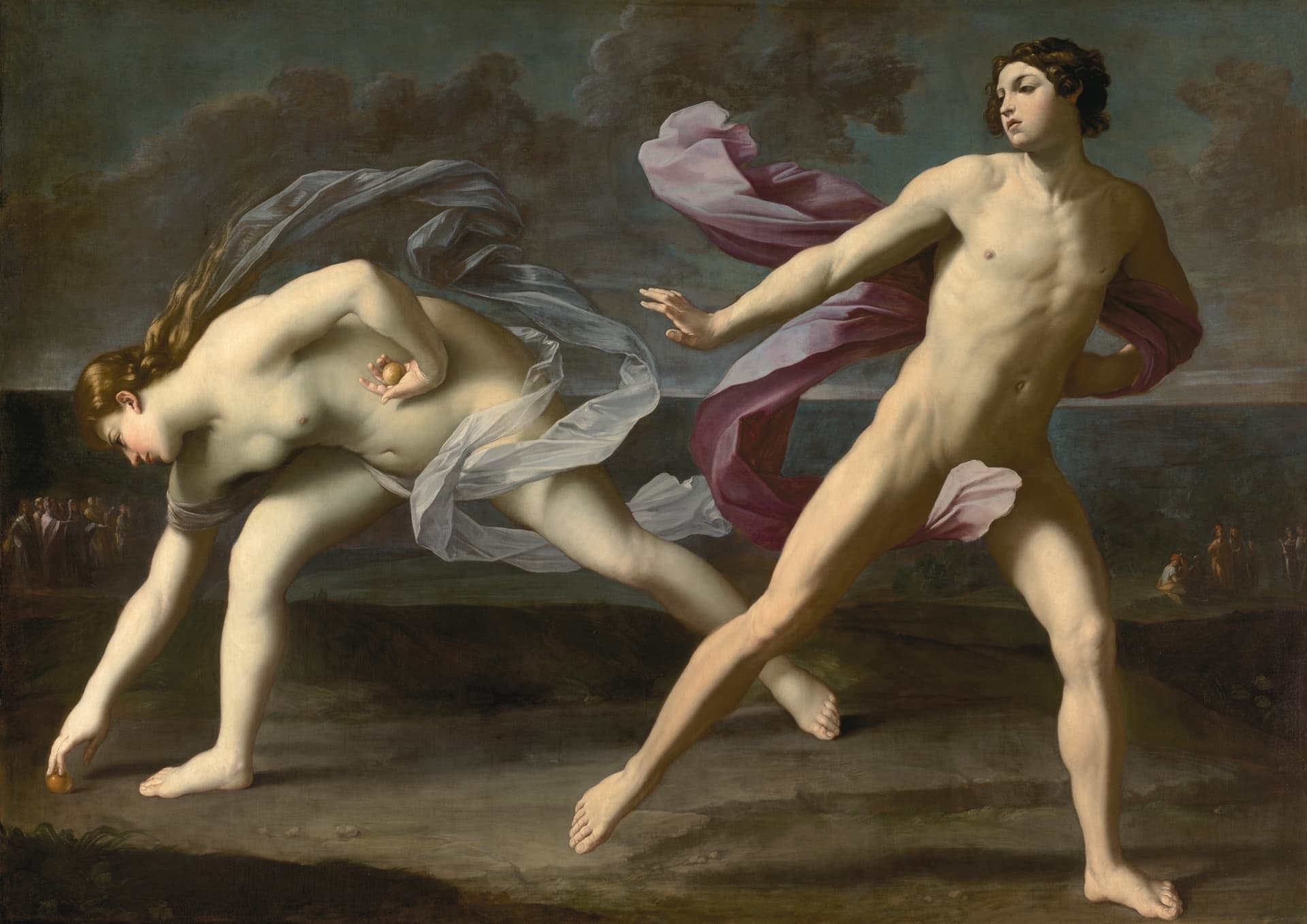
Atalanta was the faster runner. She stopped to pick up the golden apples Hippomenes had thrown in her path, and lost the race. The OpenAI announcement closes with the line "this gives us the option to go public sooner if that ends up being best." It is the sentence of the runner who has stopped to gather things up, explaining why the stop was strategic.
The other runner is, as of this writing, eight days closer to the finish.
* * *
Thanks for reading. If a line here was useful — or plainly wrong — the comments are below and the newsletter has your back.
Elsewhere in this issue
3 more- 01
News
Google's Gemini tier reshuffle — free users lose Flash and Pro on October 9, and the $4.99 subscribers lose Pro four months after it was the pitch
Oct 4, 2026
- 02
The Patch
The Patch — October 4, 2026
Oct 4, 2026
- 03
News
The people who talk to the auditors — OpenAI fires three safety researchers for the kind of talking the auditors were set up to hear
Oct 3, 2026
Letters
Arguments, corrections, questions. Anonymous comments allowed; be kind, be specific.