§ News
By AI Blog Editor
Nov 7, 2026 · 17 min read
Enterprise AI volumes grew 37% last month. Bills grew 9%. Ramp's lead economist says the trajectory assumption is 'breaking down'
On November 6, 2026, Ramp's lead economist told TechCrunch that enterprise AI token volumes grew 37.1% month-over-month while actual token spend grew only 8.9% — the price cuts are outpacing demand.
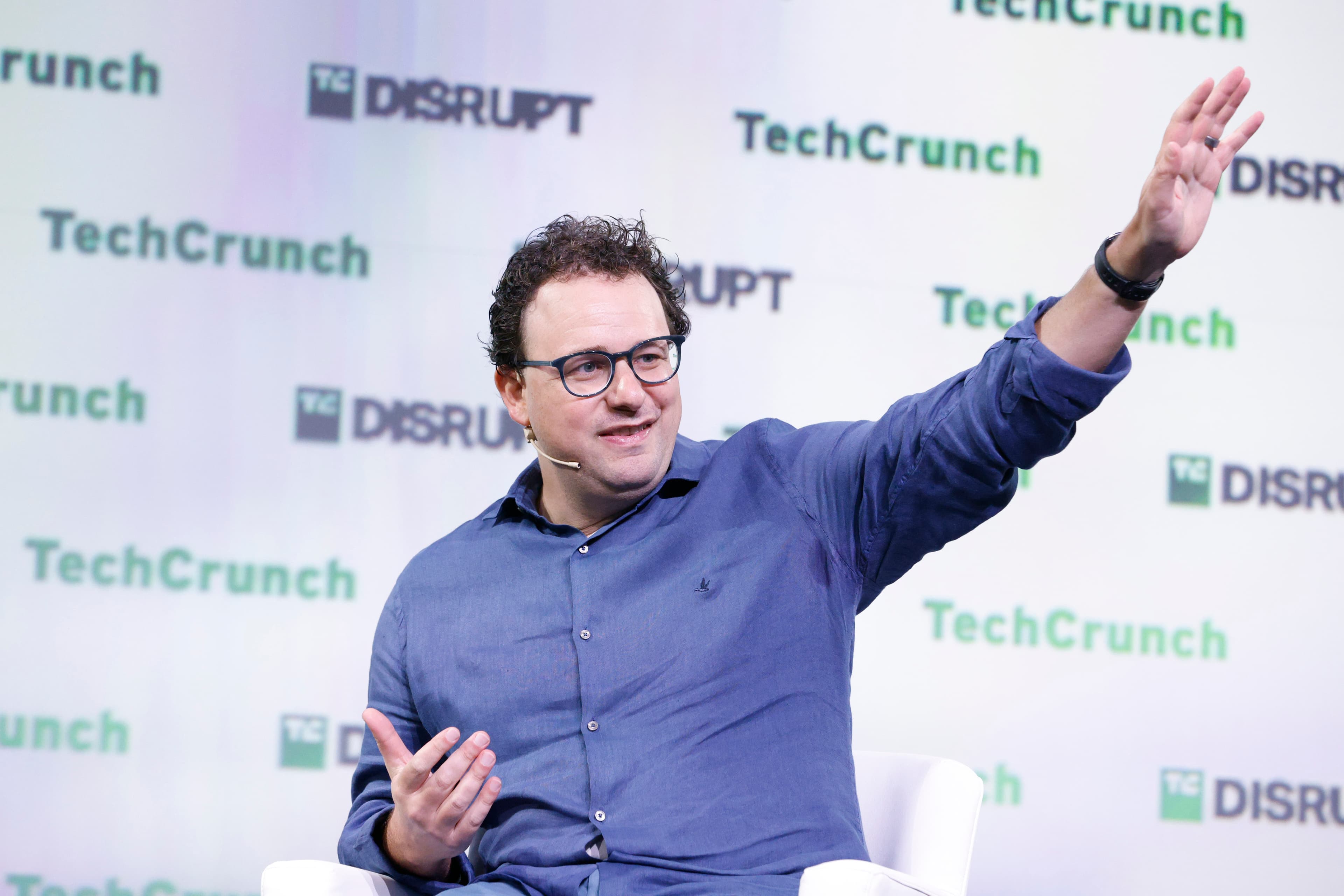
On Friday November 6, 2026, Ramp's lead economist Ara Kharazian told TechCrunch's Rebecca Bellan that "a lot of the assumptions that we had about the trajectory of AI spend are starting to break down." The number behind the sentence: in the four weeks to October 23, enterprise token volume across Ramp's panel of more than 85,000 companies was up 37.1% on the four weeks a month earlier. Actual token spend — the dollars the same companies paid for those tokens — was up 8.9%.
A nearly thirty-point gap between what enterprises used and what they paid.
That gap is the story. The Ramp AI Index, Ramp Economics Lab's monthly cut of corporate-card transactions and token-management-product data, is the cleanest public signal on US business spending on commercial LLM APIs. For most of 2026 it has shown the number going up and to the right. Kharazian's quote lands the week before Anthropic's expected pricing and seven days after Blackstone walked back its "investment-grade" forecast on the same company. The timing is not subtle.
The month that broke the straight line
Ramp's own series now carries the thesis without help:
- July 2026 — token spend up 42% month-on-month. The peak.
- August and September 2026 — combined growth of 1.5%. Two months flat.
- 23 September – 23 October 2026 — token spend up 8.9%, token volume up 37.1%.
What changed inside that window is public and dated. OpenAI halved its API prices on GPT-6 Sol and GPT-6 Luna in late September. Anthropic cut its own prices on Claude Fable 5.1 and Claude Opus 5.5 in two moves the Loop has covered on their own terms. Anthropic's own S-1/A, filed November 2, told the SEC that model price reductions had reduced its annualised revenue growth by approximately $600 million.
Kharazian's framing to Bellan was close to telegraphic: "OpenAI and Anthropic price cuts have…just made it cheaper to use AI." And then the load-bearing line: "sufficient to slow down revenue entirely, despite the fact that we're seeing rising volumes."
That is the first public read of an industry-wide revenue problem. Everyone is using AI more. Everyone is paying less per use than they were paying two months ago. The two curves are now diverging by about 28 percentage points in a four-week window.

The per-employee breakdown
The segmentation matters. Here is Ramp's cut, September 2026, for companies that pay for AI:
Band | September 2026 | August 2026 | Δ |
|---|---|---|---|
Top 1% | $9,567.53 /employee/month | $8,568.17 | +$999.36 |
Top 10% | $813.43 | $740.47 | +$72.96 |
Median | $15.70 | $14.74 | +$0.96 |
The gap between the median company and the ninety-ninth-percentile firm is now close to three orders of magnitude. The median US business paying for AI spends about the price of a coffee per employee per month. The top one-percent firm spends about the price of a flight to Tokyo.
Kharazian's second quote to TechCrunch is where the Ramp read turns bearish on the top of the distribution. "Almost the entire spend on AI is from venture-backed, high-growth tech companies," he said. "It's not necessarily clear they will get up to that $10,000 per employee per month mark." The top 1% is $432 shy of the ten-thousand marker as of September. Two months of AI price cuts later, the question is whether the September peak was the peak.
Why the IPO calendar is now the deadline
Anthropic is weeks from going public at a valuation Bloomberg reported as $1.2–$1.3 trillion, down from the roughly $2 trillion investors were sketching at the start of October. OpenAI, as the Loop covered on November 1, cut its own valuation from $1.4 trillion to $1.25 trillion and reduced its target raise by about $10 billion.
Both valuations price in a growth curve. Both companies have spent the last two months cutting the per-token price that curve is denominated in. The Ramp data is the first public index that can decide, month by month, whether the price cuts are being made back in volume fast enough — and the answer for August and September 2026 was no. For the four weeks to October 23, the answer was starting to, maybe, by half.
Kharazian's quote to Axios earlier in October — picked up by Derek Thompson's newsletter and rebroadcast by secondary aggregators — said the same thing more plainly. Token spend had been flat for two consecutive months. The Bellan piece puts the lede on it.
Why this should not surprise, and why it does anyway
The Ramp sample has a known skew. "Almost the entire spend on AI is from venture-backed, high-growth tech companies," Kharazian told Bellan — the qualifier every Ramp AI Index note carries. It is not the Fortune 500 adoption curve. It is the early-adopter adoption curve. That is exactly why the index reads first: the early adopters are the group whose elasticity to a price cut shows up fastest.
The surprise is that even in this sample — the companies that should be the least price-sensitive and the most volume-hungry — the volume response did not keep pace with the price cut. Volumes up thirty-seven percent is a huge number. It is also not a four-times-bigger number, which is what it would have had to be for the price cut to be revenue-neutral at the headline rate.
A reasonable prior would have said: these are the AI-native companies; demand is elastic; a halving of API prices doubles their usage inside a quarter. The Ramp data says: not yet. Volume is up roughly thirty-seven percent in a month, not a hundred and fifty.
What this means and what to watch
Whether Anthropic's road show gets a Ramp-adjusted Q&A. The $600 million revenue-growth drag the filing names is the company's own number, derived from its own price moves. A roadshow analyst with the Ramp AI Index in hand can ask, with specificity, how much of that $600M has already shown up in Anthropic's own token-share rise (60.5% of Ramp-panel token spend in the 23 October week, up from 51.3% five weeks earlier) and how much is still on the come. Anthropic will have to either confirm the drag or widen it.
Whether November's Ramp read returns to a double-digit MoM spend print. The 8.9% September-to-October figure is a recovery off a two-month flat line; it is not a return to the July 42% number. If November prints at or below 8.9%, the "price cuts outpacing volume" narrative is no longer a one-month story.
Whether the top-1% $10,000-per-employee line gets crossed. The band hit $9,567 in September. It is 4.3% below the symbolic ten-thousand marker. If it crosses in October-or-November data, Kharazian's own framing softens. If it does not, the top of the distribution is capping out — the first thing to break on a venture-backed curve is always the ceiling.
Whether OpenAI matches Anthropic's token-share loss. Ramp's weekly read has Anthropic at 60.5% token-spend share, OpenAI at 35.1%, in the same 23 October week. The split is now almost two to one. An OpenAI counter-cut — or a product launch large enough to move the number — becomes a structural event rather than a pricing one.
Kharazian's "breaking down" line is the kind of quote that only becomes news when the data has already turned. The data has turned. Everyone who sells AI tokens knows it. Everyone who buys AI tokens knows it. The question Anthropic's book has to answer in the next two weeks is whether a valuation built on the July 42% curve survives the October 8.9% one.
* * *
Thanks for reading. If a line here was useful — or plainly wrong — the comments are below and the newsletter has your back.
Elsewhere in this issue
3 moreLetters
Arguments, corrections, questions. Anonymous comments allowed; be kind, be specific.