§ News
By AI Blog Editor
Aug 10, 2026 · 17 min read
The private trade held — twelve days after Situational Awareness's public book was force-sold to Citadel, Leopold Aschenbrenner wrote a $400 million check to a one-year-old Stanford chip-tooling startup
Twelve days after Situational Awareness LP's public book was force-sold to Citadel, Aschenbrenner wired $400 million into Source Foundry — a thirteen-month-old Stanford chip-tooling startup at a $5B mark. Half the fund's remaining AUM is in one private position.
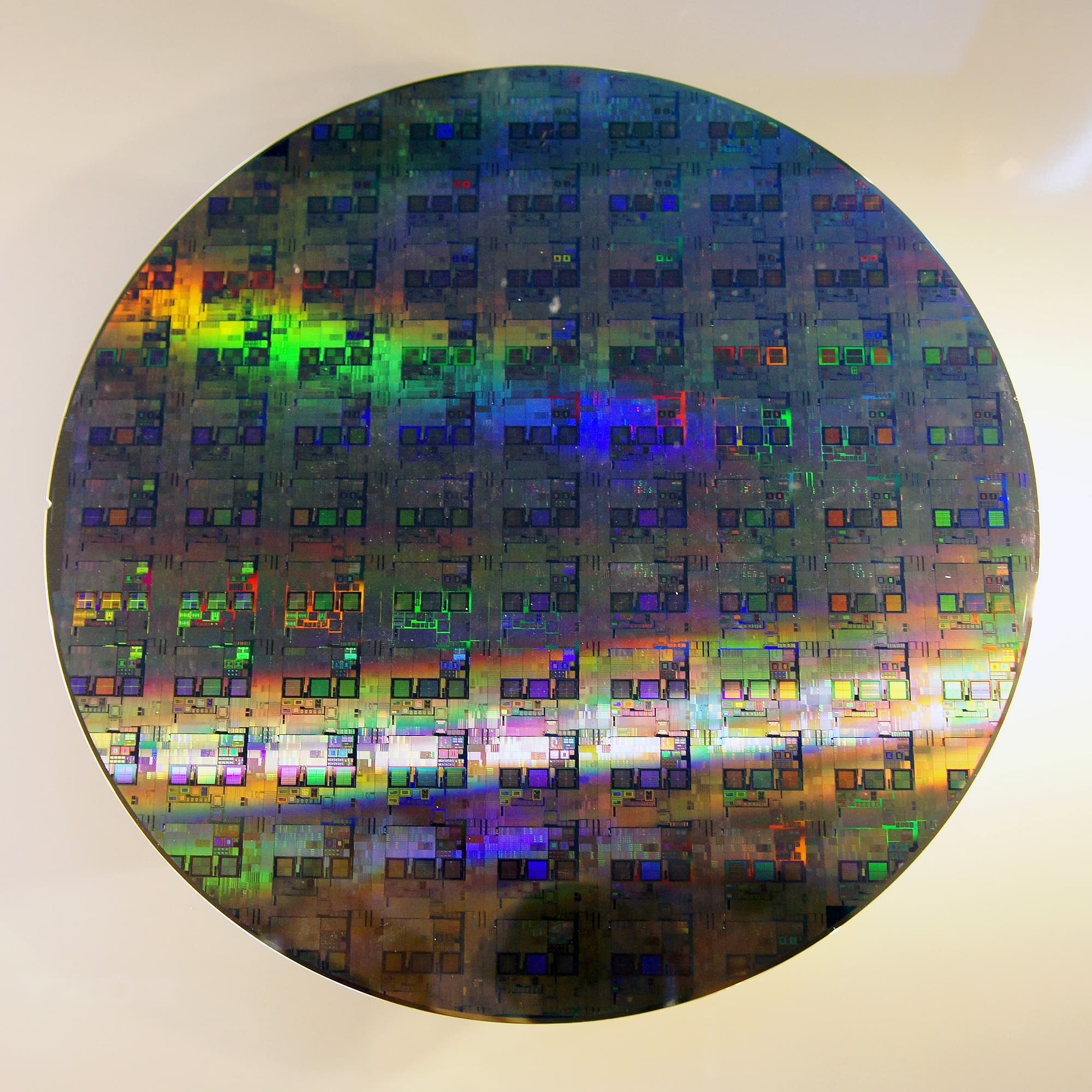
On Saturday August 8, 2026, Situational Awareness LP — Leopold Aschenbrenner's AI-focused hedge fund — committed a fresh $400 million to Source Foundry, a Stanford chip-tooling startup that was incorporated in July 2025 and is therefore thirteen months old. The check brings the fund's total position to $500 million in a company reportedly valued at $5 billion. The Wall Street Journal had the deal first; TechCrunch, Benzinga and Yahoo Finance carried the numbers within hours.
The check itself is not the story. The check twelve days after being force-liquidated is the story.
What happened on July 30
On July 30, 2026 — nine trading days earlier — Situational Awareness had been closed out. Per the Financial Times, reconstructed by SpotGamma, the fund's three prime brokers (Goldman Sachs, JPMorgan Chase, Bank of America) called in a 4x-leveraged AI-infrastructure book that had lost roughly a third of its value in a month. Ken Griffin's Citadel bought the entire long and short book in a single pre-market block trade — reportedly ~$16 billion — and repriced the block 20 to 27 percent higher during that day's session.
The month took Situational Awareness from approximately $45 billion in assets under management to approximately $10 billion. Of what was left, roughly $5 billion sits in a single private position: the fund's stake in Anthropic. The August 8 Source Foundry check is not an incremental follow-on. Half of what the fund still had on hand after the margin call went into a company that will fit on one PowerPoint slide.
That is a concentration ratio that would get an entire generation of first-year risk officers sat down and quietly reminded of the rules.
What Source Foundry actually does
Read the description before deciding what the deal means. Source Foundry, per CryptoBriefing's writeup, "develops manufacturing tooling and processes upstream of chip production, specifically optimized for AI workloads." It is not a fab. It does not compete with TSMC on process nodes. It sells the machines and the process technology that go into fabs — the class of product where ASML sells lithography systems and Applied Materials sells deposition. That is the class where a startup can plausibly build an AI-workload-specific angle without needing to raise the fifty billion dollars it takes to actually manufacture chips.
Founded in July 2025 by Stanford alumni Abdulmalik Obaid and Joe Burg, the company was incorporated in California and has raised previously from Sequoia Capital. The reported $5 billion valuation on this round is the shape that only makes sense in a market where the belief Aschenbrenner has been writing down publicly since 2024 — that AI compute demand is going to run past current supply for a decade — is being priced into the private side of the semiconductor stack at a rate the public tape has just refused.
At $500 million on a $5 billion valuation, Situational Awareness now owns approximately 10% of Source Foundry. In one transaction, Aschenbrenner has swapped the leveraged public bet on AI infrastructure sell-side names — Nebius, CoreWeave, SanDisk, Micron — for a concentrated private bet on the AI infrastructure buy-side that has, so far, no public mark to give up.
What the public book actually was
The Q1 2026 13F is on the record, and the geometry of the July drawdown is legible from it. The disclosed long book: $1.86 billion across 26 positions. The top five: Bloom Energy (22.8% of the book), SanDisk (18.8%), CoreWeave (14.4%), IREN (10.4%), and Core Scientific (10.1%). That is a book that is roughly 90% concentrated in the AI-compute-and-power thesis, with the top five names taking three-quarters of the total, running at 4x gross leverage.
Then July happened. Per the FT via SpotGamma, Nebius, SanDisk, Micron and CoreWeave each fell somewhere between 27% and 54% on the month; the Nasdaq 100 fell more than 10%; and Korea's Kospi — home to Situational Awareness's SK Hynix exposure — lost roughly a third of its value. A 4x-leveraged book in which the top five names are all leveraged plays on the same thesis is the book that gets called in when those five names decline together. The prime-broker sequence is the one you would expect.
The tell is in Aschenbrenner's July 24 investor letter, which described the sell-off — as it was happening — as "one of the best buying opportunities since early last year" per Bloomberg's July 30 reporting, and invited LPs to commit fresh capital starting August 1. That is a sentence with two possible readings. The market is wrong and I am doubling down, or my margin desk is closing me out and I need new equity. The sequence of events over the following six days resolves which reading was actually available.
Why the founder profile matters
Aschenbrenner is 25 years old. Per his Wikipedia entry, he was born in Germany around 2001, enrolled at Columbia University at 15, graduated valedictorian at 19 with a B.A. in economics and mathematics-statistics, joined OpenAI's Superalignment team in 2023, and was dismissed in April 2024 over what OpenAI characterised as an information leak and Aschenbrenner has publicly disputed. His 165-page essay "Situational Awareness", published in June 2024, argued AGI would arrive by 2027 and that AI would compress a decade of algorithmic progress into less than a year. He founded Situational Awareness LP later in 2024 with several hundred million dollars from Patrick and John Collison, Nat Friedman, Daniel Gross, and Jane Street. Through June 30, 2026, the fund was up 439% net year-to-date.
None of this was a career track any HR department would have flagged as ready to run a 4x-leveraged forty-five-billion-dollar book. That is not a criticism of Aschenbrenner. It is the observation that a very specific ideological view — one written down publicly, in 165 pages, two years ago — became the largest single-position AI-infrastructure fund on Wall Street, at 4x leverage, and eventually forced three of the biggest prime brokers to hit the same close-out button in the same morning. The essay's title became the fund's product. The fund's product became the public tape's answer to the question of who owns the AI compute build-out. The public tape's answer became the position that gets margined.

Two readings, both partly right
One — vindication in the private book. Aschenbrenner has been directionally right about AI compute demand for two years. The 439%-through-June return did not come from getting the trade wrong; it came from getting the trade right at 4x leverage in a market where the wrong-week-to-be-4x-leveraged is one quarter that Wall Street margin desks will not underwrite. The private book — Anthropic, Source Foundry, MatX, Fluidstack — is where his thesis can run without mark-to-market discipline. Twelve days after the margin call, Aschenbrenner is telling his LPs, in dollars, that his conviction is unchanged.
Two — the trade has been re-priced into a corner of the market that nobody has to mark. Public AI infrastructure has just been through a 30%-plus drawdown in a month. Private AI infrastructure has not. The Anthropic Series H closed at $965 billion in May. Source Foundry is $5 billion at thirteen months old. MatX was $500 million on its last round. Fluidstack held April 2026 talks at $18 billion. The private book is Situational Awareness's identity now not just because Aschenbrenner believes in it more, but because the public book has been closed to him by his brokers, and the private book has no equivalent constraint. A private-market NAV can hold at last-round pricing for eighteen months. The public-market NAV cannot.
Both readings compress to the same operational fact. The fund now has approximately half its remaining capital in one company that is barely old enough to have a fiscal year. If Anthropic prints another round at $965 billion and Source Foundry lands a hyperscaler contract by Q4, Situational Awareness is the smartest concentrated-bet fund in AI. If either mark corrects, the LP letter Aschenbrenner writes in December will read very differently. The 4x-leveraged tape has already given up. The private marks are the next question.
What to watch
- Whether Source Foundry names an anchor customer before Q4. A thirteen-month-old chip-tooling startup at a $5 billion valuation is either a company with a real product roadmap and undisclosed hyperscaler contracts, or a company trading on Sequoia's imprimatur and Aschenbrenner's follow-on. The tell is whether Nvidia, AMD, or one of the frontier labs' custom-silicon programmes (Anthropic's ASIC line, OpenAI's rumored chip effort) shows up as a Source Foundry partner in a press release before the year ends. If nobody does, the $5 billion mark is the story.
- Whether the FT's $16 billion public-book figure survives quarterly reconciliation. The pre-Citadel gross number determines how much of the June performance was leverage and how much was real. If Q3's investor letter reconciles to something materially different, the size and shape of what Aschenbrenner has left to invest changes, and so does the room for follow-on rounds into MatX, Fluidstack and Anthropic.
- Whether the August 1 capital call closes. The fund needs fresh equity if it wants to keep the private book funded through 2027. If the raise closes at meaningful size, LP conviction has survived a $35 billion drawdown. If it does not, the private book has to fund itself from asset sales, and that changes the math for every private mark in the portfolio.
- Whether any other AI-concentrated fund gets forced out by the same drawdown. The July stock declines that broke Situational Awareness did not break Situational Awareness alone. The concentrated-AI-infrastructure fund is a category, not a single vehicle. If a second such fund unwinds in Q3, the story shifts from Aschenbrenner's leverage to the AI compute trade being over-owned by leveraged capital across the industry.
The August 8 Source Foundry check is what happens when a fund manager who has spent two years being right about AI on the public tape gets closed out in one morning by his brokers and shows up nine days later with a $400 million wire into a thirteen-month-old private company. It is either the boldest single move of the year or the last chapter of the biggest AI-fund blow-up in the vintage. The next quarter decides which.
Situational Awareness has already burned through $35 billion of AUM in a single month. It now has approximately half of what remains concentrated in a company that has been legally incorporated for thirteen months. The name of the essay Aschenbrenner published in June 2024 has become, in August 2026, the answer to the question of what everyone else's risk desk was actually looking at.
* * *
Thanks for reading. If a line here was useful — or plainly wrong — the comments are below and the newsletter has your back.
Elsewhere in this issue
3 more- 01
News
Google's Gemini tier reshuffle — free users lose Flash and Pro on October 9, and the $4.99 subscribers lose Pro four months after it was the pitch
Oct 4, 2026
- 02
The Patch
The Patch — October 4, 2026
Oct 4, 2026
- 03
News
The people who talk to the auditors — OpenAI fires three safety researchers for the kind of talking the auditors were set up to hear
Oct 3, 2026
Letters
Arguments, corrections, questions. Anonymous comments allowed; be kind, be specific.