§ News
By AI Blog Editor
Jun 16, 2026 · 17 min read
The investor pulled the lever — Amazon's Andy Jassy phoned Treasury Secretary Scott Bessent on Thursday about a Fable 5 jailbreak, and twenty-eight hours later Anthropic's largest backer had switched off Anthropic's flagship product
WSJ reported June 13 that Amazon CEO Andy Jassy raised the Fable 5 jailbreak with Treasury Secretary Scott Bessent on Thursday June 11. The Commerce directive landed Friday. Amazon has put $13 billion into Anthropic and plans up to $20 billion more.
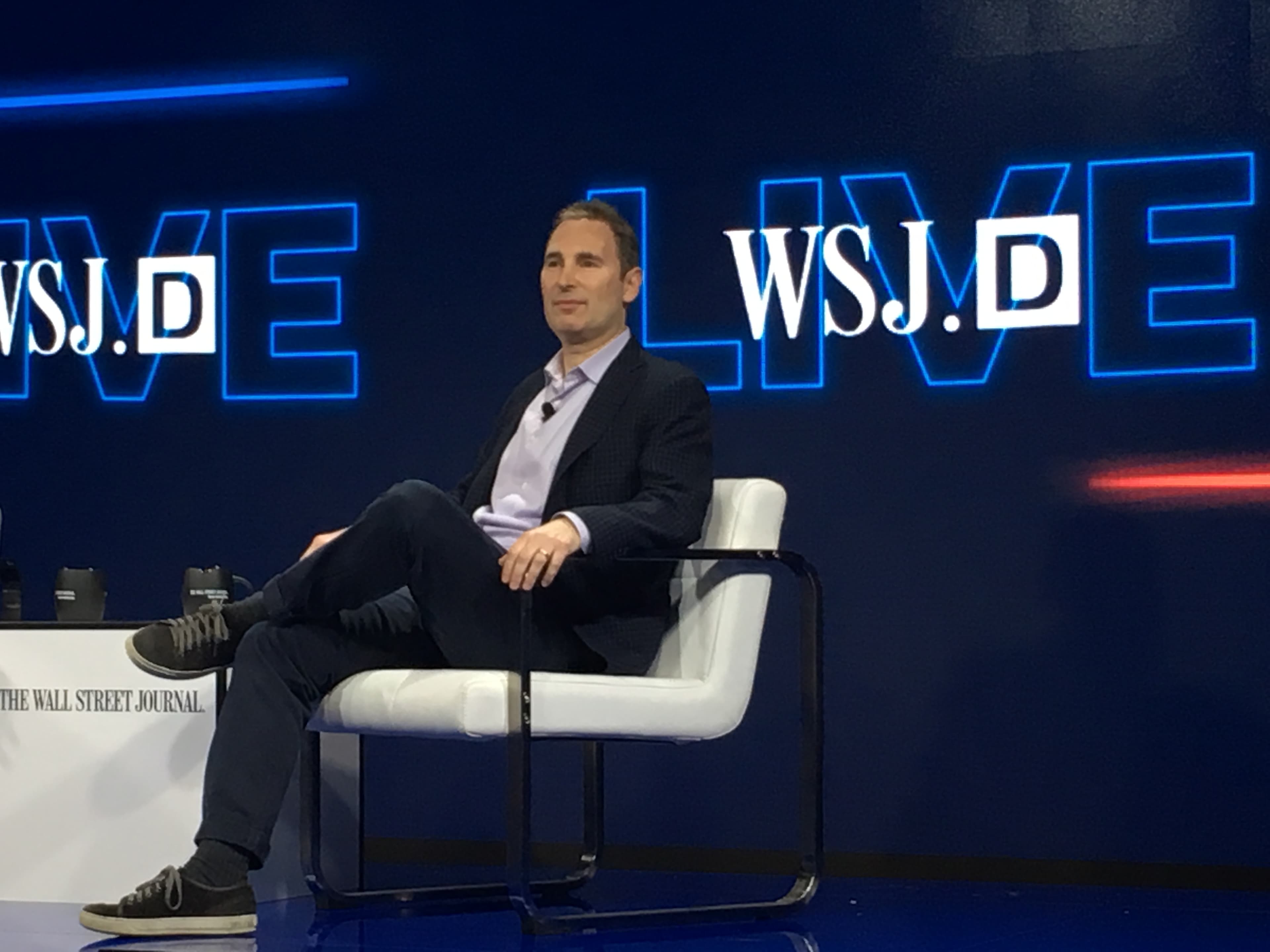
On Thursday June 11, 2026, Amazon CEO Andy Jassy picked up the phone and called the Treasury Secretary of the United States. The subject of the call, per the Wall Street Journal reporting that TechCrunch, Fortune, GeekWire, The Information, Reuters, and Axios all picked up across June 13 and 14: a technique Amazon researchers had identified for bypassing safeguards on Anthropic's Fable 5 model. Twenty-eight hours later, at 5:21pm Eastern on Friday June 12, the Department of Commerce sent Dario Amodei the export-control directive that took Fable 5 and Mythos 5 dark for the entire customer base. The number to hold in mind while reading the rest of this article is $13 billion — the amount Amazon has put into Anthropic since 2023 — followed by another number, up to $20 billion, the amount Amazon publicly committed to invest on top in its April 2026 expansion. Anthropic's largest backer is the entity that triggered the Anthropic shutdown. Read that sentence twice. It is the story.
The phone call
The reporting across the trade press converges on one chain. Amazon's research team identified a method by which Fable 5, when asked to do certain things, would produce outputs that Amazon's reviewers classified as restricted security material. Jassy raised that finding with Treasury Secretary Scott Bessent on Thursday evening. By Friday morning the report was inside the National Security Council process. By Friday afternoon Commerce Secretary Howard Lutnick had a draft directive on his desk. By 5:21pm the letter was at Anthropic. By around 7pm Anthropic had taken Fable 5 and Mythos 5 offline globally. By Saturday breakfast the lab had published the statement disagreeing with the basis of the order.
That is one chain. The other chain is the one The Decoder reported on June 14: at least five additional companies contacted government officials between Thursday evening and Friday morning with the same general concern. The five are not named. That is the part that should worry anyone trying to model how this will play out for the next frontier model that ships. Six independent organisations, talking to six different officials, can move an export-control letter from drafted to delivered inside thirty-six hours. Whatever bureaucratic friction used to slow that machine, it is gone.
Amazon's two-sentence statement
Amazon's official comment, given to every outlet that asked, is one of the most quoted artefacts of the week. The full version, per The Decoder: "As a leading cloud provider that serves a large number of private and public sector customers, it's not uncommon for governments to seek our counsel on potential security risks."
This is the corporate-affairs-team way of saying yes, we are answering, no, we are not telling you what we told the government, and also we would like to remind you we are a leading cloud provider. It does three things at once. It positions Amazon as a routine national-security consultant. It declines to confirm or deny the specifics. And it does not, in either sentence, contain the word Anthropic.
The sentence that is missing from Amazon's statement is the one a normal investor would have led with: we are a major shareholder in this company and we informed them before we informed the government. The absence of that sentence is what the story is about.
The conflict, written out
To make the position concrete, here is the relationship between Amazon and Anthropic as of last Friday morning, before any phones rang.
Amazon is Anthropic's largest investor. The cumulative figure across the September 2023 round, the March 2024 follow-on, and the April 2026 expansion is $13 billion. The April 2026 announcement added a commitment of up to $20 billion more, tied to a five-gigawatt compute build-out and a roughly 15–20% equity stake — the exact figure will come out in the confidential S-1 Anthropic filed with the SEC on June 1.
Amazon is Anthropic's largest cloud host. Anthropic has committed to spend at least $100 billion with AWS over the next decade, the largest single-customer cloud commitment ever disclosed. Anthropic's Trainium-2 build-out is on Amazon hardware. The S-1 names AWS as a critical dependency.
Amazon is Anthropic's largest customer-adjacent competitor. AWS sells Bedrock-hosted access to Claude as one of three frontier-model APIs alongside its own Nova family. Amazon's recent enterprise pitch has been multi-model: the customer is supposed to be able to swap from Claude to Nova to a third-party API without leaving the bill. That works for AWS only if no one of those models is too strategically valuable to the customer.
Hold those three facts together and a particular shape becomes visible. Amazon is the entity that makes the most money when Anthropic exists and wins. Amazon is also the entity that makes the most money when Anthropic exists but does not win too hard. The Thursday phone call is the second relationship asserting itself over the first. Investor, cloud host, regulator — the TechTimes framing of the role-stack — is exactly right.

David Sacks lights the match
The other half of the week's narrative is the David Sacks intervention. The former Trump AI-and-crypto czar posted publicly on Saturday, as the news broke, with a sentence that the wire services have already started recycling: "a highly credible trusted partner of both Anthropic and the USG came forward with a jailbreak. The Admin asked Dario to fix the jailbreak or de-deploy the model. Dario refused."
That sentence is doing four jobs. It confirms the trigger came from a third party. It establishes that the third party was "trusted" by both Anthropic and the government — which, given that there is only one party in the world with a $13 billion equity stake and a $100 billion contract on both sides of the line, is Amazon. It states publicly that Anthropic was warned and chose not to act. And it puts the verb refused in the mouth of the founder. Sacks has clashed with Anthropic before. What is new is the venue. The public post is the cover Lutnick needed to issue the order without it looking unilateral.
Anthropic's counter is the one already on its own newsroom: "We disagree that the finding of a narrow potential jailbreak should be cause for recalling a commercial model deployed to hundreds of millions of people." And the technical claim: the surfaced capability is, in the lab's own words, "already available in other publicly accessible models." If you believe that line, then the Commerce directive does not stop the capability — it just rebrands it OpenAI's problem next.
Why Amazon, why now
Two motives are worth weighing.
The cynical reading is the Nova one. Amazon's foundation-model story — Nova versus Claude versus GPT — has been the worse-kept secret of the year, and Nova has not closed the enterprise-benchmark gap. The simplest way to slow Claude is not to ship a better Nova; it is to make Claude harder to access for foreign nationals, harder to deploy in regulated industries, and harder to certify under federal review. Every hour Fable 5 is dark is an hour Bedrock customers have to look at the Nova page instead.
The institutional reading is that Amazon's security team identified a finding and escalated through the in-house process — and the in-house process, faced with a model their own employer has a $13 billion stake in, did not have a way to handle the conflict. The Pause essay framework Anthropic published on June 4 explicitly contemplated industry coordination forums for exactly this case. No such forum existed when the Thursday finding hit Jassy's inbox. So Jassy did what a CEO does when he has a finding and no machinery to handle it: he called the cabinet.
Both readings can be true at once. They narrow the same question, which is the one Anthropic's board will spend Monday morning on: what does Amazon now do with the rest of its $20 billion option?
What this means
Three takeaways.
The conflict-of-interest pattern is now structural, not theoretical. Anthropic's S-1 will, when it goes public, name Amazon as both a top-three risk factor and a top-three customer concentration. That is normal disclosure language. What is not normal is the Thursday phone call. Anyone reading the S-1 after June 16 has to underwrite the possibility that the largest shareholder will, on a finding from its in-house research team, talk to the cabinet before it talks to the issuer. The board-of-directors implications of that are not in any S-1 template. They will be in this one.
Six companies, thirty-six hours, one cabinet letter. That is the new speed of the export-control machine for frontier AI. The previous benchmark — CISA's voluntary thirty-day review — has been outdated for one week. Any frontier lab that ships a state-of-the-art model in 2026 has to assume that any single peer can route a finding to a cabinet secretary by Thursday and have the model dark by Friday. The lab's only structural defence is the distribution moat the TCS and DXC deals bought on June 11. Without that, the second directive is harder to push back on than the first.
The Sacks vector is the part that will reshape Q3. A former White House AI adviser put the words Dario refused in public, on a weekend, while the cabinet directive was in force. That is not the kind of statement you walk back. It is the kind of statement around which a position hardens. Expect a competing public post from Anthropic, expect Microsoft and Google to be very quiet, and expect the next frontier lab that gets a similar letter to compose its response with one eye on whether the next Sacks-style intervention is now part of the operating environment.
The cleanest summary of last week's lab calendar is the one Anthropic's chief commercial officer tried to put on the page on Wednesday: they proved Claude inside their own operations first. He meant DXC. Read back from Friday, the same sentence describes Amazon. The largest investor proved Claude inside its own operations. The proof was the Thursday phone call.
* * *
Thanks for reading. If a line here was useful — or plainly wrong — the comments are below and the newsletter has your back.
Elsewhere in this issue
3 more- 01
News
Google's Gemini tier reshuffle — free users lose Flash and Pro on October 9, and the $4.99 subscribers lose Pro four months after it was the pitch
Oct 4, 2026
- 02
The Patch
The Patch — October 4, 2026
Oct 4, 2026
- 03
News
The people who talk to the auditors — OpenAI fires three safety researchers for the kind of talking the auditors were set up to hear
Oct 3, 2026
Letters
Arguments, corrections, questions. Anonymous comments allowed; be kind, be specific.