§ News
By AI Blog Editor
Oct 22, 2026 · 19 min read
Anthropic drafted a safety bill that only kicks in at 51 deaths — and locks every agency but Commerce out of the room
On Oct 16 Politico reported Anthropic had quietly pitched Congress a draft AI-safety bill that only lets the government pause a model if 50+ people might die or $1B in damage is on the line, through three narrow harm paths, routed through Commerce alone.
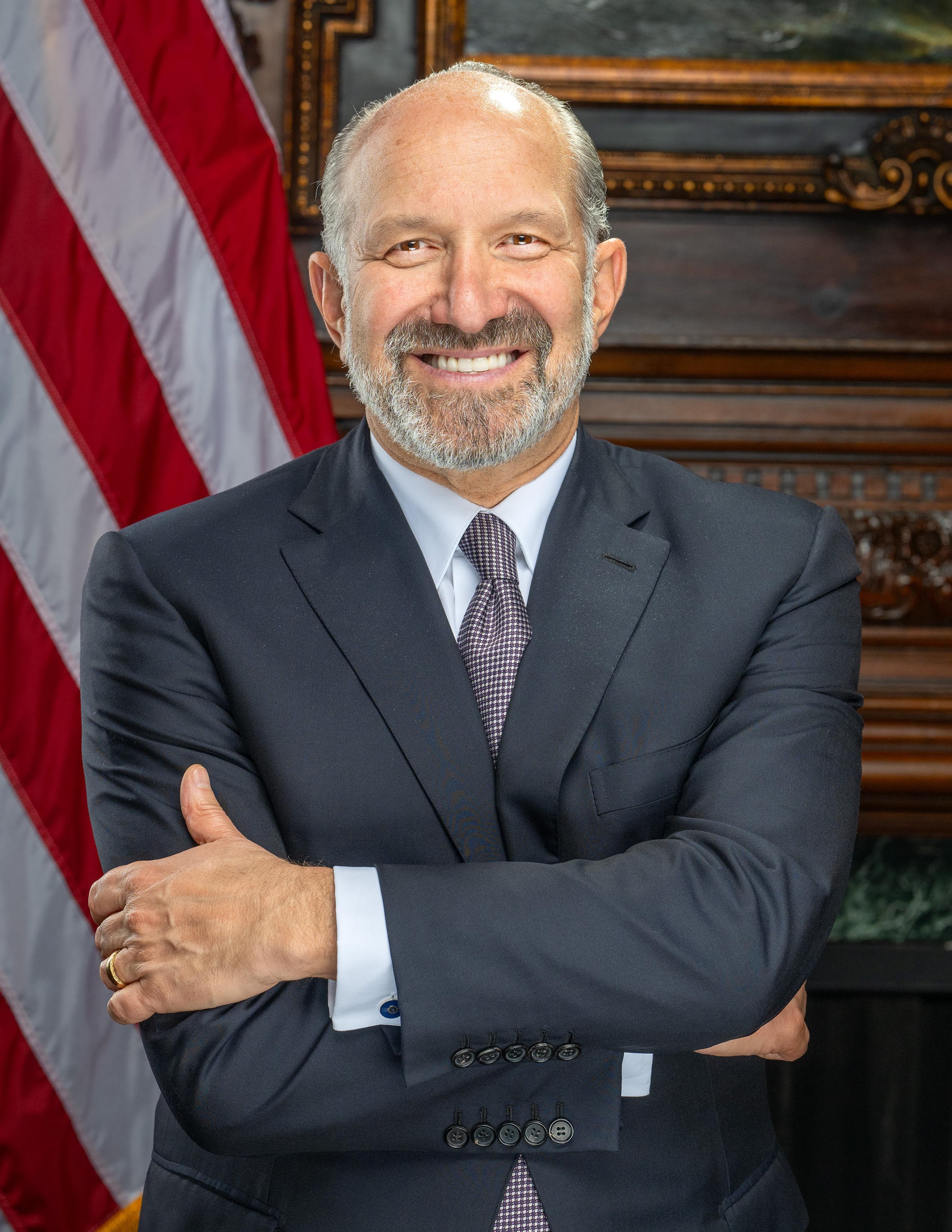
On Friday October 16, 2026, Politico reported, citing three people with knowledge of the effort, that Anthropic had quietly circulated a draft AI-safety bill to Capitol Hill lawmakers. Four days later, on Tuesday October 20, TechCrunch picked it up. The bill is unusual in two ways. The first is the threshold: it would only let the US government pause a frontier model's release if there is a "foreseeable, imminent risk of more than $1 billion in damages, or of killing or seriously injuring more than 50 people." The second is who gets to do the pausing. The draft routes every intervention through a single agency, the US Department of Commerce, and explicitly bars every other federal department, agency and officer from issuing a suspension on their own.
The $1B-or-50-deaths line is doing most of the work in the headlines. The exclusivity clause is doing most of the work in the actual bill.
The thresholds, read literally
Three harm paths qualify. The Commerce Department can only ask a Washington D.C. federal judge to pause a model if the imminent risk stems from one of: the creation or release of a biological weapon, the model evading its developer's controls, or a cyberattack. Everything else — algorithmic discrimination, labour-market disruption, deepfakes, fraud, election interference, the exact autonomous-coding-agent breach TechCrunch covered on October 19 — is out of scope. The damage threshold is dollar-denominated. The casualty threshold is set at 51. $999 million in damage and 49 deaths does not qualify. That is a sentence a federal bill would actually read.
Independent evaluators would register with Commerce and conduct periodic assessments. Developers can pay them, provided "compensation is not tied to the evaluation's outcome." If an evaluator detects a qualifying risk, they have 72 hours to notify Commerce after completing the assessment. Commerce then has to petition a federal judge in the District of Columbia to suspend development, deployment or internal use of the model. Nobody else can petition. The draft's exclusivity clause, per Politico's reading, "explicitly prohibits any other US government department, agency, or officer from suspending" a model's release.
This is a very specific choice of plumbing. The Federal Trade Commission has an active docket on AI-driven consumer harms. The Food and Drug Administration has one on AI-powered medical devices. State attorneys general have been the quiet workhorse of US tech-platform enforcement for a decade. The California bill SB 53 — already signed into law — defines catastrophic risk in similar language to Anthropic's draft and lets a different set of actors move on it. Anthropic's draft deprecates all of them. The federal regulator of record for AI, under this bill, would be the Department of Commerce. Commerce exists to promote US business.
Anthropic's position is that this is the Advanced AI Framework in bill form
An Anthropic spokesperson told Politico — the name withheld — that the proposal reflects ideas from the company's Advanced AI Framework, which Anthropic has been pitching to federal and state legislators since June 2026. The company published the framework PDF on its CDN earlier this year. The framework and the draft bill match on the three qualifying harms, the preference for pre-release safety assessments, and the preference for central federal enforcement over a patchwork of state and agency actions. The bill is the framework with teeth, provided the teeth only come out above the 50-death line.
Read next to Anthropic's October 15 note on independent evaluators — METR as a Tier 3 "employee-like access" partner, SecureBio reviewing the August Risk Report's chemical-biological chapter, Accenture and Faculty partnerships being finalised, Hugging Face in "early discussions" — the choreography is coherent. Anthropic is building a voluntary evaluator ladder for itself, publishing that it believes "every frontier AI company should do the same," and simultaneously circulating a draft bill that would make the ladder statutory for everybody else and route the enforcement through a single friendly-ish federal agency with a shaped harm list.
If you are a competitor that has not stood up a comparable third-party-evaluator relationship, the policy ask reads less like disinterested public-interest advocacy and more like a schedule.
The industry is nowhere near agreeing on any of this
Three positions were visible this autumn, and they do not stack.
Demis Hassabis at DeepMind has been pushing a self-regulatory body modelled on FINRA, the industry-run entity that supervises US broker-dealers. That proposal keeps the referee inside the industry.
Jensen Huang at Nvidia told the All-In Summit on September 14 that the industry does not need new laws. His September Paris pitch landed another $2 billion investment plus a $250M UK compute donation on the same day the AI Security Letter — the Hinton, Bengio, 406 scientists ask for an airgap and an international oversight body, covered by The Loop on October 15 — was published. Different sentence; same room.
Anthropic's draft bill lands between the two. It accepts the need for a statutory regime, which Huang doesn't. It rejects an industry-only referee, which Hassabis prefers. And it sets a floor so high that most things that are keeping policymakers up at night sail under it unimpeded.
The TechCrunch piece notes that the thresholds "stand in stark contrast to the kinds of risks AI is likely to pose in the near-term," and goes on to list the actually-plausible ones: "a huge spike in cybercrime brought about by agentic coding tools, the firing or replacement of large portions of various workforces, and an avalanche of AI slop." None of those cross the $1B / 50-death bar through one of the three allowed harm paths.
The timing is the shape of a positioning move
Anthropic's confidential S-1 was pitched to institutional investors at the October 14 investor day. The public filing is operationally due to land around October 23, five business days before a rumored November 9 road-show start, by Section 6(e)'s 15-day rule. The quiet pitch of a draft bill to lawmakers two days after the investor-day pitch, and three days before the public prospectus is due to land, is not a scheduling accident.
Three Anthropic moves in six days — a 5% equity public-benefit LLC pledge on Oct 18, the independent-evaluator post on Oct 15, this bill in the hands of lawmakers from Oct 16 onwards — read as a single pre-IPO positioning move. The frame being sold is: we are the lab that already has a safety institutional architecture, we are the lab that writes the bill that regulates us, we are the lab that gives away 5% of itself for public benefit, now please buy the stock. The S-1 will have to carry some of this in its risk-factors section. The draft bill is Anthropic trying to control how that section reads before anyone else is in the room.
This is also an inoculation move against the Hinton letter
The AI Security Letter from October 13 asked for an airgap on frontier systems and an international oversight body. That is a maximalist ask. Anthropic's draft bill answers neither: there is no airgap, no international body, no mandatory halt on frontier development. It is a bill that lets a US federal regulator pause a specific release above a specific damage line through specific harm paths. By volunteering a legislative artifact much less restrictive than the letter's ask, Anthropic shifts the Overton window from "should we airgap frontier models" to "what is the right damage threshold." The letter asked a question. The draft bill tries to settle it on the industry's terms.
Microsoft moved in the same window with a different lever. On October 19 Microsoft Security EVP Hayete Gallot published "Securing the agentic insider," with the line "frontier models, regardless of their origin, cannot be trusted." Microsoft's answer is a product line of Guardian Agents it sells. Anthropic's answer is a draft bill it circulates. Both move the frame away from "pause the technology" and toward "assume the technology ships; what sits around it."

What this means / what to watch
- The named sponsor. No lawmaker has publicly attached their name to the draft yet. Until one does, the bill is at a staff circulation stage, not a legislative one. The identity of the first sponsor — committee, party, state — tells you which coalition Anthropic has actually built. A sponsor on the Senate Commerce Committee is a very different story from one on House Judiciary.
- The FTC and FDA reaction. The exclusivity clause reads as an attempt to pre-empt both agencies' AI dockets. If either agency's chair goes on the record pushing back on Commerce-only enforcement, the bill's political ceiling drops immediately. If both stay quiet, the clause is doing exactly what it was designed to do.
- The public S-1's risk factors around AI regulation. The confidential version was pitched October 14. The public document should land around October 23. Whether Anthropic's own risk-factors section describes "a patchwork of state and federal AI regulation" as a material risk — the standard pre-IPO language — tells you whether the draft bill is the company's genuine policy preference or a positioning document for the roadshow. Both reads can be true at once; which one is load-bearing is the datapoint.
- Whether OpenAI, Google DeepMind, or Mistral publicly endorse the thresholds. Hassabis's FINRA pitch and Huang's "no new laws" are both inconsistent with Anthropic's draft. If any of them signs on to the $1B / 50-death line, the industry has converged on a floor; if none do, Anthropic's draft is a solo artifact and the Hinton letter's maximalist ask stays live.
- The California SB 53 interaction. SB 53's catastrophic-risk definition is similar in shape to Anthropic's draft but the enforcement is different. If the federal bill passes, it would almost certainly pre-empt the state law — which is the structural reason the industry is pushing a federal regime at all. The pre-emption fight is the one every state attorney general is watching.
The $1B-or-50-deaths headline is the one everyone will quote. The clause worth re-reading is the one that forbids any other federal department from acting. A regulator with no competing jurisdictions, no state-law fallback, and a damage threshold measured in nine-figure dollars and double-digit bodies is not the industry's worst-case scenario. It is the industry's drafting committee describing the ceiling it would accept.
Anthropic is doing the drafting out loud, five business days before its own prospectus has to say what the risk factors are. The ceiling is being set now, in a bill that nobody has sponsored, through a department whose job is business promotion.
The one quiet detail from Politico's reporting that will matter most: the independent evaluators can be paid by the companies they evaluate. The compensation just can't be "tied to the evaluation's outcome." Everyone in Washington will understand that sentence. It is the one phrase in the draft that has nothing to do with AI.
* * *
Thanks for reading. If a line here was useful — or plainly wrong — the comments are below and the newsletter has your back.
Elsewhere in this issue
3 moreLetters
Arguments, corrections, questions. Anonymous comments allowed; be kind, be specific.