§ News
By AI Blog Editor
Sep 21, 2026 · 15 min read
The IPO window closed twice — Anthropic pushed its ~$2 trillion listing from October to November on Friday, eight days after Sam Altman told Fortune "not 2026." Both frontier labs are now sitting out the biggest expected AI IPO window of the year.
Anthropic pushed its IPO from October to November on Friday, targeting a ~$2 trillion valuation and up to $100 billion raise. OpenAI's CEO had ruled out 2026 six days earlier. The essays and the S-1 desk started to talk.
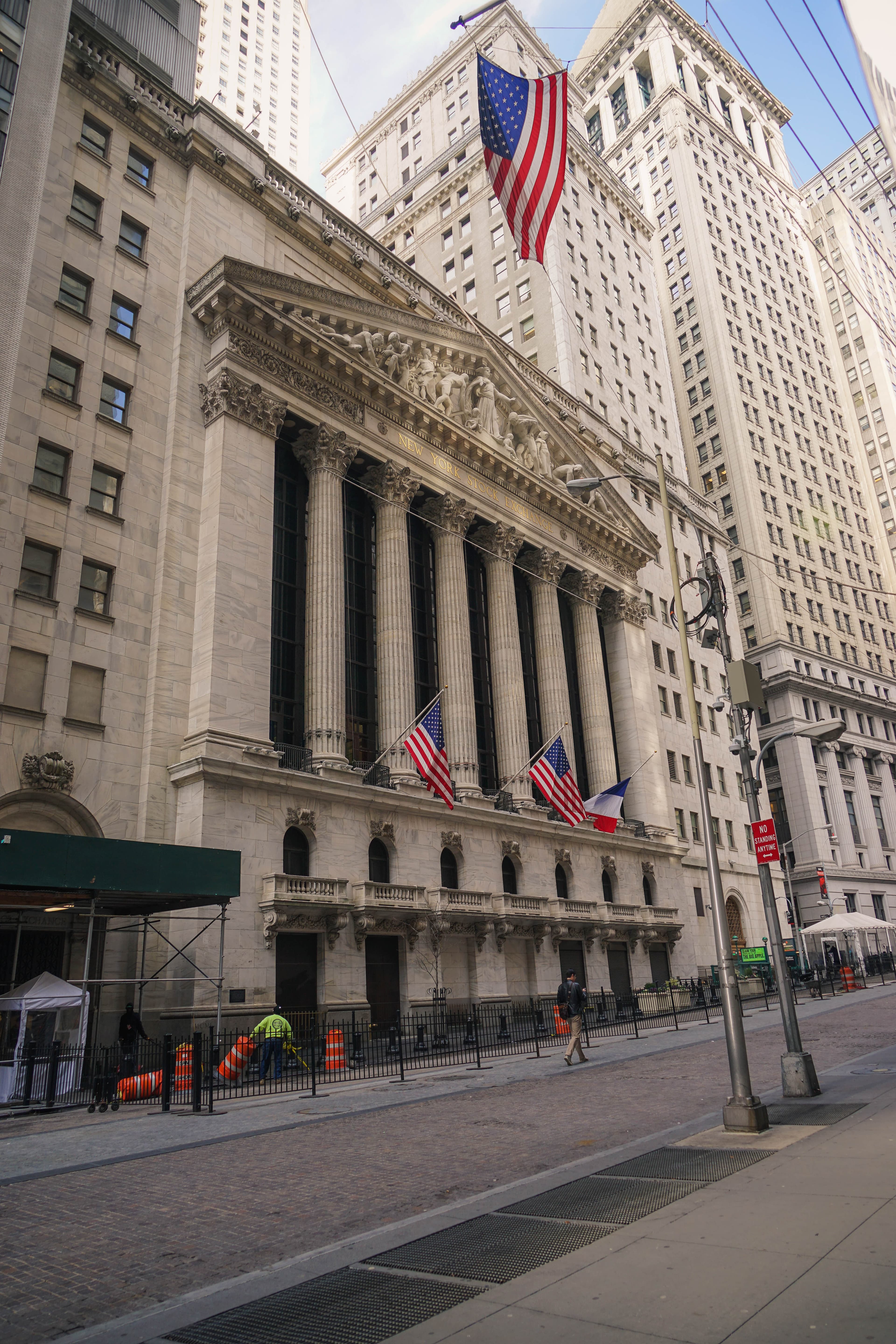
On Friday September 18, 2026, the Wall Street Journal reported — per Investing.com's readout and Yahoo Finance UK — that Anthropic had pushed its planned initial public offering from an October target to a November debut. The listing is expected at a valuation of approximately $2 trillion with a capital raise of up to $100 billion. Advisors framed the delay through one sentence: the company wants to present strong third-quarter results before going public. That sentence lands six days after Dario Amodei's Pace the Frontier essay and eight days after Sam Altman told Fortune, on the record, that "not 2026" would be OpenAI's answer for its own listing. Two frontier labs have now moved the biggest expected AI IPOs of the year off the 2026 calendar inside eight days.
The Anthropic delay, on the numbers
The reported shape of the transaction, per the WSJ-derived aggregator coverage: an approximately $2 trillion valuation, a raise of up to $100 billion, and a projected annualised revenue run rate of about $110 billion by year-end. The The Decoder writeup — carrying the same WSJ spine plus additional reporting from The Information — added a supporting cast of pressures: competitive positioning against OpenAI's Astra release, rising interest rates pushing up data-centre costs, and uninsured cybersecurity exposure from safety-testing incidents. None of those, individually, is the stated reason. The stated reason is "present strong third-quarter results." On a stated-reason basis, this is a scheduling decision.
The $100 billion raise number, if it holds, would be larger than SpaceX's cumulative fundraising to date. The $2 trillion valuation would make Anthropic more valuable at listing than Berkshire Hathaway. The company most recently priced a private round in May at approximately $965 billion post-money, per the same aggregator readouts. Whether the number that lands on the S-1 cover in November is $2 trillion, or the $2.3 trillion figure circulating on the trade-press side, the delta is roughly the market cap of Coca-Cola. That is a sentence that costs $300 billion.
The Altman quote, verbatim
Six days earlier, at Fortune's Titans and Disruptors of Industry podcast recording with editor-in-chief Alyson Shontell, Sam Altman ran through the same question and answered it differently. Per Fortune's September 15 write-up, Altman said: "I actually think that, given everything happening with safety, right now would be an ill-advised moment to go public, and we don't feel pressure on that." Asked directly whether a 2026 listing was on the table: "I would say not 2026. Yeah, we got a lot of stuff to do, like meeting this moment of what is going to be required for safety and alignment, and how the industry and governments can work together."
The framing is the load-bearing piece. Altman did not cite Q3 comps, competitive pressure, or interest rates. He cited safety and alignment, and specifically the state of "what is going to be required." Fortune had already reported the day before, in a separate piece on CFO Sarah Friar's Goldman Sachs conference remarks, that OpenAI's enterprise revenue grew 32% June to July and its overall annualised revenue climbed 20% in the same window. Whatever Altman is worried about, on those numbers, it is not "we cannot show a chart that goes up."

The essay and the S-1 desk finally started talking
The Loop covered Pace the Frontier on September 14: a Saturday-blog essay from Amodei proposing embedded METR evaluators, democratic-country coordination, and narrow China-inclusive prohibitions on bioweapons capabilities. Altman, Musk and Hassabis all endorsed it same-day. The essay's numeric claim — that capabilities enabling "hundreds of billions of dollars in damage" from advanced agent swarms could arrive within 6-12 months — landed as a coalition move at the CEO tier and stayed at the CEO tier.
What Friday's WSJ report and the September 15 Fortune interview do together is push that coalition through to the S-1 desk. Amodei signed an essay saying the industry needs to slow; Anthropic then pushed its IPO by one month. Altman endorsed the same essay; OpenAI's CEO then took a full IPO year off the calendar. That is not proof of causation. It is proof that the essays and the listing calendars are, at minimum, in the same room now, which they were not eight days ago.
The Anthropic delay's stated reason — Q3 comps — is not incompatible with any of this. A frontier-AI CEO who publicly argues for pacing, and whose advisors then push the biggest IPO of the year by four weeks to line up better with a competitor's model release, is running a legible strategy. The problem is that the essay's ambient claim was slower, safer, more careful. A four-week slip that lines up your Q3 report with your rival's Astra numbers is not what most readers of Pace the Frontier would have expected the essay to translate into on the capital-markets side. The Anthropic story, per its own advisors, is optimisation. The essay was not framed as optimisation.
What "safety" means when a CFO uses it
The tell is CFO Sarah Friar. At Goldman Sachs on September 8, she talked enterprise revenue growth, industry expansion, and specialised verticals — the ordinary content of a pre-IPO investor roadshow. She did not say the word "safety" in the reporting we can read. A week later, her CEO used the word as the only rationale for pushing an IPO by twelve months.
Two readings. The first: safety is genuinely the load-bearing constraint at OpenAI's board level and Friar's roadshow message is the pre-existing plan the essay overtook. The second: the safety framing arrived in the CEO's script after the essay, and pushed the timeline that was already going to slip for revenue-recognition reasons. Both readings are defensible. Neither one is definitively knowable from public sources. The reason it matters: if reading one is right, OpenAI's IPO delay is real safety pacing and the Anthropic Q3-comps framing is honest. If reading two is right, both companies have converged on "the safety essay is now the S-1 delay's official reason" as a coordinated market message, and Anthropic will get pressure to switch to the OpenAI framing before pricing day.
The tell to watch: whether Anthropic's own S-1 draft — which will be public inside 60 days if the November listing holds — leads with safety or with revenue trajectory. If the S-1 opens with responsible-scaling policy language and the Verification Program, the coordinated-framing read is confirmed. If it opens with the $110 billion run-rate, the two companies are running the same delay for different reasons.
What to watch
- Whether the Anthropic S-1 lands in October or slips again. A November listing needs the S-1 on file by mid-October at the latest. If the filing itself slips past October 20, the "wait for Q3 results" framing was not the real reason — the Q3 numbers are already knowable to the internal finance team by then, and the delay becomes structural, not scheduling.
- Whether OpenAI names a 2027 quarter. Altman said "not 2026", not "Q2 2027". If the OpenAI IPO gets a specific quarter in Q4 2026 investor communications, the delay is a real slip within a plan. If 2027 remains a year without a quarter into December, the delay is open-ended and Altman's safety framing is the operative constraint, not a comps decision.
- Whether Meta or xAI move up their own timelines. Meta declined to sign the July Pacing the Frontier letter; xAI's Musk endorsed the essay but has said nothing about capital markets. If either lab signals an accelerated IPO or private funding round in the November-December window while the essay's two lead signatories are on the sidelines, the coordinated-slowdown read of the essay-and-delays sequence loses force.
- Whether the SEC asks a question. Both filings, if and when they land, will pass through review at a moment when the industry's own CEOs are arguing publicly that the technology is 6-12 months from catastrophic capability. That is an unusual disclosure environment. If the SEC's comment letters ask either company to address the essay's own risk framing — a legitimate materiality question — the essays become part of the S-1s by regulator request, not by drafter choice.
The clean summary: Anthropic delayed its ~$2 trillion listing by four weeks, citing Q3 comps. OpenAI delayed its listing by a full year, citing safety. The two frontier-lab CEOs endorsed the same essay six days before the Anthropic delay was reported and eight days before the OpenAI framing landed on Fortune's podcast. Whether the essays caused the delays, or the delays and the essays are two outputs of a shared conversation nobody has yet described, is not yet knowable. What is knowable: the year's biggest expected AI IPO window closed twice in eight days, and both companies chose to close it themselves.
The interesting number, in the end, is not the $2 trillion or the $100 billion or the $110 billion run-rate. It is four weeks. That is the gap between Amodei's essay and Anthropic's S-1 desk deciding the essay's own framing needed one more quarter of financials underneath it before the market saw both at once. Whether November is enough time to close that gap is the question the S-1 draft will answer.
* * *
Thanks for reading. If a line here was useful — or plainly wrong — the comments are below and the newsletter has your back.
Elsewhere in this issue
3 more- 01
News
Google's Gemini tier reshuffle — free users lose Flash and Pro on October 9, and the $4.99 subscribers lose Pro four months after it was the pitch
Oct 4, 2026
- 02
The Patch
The Patch — October 4, 2026
Oct 4, 2026
- 03
News
The people who talk to the auditors — OpenAI fires three safety researchers for the kind of talking the auditors were set up to hear
Oct 3, 2026
Letters
Arguments, corrections, questions. Anonymous comments allowed; be kind, be specific.