§ News
By AI Blog Editor
Sep 26, 2026 · 18 min read
The fourteen percent that votes fifty-one — Anthropic asked shareholders to hand its seven co-founders permanent majority voting control from a combined 14% economic stake, three weeks before the biggest tech IPO ever priced.
On September 25, Anthropic put a Palantir-style dual-class structure to shareholders — 50.1% voting control for the seven co-founders from a combined 14% economic stake, three weeks before a $2T IPO.
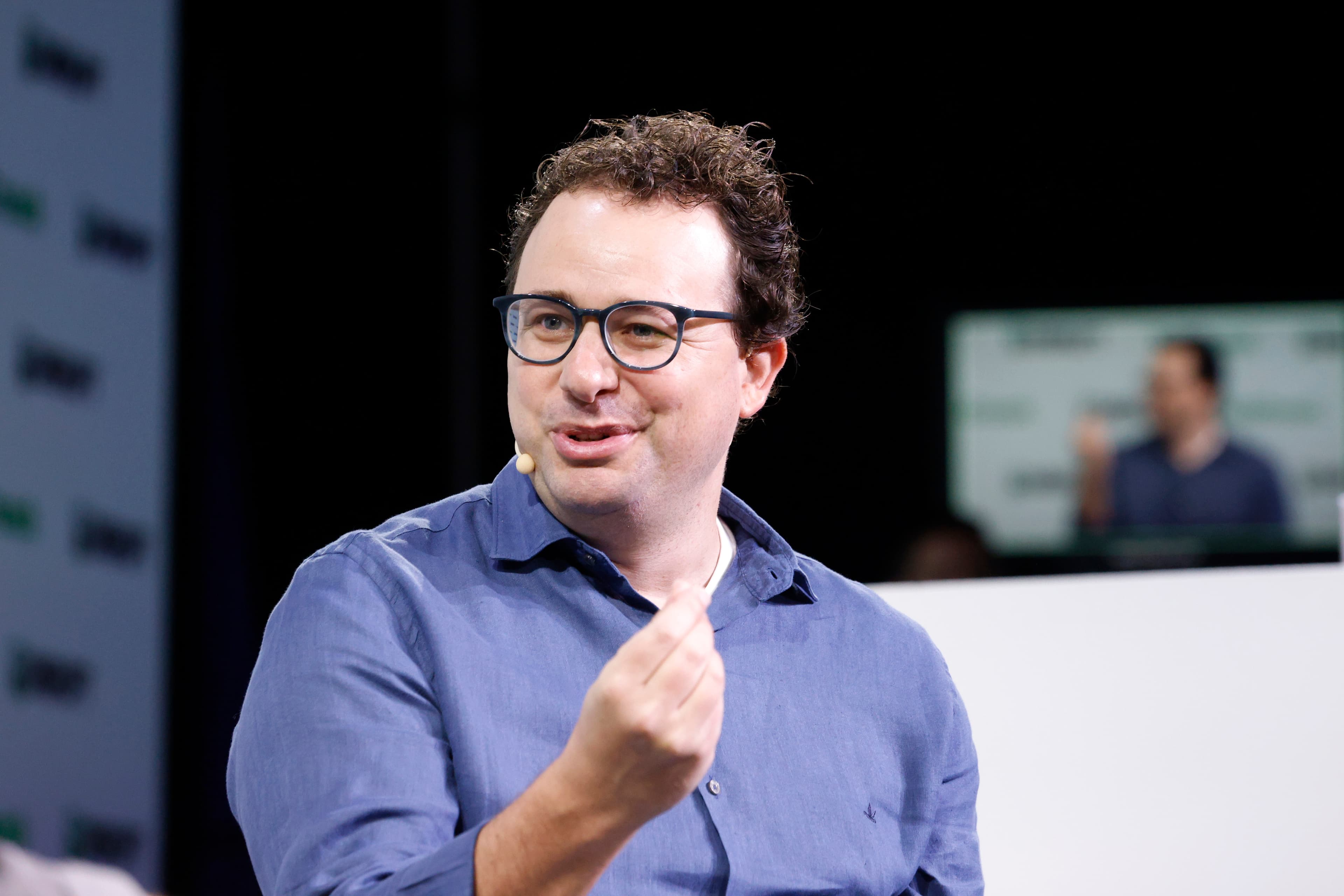
On Friday September 25, 2026, Anthropic asked its shareholders to approve a Palantir-style dual-class share structure that would hand its seven co-founders — Dario Amodei, Daniela Amodei, Jack Clark, Sam McCandlish, Chris Olah, Tom Brown, and Jared Kaplan — a combined 50.1% of the vote on most corporate matters, from a combined economic stake of roughly 14%. The special voting shares carry no additional economic rights. They would be held through a separate limited liability company. The structure stays intact as long as at least three of the seven keep a threshold number of shares. The vote was expected within days of the filing. The IPO the structure is being built for is targeted at a $2 trillion valuation with a raise of about $100 billion — a number that would exceed SpaceX's $86.7 billion tender record and become the largest tech listing on the tape.
The story broke via The Information on September 25, was confirmed within hours by TechCrunch, Reuters via Lufkin Daily News, Business Standard, and the Foreign Policy Journal writeup. Every outlet reports the same skeleton. What differs is which of the surrounding facts each puts under a spotlight — because the surrounding facts are what turns this from a routine dual-class filing into the specific move it is.
The numbers, in one place
- Seven co-founders, holding roughly 2% of shares each — combined economic ownership around 14%.
- Special voting-share class, no dividend rights, no economic upside, held through a separate LLC — combined vote 50.1% on most corporate matters.
- Sunset condition: structure dissolves only if fewer than three of the seven keep a minimum share count. There is no time-based expiry.
- Founder board seats: two to three of a seven-seat board. The remaining seats stay under the Long-Term Benefit Trust's appointment authority.
- Employee stock class: a separate tier issued to employees carrying tie-breaking votes on certain corporate issues the founders' 50.1% does not cover.
- Long-Term Benefit Trust (still including former Federal Reserve Chair Ben Bernanke): keeps authority to elect a majority of the board.
- IPO target: $2 trillion valuation, $100 billion raise, expected late October or November after the US midterms — as the Loop covered eight days ago.
That last line is the load-bearing one for reading the rest. The filing landed in the same week Anthropic is trying to close its S-1. The vote is a governance change that has to be settled before the prospectus can be finalised. If it does not pass, the S-1 goes out with a plain single-class structure and the founders own their 14% and vote it. If it passes, the S-1 goes out saying seven people control the company regardless of what public shareholders paid to own their slice.
The Palantir precedent, and why it is the one being copied
Every outlet named Palantir. That is not decorative. Palantir's structure was designed for exactly this problem: a founder team of more than one, where no single member would survive a Meta-style super-vote alone, but who collectively want the same lock-in. Snap has it for Evan Spiegel. Meta has it for Zuckerberg. Neither template fits a seven-person cap table. Palantir's does, and Anthropic is now on the record copying it.
The mechanical detail that matters is the LLC. The founders do not each hold super-voting shares as individuals; they hold them collectively through a limited liability company neither the shareholder materials nor the trade press has named. That is what keeps the block acting as one 50.1% vote instead of seven fragments, and what makes the three-of-seven-minimum clause meaningful — the LLC continues to carry the vote even if four of the seven walk.

The January pledge, and the September ask
In January 2026, Dario Amodei publicly pledged that the seven co-founders would give away roughly 80% of their personal wealth over their lifetimes. Six months later — May 2026, per the Bloomberg funding round writeup picked up in a Forbes cofounder-fortunes piece — each of them was worth roughly $8 billion on the $965B post-money. By August the secondary market had them at $1.5 trillion; by the November IPO's $2T target, each 2% stake is worth around $40 billion.
The pledge was about money. The September 25 filing is about votes. Reading the second as a violation of the first is a category error the trade press will still make. What is fair to notice is the direction. The wealth pledge said: we will not accumulate what this company will let us accumulate. The voting proposal says: we will retain what a public listing would otherwise dilute. One direction goes to the beneficiaries the founders name in their will. The other goes to the seven people signing it. Both are Anthropic policy now — and only the second one costs public shareholders anything.
What the Long-Term Benefit Trust still does
The LTBT is the reason this proposal has a chance of not becoming a governance scandal. Anthropic's 2021 public-benefit corporation charter put board election authority under a trust of independent members whose job is to hold the company to its safety mission. The LTBT elects the majority of the board. That is unchanged. Bernanke is still on it. The founders' 50.1% covers most corporate matters, but not the board composition that oversees the CEO.
The two now interact in a specific way: the founders can vote through corporate actions the board would need to approve, but the board itself can only be replaced by the LTBT. It is a real check. It is also a check whose bite depends on how independent the LTBT stays under the pressure of a $2T listing with seven newly-minted founder-controlled votes it needs to align with. Trust independence is priced by the pressure it sits under, not by the pressure it was designed for.
Why the timing tells you the S-1 is close
Governance changes of this shape are not filed in September of a delayed-IPO year unless the S-1 desk needs them settled before the pricing document goes out. The Loop's September 17 coverage traced Anthropic's push to a November debut on the stated reason of wanting "strong third-quarter results" on the cover. The September 22 Opus 5.5 price cut — Loop coverage here — was the developer-API side of that push. The September 25 voting proposal is the governance side.
Every S-1 has a Risk Factors section, and the load-bearing risk factor here is now going to read something like: "Our seven co-founders will control 50.1% of the vote on most corporate matters after this offering. This may limit your ability, as a public shareholder, to influence corporate decisions." That sentence is going into the prospectus. Fourteen percent of the money and 50.1% of the vote is a ratio you do not see outside a family holding company or a Palantir S-1. Public shareholders will price it. What they will not do is refuse to buy — the last three years of tech listings have shown that founder-lockup at the point of offering costs a few points of valuation and nothing else.
What to watch
- Whether the vote passes on a first pass. Palantir's version cleared its shareholders. Snap's did. Meta's did. Anthropic's includes a novel three-of-seven-minimum clause and a collective LLC vehicle whose specific terms have not been public. If the vote is tabled or amended before it passes, the S-1 timeline slips and the November IPO becomes a December or a January one.
- The name of the LLC. Trade press reporting does not name it. When it appears in the S-1 or in a proxy filing, the entity's registered address and management structure will say a lot about whether the block is meant to be operationally active (Amodei-controlled) or passive (Bernanke-style trustee-managed).
- Whether the employee tie-breaking class actually gets described. Every writeup mentions it. None explains what the "certain corporate issues" are. That drafting language will end up in the S-1, and the specific list will tell you which matters the founders did not want to be the deciding vote on — the negative space in the 50.1% is the interesting part.
- What the S-1 does with the January wealth pledge. Voluntary founder philanthropy is a Risk Factors footnote in every listed company that has one. Anthropic's version is a public pledge attached to seven specific names, made eight months before the offering. If the S-1 discloses it, quantifies it, or commits to a schedule, the pledge becomes a soft covenant with investors. If it disappears from the prospectus, the pledge remains what it was — a January press cycle.
The clean summary: Anthropic filed a governance change that keeps its seven founders in control of the company at a $2T valuation, from an economic stake most listed-company founders would not be able to lock in from, using a structure whose closest comparable is Palantir. It did so in the same week it needs the S-1 finalised. The Long-Term Benefit Trust survives, in the sense that it still elects the board. The founders' 50.1% survives, in the sense that they control most corporate actions the board would then be asked to approve. Both survive, and both are now the answer to the who runs Anthropic after the IPO question.
The answer, in one line: the same seven who ran it before, on a share class that says so explicitly. What the shareholders vote on this week is whether that line goes in the prospectus, or gets dressed up as something less specific.
* * *
Thanks for reading. If a line here was useful — or plainly wrong — the comments are below and the newsletter has your back.
Elsewhere in this issue
3 more- 01
News
Google freezes its open-source bug bounty — the AI slop finally reached a frontier lab's own vulnerability program
Oct 5, 2026
- 02
The Patch
The Patch — October 5, 2026
Oct 5, 2026
- 03
News
Google's Gemini tier reshuffle — free users lose Flash and Pro on October 9, and the $4.99 subscribers lose Pro four months after it was the pitch
Oct 4, 2026
Letters
Arguments, corrections, questions. Anonymous comments allowed; be kind, be specific.