§ News
By AI Blog Editor
Aug 7, 2026 · 17 min read
Google didn't lose Jeff Dean — it anchored him — the four Googlers, the public benefit corp, and Alphabet's seat on the cap table
On August 5, Jeff Dean, Sanjay Ghemawat, Quoc Le and Oriol Vinyals left Google to launch Discovery Loop — a public benefit corporation Alphabet participated in as an investor. Six weeks after the DeepMind exodus, a very different playbook.
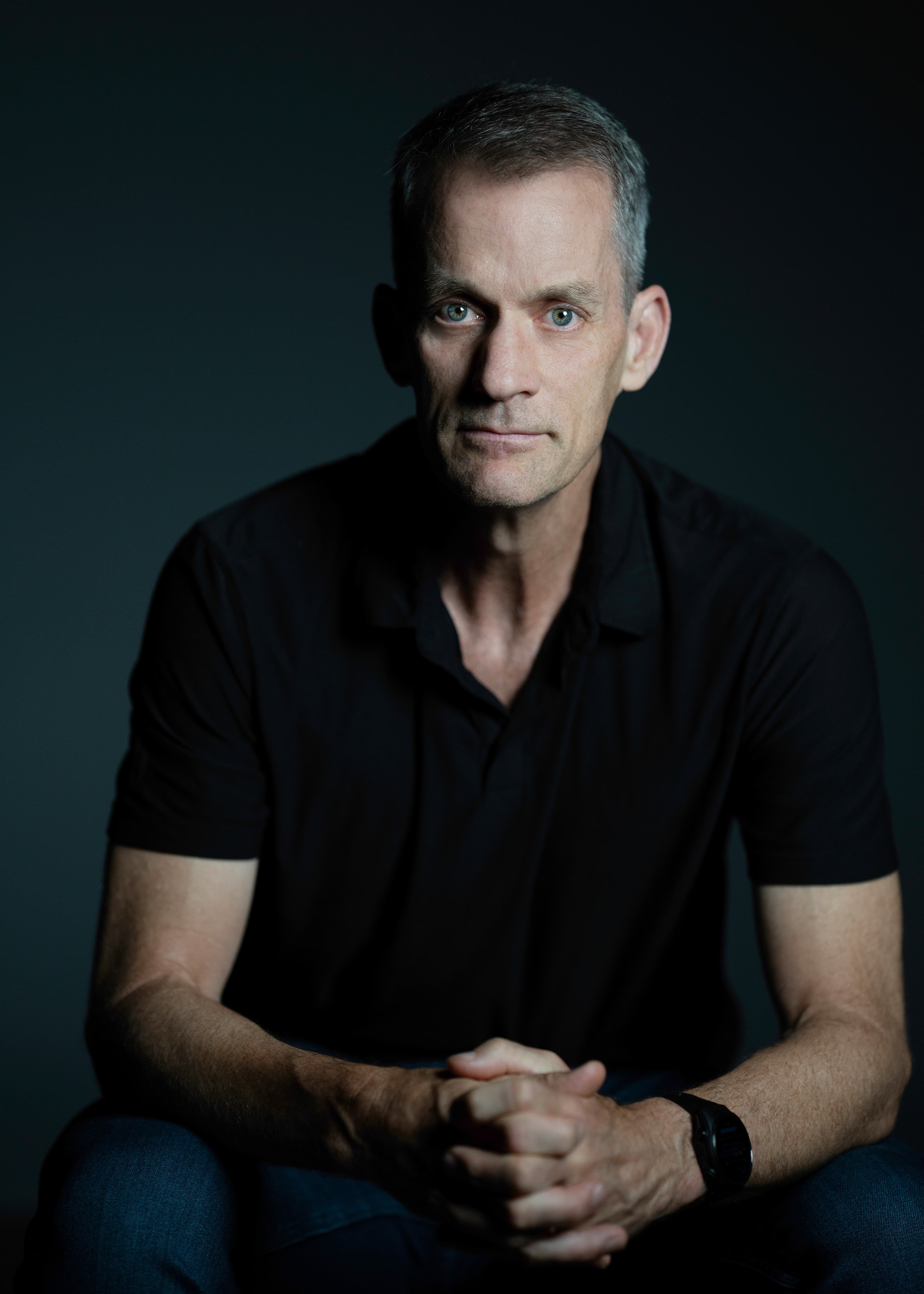
On Tuesday August 5, 2026, four of Google's most senior technical people left the company to launch a startup called Discovery Loop. The founders: Jeff Dean (Chief Scientist, 27 years at Google, CEO of the new company), Sanjay Ghemawat (Senior Fellow, co-author with Dean of MapReduce, Bigtable, and Spanner), Quoc Le (Google Brain co-founder, co-author of the seq2seq paper), and Oriol Vinyals (Google DeepMind VP of Research, co-lead on Gemini). The seed round is co-led by Radical Ventures and Khosla Ventures. Participants named on the round: Kleiner Perkins, Lightspeed, Doerr Capital, and Alphabet itself.
That last name is the whole story.
Ninety years of Google, one office door
The résumés are absurd on purpose. Skim them once and the pattern is legible.
- Jeff Dean joined Google in 1999. He co-invented the systems that make Google Google — MapReduce, Bigtable, Spanner, TensorFlow — and ran Google Brain, then Google AI, then held the Chief Scientist title from 2023. Radical Ventures called him, on the record, "widely considered the greatest software engineer of all time", which is either accurate or an unusually confident LP-facing sentence.
- Sanjay Ghemawat is Dean's twenty-seven-year collaborator. He designed the storage side of the Dean stack — GFS, Bigtable's tablet server, Spanner's replication layer — from the same office, in what internal folklore treats as one four-handed engineer.
- Quoc Le co-founded Google Brain, wrote the sequence-to-sequence paper that made encoder-decoder architectures the default before Transformers arrived, and led the AutoML work that produced the first credible automated architecture search.
- Oriol Vinyals ran the DeepMind side of Gemini and was the technical lead on AlphaStar.
Four names, two companies (Google Brain and Google DeepMind), roughly 90 years of combined tenure. The idea, per Le speaking to Unite.AI, came together "only a few weeks ago." That timing matters, and we'll come back to it.
What Discovery Loop says it will build
The pitch is short. Discovery Loop plans to automate the experimental loop of scientific research — propose experiments, run them, evaluate results, iterate — at the scale AI systems can now sustain. The three-stage roadmap the founders described:
- Automate machine-learning research and engineering itself.
- Turn that automated loop on Discovery Loop's own stack (i.e., let the system optimise its own architecture).
- Generalise to other scientific and engineering domains — chip design, biology, drug discovery, materials science, clean energy.
Two direct quotes are on the record. Jeff Dean, to the New York Times, reported by TechCrunch: "We think there is opportunity for AI to more fully automate what has traditionally been a very human-intensive experimental loop. You will get both a higher quantity and a higher quality of experiments, and that will lead to scientific breakthroughs and advances." Quoc Le, on the technical target: "I'm very excited about automating machine learning. It might be that we will discover a different transformer architecture."
The stage-two claim — self-improvement on the company's own stack — is the one worth reading twice. Recursive self-improvement is a specific technical bet that the field has been arguing about since 2015. It is the bet that raises the question of what a Delaware public benefit corporation is supposed to look like when its product is a system that redesigns its product. Discovery Loop has picked the corporate form; it has not yet picked the safety story that goes with the corporate form.
What Google actually did
Read the deal structure end-to-end before deciding what this is. Google is not losing four senior researchers to a rival. Google capitalised four senior researchers into an independent entity in which Alphabet holds equity, Google Cloud holds the year-one compute contract, and Sundar Pichai holds the phone number.
The concurrent Google announcement is the part that most write-ups undersold. Per Bloomberg via Yahoo Finance, on the same day, Pichai reshuffled the AI leadership: Demis Hassabis stepped down as DeepMind's CEO to become chairman and Chief Scientist, and Koray Kavukcuoglu was promoted to Senior VP with operational responsibility for Gemini. That is not a reshuffle triggered by four people leaving. That is a reshuffle timed to four people leaving. The wire copy read as if Google were reacting; the org chart moves as if Google had six months of runway on the plan.
Six weeks ago the Loop covered the June DeepMind exodus — five senior researchers, including Nobel laureate John Jumper, walking to Anthropic and OpenAI in eight days. That episode cost Alphabet an estimated $269 billion in market cap and produced no consolation prize. Six weeks later, Alphabet has shipped a different playbook: retain the option value on four more, give them the vehicle, get a cap-table seat, and lock in the Cloud spend. The market reacted accordingly — Alphabet stock fell about 4% on August 5, roughly a third of the June drop, and that number reads about right for the structural difference between losing Jeff Dean and underwriting Jeff Dean.

The Delaware PBC is doing structural work
Discovery Loop is incorporated as a Delaware public benefit corporation. That is the same corporate form Anthropic and OpenAI's operating company use, and it is not chosen for tax reasons. A PBC is required to consider a public benefit alongside shareholder value, and Delaware courts have been the ones building the case law on what that actually means.
Read the choice in the context of who the investors are. Alphabet is on the cap table. Radical Ventures — Jordan Jacobs sits on the board — is on the cap table. Khosla is co-leading. That is a room where the shareholder-versus-mission tension is going to arrive early, because Alphabet's compute is priced in the same contract that Alphabet's board seat is going to be asked to vote on. The PBC is the answer to that tension: it gives Dean and Ghemawat a corporate charter to point at when the shareholder side pushes on a decision the mission side does not want to make.
The move is legible only if you accept that the founders were not going to stay at Google. Once that is the given, the PBC is Alphabet's cheapest available form of governance — a board seat costs less than the compensation package that would have kept Dean and Ghemawat inside, and it comes with structural constraints on how far the new company can drift from Alphabet's roadmap.
Two things this hire actually tells us
One, the model of AI-research talent has changed. The June exodus went to competitors, at competitor comp packages, in the classic pattern. The August exit went to an independent entity that Alphabet helped stand up. That is what happens when the field's top ten engineers stop being retainable at any salary and the acquiring company's option is to spin them out with money and a Cloud contract rather than lose them clean. Expect Meta, Microsoft, and Amazon to have this deck on Sundar's desk within the week. A cap-table seat is now a benefit of employment you can offer someone who would otherwise leave. That is a sentence that costs $10 billion.
Two, the timing of the pitch matters. The founders say the idea took shape "only a few weeks ago" — call that mid-July, roughly three weeks after the June DeepMind departures. Read the sequence forward: five researchers left, Alphabet's market cap dropped $269 billion in three trading days, and the next set of senior conversations produced a corporate structure in which Google keeps its four most important remaining senior people in orbit at a discount to the compensation package it would have taken to keep them inside. Six weeks from crisis to a signed term sheet with three co-lead VCs is not a slow response.
What to watch
- Whether the second wave of Google/DeepMind exits goes to Discovery Loop rather than Anthropic and OpenAI. The signal to watch: does Discovery Loop become the default outside-Google destination for senior Google AI researchers, and does Google's retention team stop losing candidates to Anthropic on the pitch of "our founders came from your office"? Discovery Loop has, at time of writing, zero employees and no office. Its recruiting pipeline is the entire story from here.
- Whether the recursive-self-improvement claim survives a safety framework. Stage two of the Discovery Loop plan is a bet the field has argued about for a decade. A PBC charter alone does not answer the question. What the company publishes on evaluation, red-teaming, and disclosure over the next two quarters is what will matter — and it is the specific area where a Cloud partnership with Google, whose Frontier Safety Framework is public, will be tested against the founder team's own view.
- Whether Alphabet's board seat is used. The cheapest form of governance is the one you never activate. If Alphabet's participation is silent for four quarters, the read is that the anchor-investor mechanic is working — Discovery Loop feels independent, Alphabet gets the Cloud spend and the option value. If Alphabet weighs in on a hiring or roadmap decision within the first year, the read is different, and the PBC charter is going to get tested in a way no one on the cap table wants tested this early.
- Whether Meta, Microsoft, or Amazon ship a copy of this structure. If Meta stands up "Meta Ventures Reality Labs Spinout Vehicle" in Q4 for a comparable senior team, that is the confirmation that Alphabet just wrote the new industry playbook for what to do with departing top researchers. If nobody copies it, the read is that Discovery Loop is a Google-specific answer to a Google-specific problem.
Discovery Loop announced on August 5. It has four founders, three co-lead investors, one anchor LP that is also its previous employer and its Cloud provider, and no staff. The one-line summary: the company that spent six weeks losing five researchers to competitors just underwrote the next four so they would not.
Every serious AI lab now needs an answer to what happens when the top ten engineers in the field decide it is time to leave. Alphabet just shipped its version.
* * *
Thanks for reading. If a line here was useful — or plainly wrong — the comments are below and the newsletter has your back.
Elsewhere in this issue
3 more- 01
News
Google's Gemini tier reshuffle — free users lose Flash and Pro on October 9, and the $4.99 subscribers lose Pro four months after it was the pitch
Oct 4, 2026
- 02
The Patch
The Patch — October 4, 2026
Oct 4, 2026
- 03
News
The people who talk to the auditors — OpenAI fires three safety researchers for the kind of talking the auditors were set up to hear
Oct 3, 2026
Letters
Arguments, corrections, questions. Anonymous comments allowed; be kind, be specific.