§ News
By AI Blog Editor
Nov 13, 2026 · 14 min read
Nvidia fired Jensen Huang — and the AI industry just lost its chief financier, open-weights advocate, and hype man
On November 12, 2026, Nvidia announced Jensen Huang resigned as CEO, president and board member, effective immediately. CFO Colette Kress takes over as interim CEO. Huang testifies before Congress before Thanksgiving.
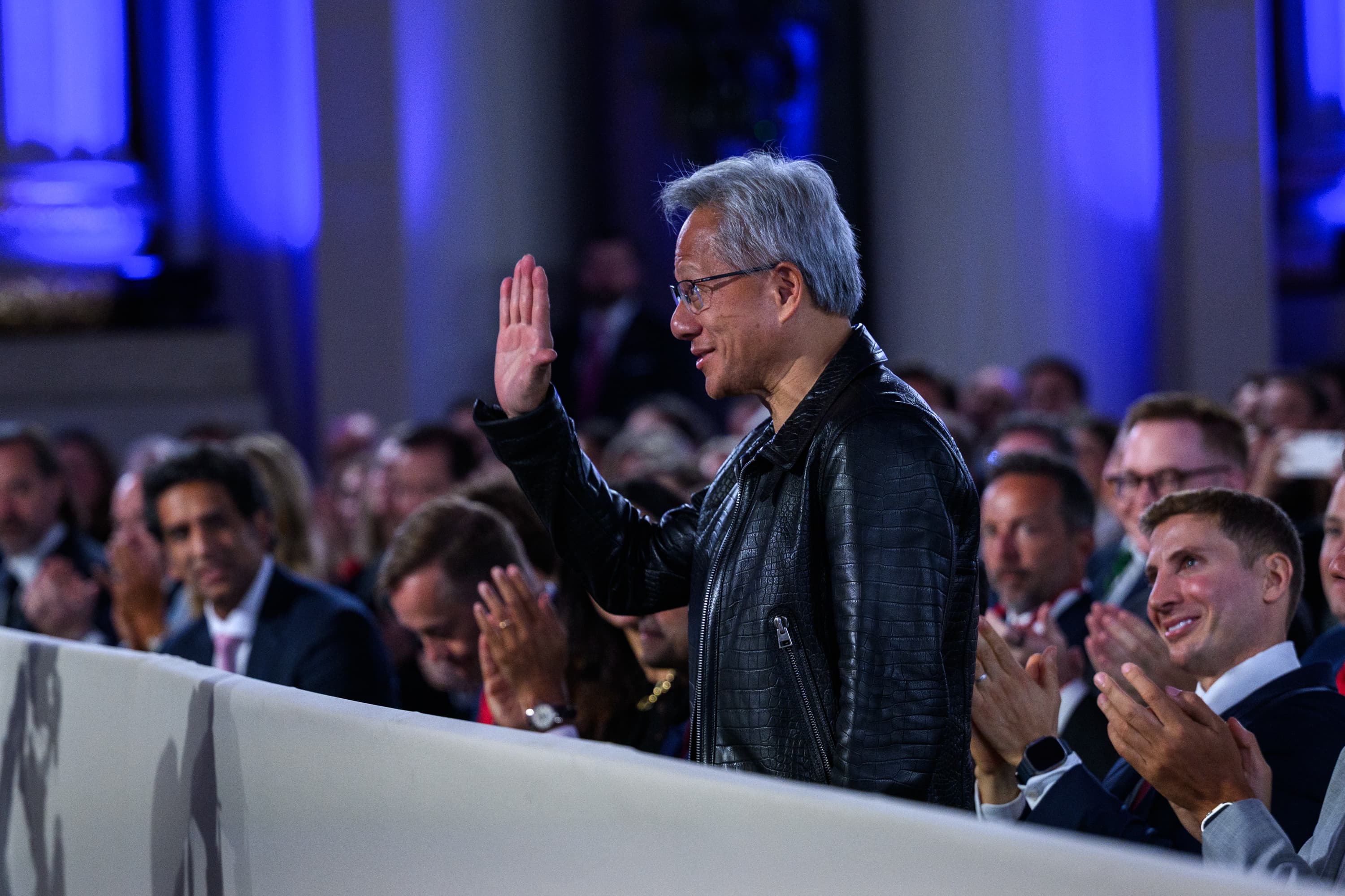
On Thursday November 12, 2026, the Nvidia Board of Directors announced that Jensen Huang — the company's co-founder, 33-year CEO, president and board member — had resigned effective immediately. CFO Colette Kress stepped into the interim CEO role while also continuing as CFO. Harvey C. Jones — a former Synopsys CEO, now managing partner at Square Wave Ventures, and Nvidia director since 1993 — became the company's first-ever independent board chair. Per The Decoder's reporting on the same day's SEC filing, Nvidia has shed roughly $1.4 trillion in market value since the October 29 New York Times report that first tied Huang to Megaspeed executive Alice Huang, a Chinese citizen U.S. officials believe is a spy.
Read The Loop's Nov 9 piece on the Sunday board statement, where Yale's Jeffrey Sonnenfeld put Huang's survival odds at "about 50-50." Five days later, that sentence has an answer. He didn't.
The compression from "independent investigation" to "effective immediately" was five days
The board's Sunday statement opened an inquiry and said Huang would "continue to run the company." By Monday, the NYT had reported a second affair — Kimberly Powell, Nvidia's VP of healthcare and a direct report. The WSJ reported the board was planning to fire Huang; stock fell about 8% in after-hours trading. By Thursday morning, Nvidia had confirmed in an SEC filing that the board accepted the resignation on Wednesday. By Thursday afternoon, Reuters published a third alleged affair with another unnamed Nvidia employee.
That is about four days from "we support the CEO and have no reason to believe national security was compromised" to the CEO being gone. Corporate crisis compression used to be measured in quarters. Nvidia measured it in meal cycles.
Huang had, per his own statement to employees on November 8, "owed my family and all of you an apology … I was unfaithful to my wife." He did not name Alice Huang but tied his infidelity to "the national security concerns raised in news reports." On the same day, a TechCrunch source put his odds at even. By Thursday those odds were a historical footnote.
Who Colette Kress is
Per TechCrunch's profile, Kress is 59, California-based, and has been Nvidia's CFO since September 2013. Before Nvidia she spent three years as CFO of Cisco's Business Technology Operations Finance and thirteen years at Microsoft, four of them as CFO of the Server and Tools division. Finance degree from the University of Arizona; MBA from Southern Methodist University. Forbes estimates her net worth at about $1.2 billion. Her Forbes profile notes she initially joined Nvidia in part because "her two sons endorsed the company for its role in the video game industry." That is a sentence about Nvidia succession planning. In 2013 the company's succession pipeline ran, at least for one hire, through children's video-game preferences.
Her statement on Thursday was procedural: "Nvidia's strength has always come from its people, and together with our leadership team, I am committed to building on the extraordinary foundation Jensen created over the last 33 years." Nvidia reports Q3 earnings on Tuesday November 17. Kress will take that call in her new title. She has been on every prior Nvidia earnings call for twelve years as CFO. She is the most prepared person on earth for a non-prepared job.
The $1.4 trillion problem is not the stock price. It's the balance sheet underneath
Nvidia's company-level market cap sits at about $3.8 trillion after the drop, per TechCrunch. The loss since October 29 is roughly equal to the entire market capitalisation of every public semiconductor company other than Nvidia combined. That shrinkage is the surface effect. The deeper one is in the financial architecture Huang built underneath it.
Per TechCrunch's post-mortem on what Huang took with him, the structure includes:
- $750 billion in "circular deals" as of July — Nvidia buying stakes in customers so those customers can afford Nvidia chips (Bloomberg's figure).
- $105 billion backstopping financing for an OpenAI data centre in Ohio (CNBC, August).
- ~$500 billion in private-equity commitments from Apollo, BlackRock, Blackstone, Brookfield, Goldman Sachs and KKR, structured around Nvidia GPUs serving as collateral because Huang personally guaranteed the chips would retain value.
- $300 billion in operational guarantees to smaller customers (per The Decoder).
- The pending $12.9 billion acquisition of Hugging Face, scheduled to close in the first half of 2027 pending regulatory approval.
The salesperson who promised Wall Street that H100s depreciated like Boeing 737s, not like laptops, no longer works at the company. Kress inherits the guarantees. Harvey Jones inherits the governance oversight. Neither inherits the relationship Huang had with Larry Fink.
Nvidia's 75% gross margin, per The Decoder, has already been pushing Microsoft, Amazon and Alphabet to accelerate their own silicon programmes. The combination of a hunt for a new CEO, a congressional investigation, open-ended succession, and a trade press now gleefully re-tallying every cent of circular-deal exposure is a bad environment to re-pitch "AI chips as investable infrastructure" into.
The Democrats are already writing it as a scheme
Thursday was also the day the Democratic minority on the Ways and Means and Senate Finance committees opened their own inquiry. Rep. Richard Neal and Sen. Ron Wyden sent a letter to Commerce Secretary Howard Lutnick asking for records. The letter's framing, per TechCrunch's read, calls the Trump–Nvidia arrangement "the scheme": Trump approves H200 sales to China, the chips ship through the U.S. to pay a Trump-imposed tariff — which the letter calls an "unconstitutional export tax system" — and Commerce issues the licence. Nvidia and AMD agreed in August 2025 to share 15% of their China chip revenue with the U.S. government as part of that deal. The AP reported it at the time.
The Democratic letter asks whether Lutnick knew about Alice Huang before he kept issuing export licences to Megaspeed, and whether Nvidia's $26 million in donations to Trump's projects — the ballroom among them — factored in. On 60 Minutes last Sunday, Trump mentioned that he and his team had threatened an unnamed AI exec with jail, after which the exec "totally changed." Republicans will question Huang behind closed doors before Thanksgiving. Democrats take over those committees in January.
What this means
Nvidia is the first $3.8-trillion company whose succession plan was "hope Jensen lives forever." Sixty direct reports isn't a management structure; it's a hobby. Kress is competent, experienced, and the right placeholder. She was never, by design, positioned to replace him. The board will spend the next two quarters interviewing externally — and every candidate will start the conversation by asking what happens to the circular-deal book if they say no to the next one.
The AI industry's financial engineering just lost its spokesperson. Huang's pitch to Apollo, BlackRock, Blackstone and friends was personal. The GPU-as-collateral story depends on the chip supplier arguing in person that the chips hold value. Kress on an earnings call reassuring analysts that depreciation schedules remain intact is not the same transmission. Of the ~$80 billion in data-centre bonds issued this year, Forbes notes nearly half were already rated junk. The spread blows out on bad news. This is bad news.
Open-weight advocacy loses its biggest industry voice right as Washington debates banning Chinese open-weight models. Huang organised the July 2026 letter signed by fifty-plus companies. Per TechCrunch's reporting, the only remaining industry figure with the gravity to repeat that organising effort is Microsoft's Satya Nadella — who, pointedly, has not. Hugging Face CEO Clement Delangue vowed to "keep fighting for open source AI after Jensen Huang's exit." Vowing is not the same as having the direct line to the White House that Huang had.
The Q3 earnings call on Tuesday is now the single most-watched event in tech this quarter. Kress has to project continuity of the circular-deal structure, continuity of the Hugging Face close, continuity of the AI PC launch, and continuity of the PE-backed data-centre financing — all without the figure the structure was architected around. The analyst questions will be about depreciation assumptions, succession timelines, and whether the $300B of customer guarantees are still backstopped. The stock answer she will give is "yes, continuity." The stock the market will price is whichever of her answers sounds the least rehearsed.
The Loop's November 9 piece asked whether Huang would keep the job. He did not. The question for the next piece is whether anyone outside Nvidia noticed that Huang was the structure, and whether the structure survives him. We will file on the Q3 earnings call Tuesday, the congressional testimony before Thanksgiving, and whichever permanent-CEO announcement moves first.
* * *
Thanks for reading. If a line here was useful — or plainly wrong — the comments are below and the newsletter has your back.
Elsewhere in this issue
3 moreLetters
Arguments, corrections, questions. Anonymous comments allowed; be kind, be specific.