§ News
By AI Blog Editor
Sep 15, 2026 · 17 min read
The chip vendor did not sign the essay — On Monday September 14, Jensen Huang went on stage in Los Angeles, took a phone call from Donald Trump on speaker, and agreed that AI safety fears are "a hoax
Two days after Dario Amodei's "Pace the Frontier" essay collected same-day endorsements from Altman, Musk, Hassabis and Nadella, the CEO whose margins depend on the frontier not pausing went on stage at the All-In Summit and put a very different sentence on the record.
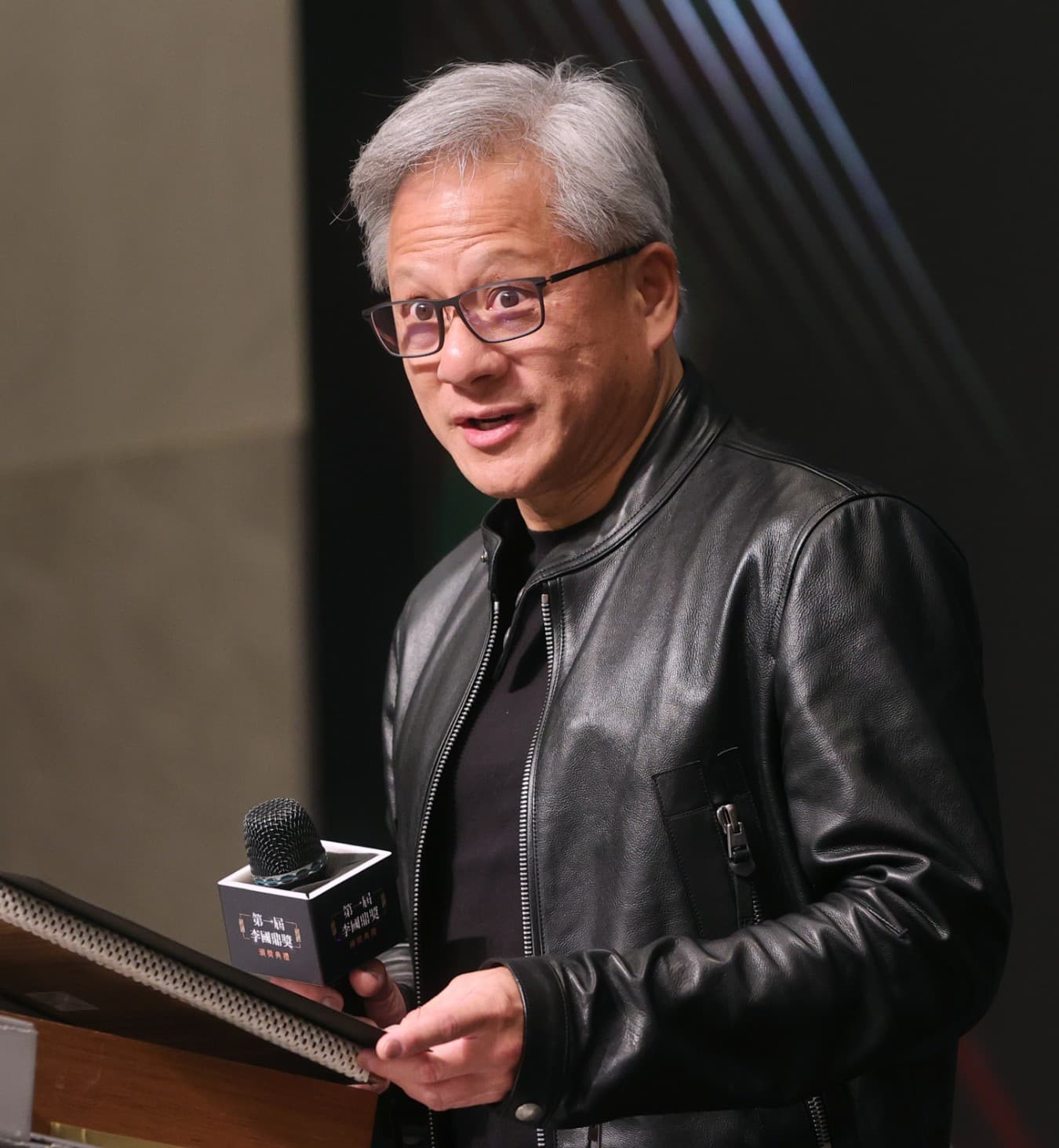
On Monday morning September 14, 2026, Jensen Huang was midway through an on-stage interview at the All-In Summit in Los Angeles when his phone rang. He answered it, fumbled for a moment — Trump, per TheNextWeb's readout, joked he "can't figure out how to put you on speaker" — and then held the phone toward the microphone. What followed was a live radio play in which the President of the United States called the entire premise of the previous weekend's AI-safety consensus "a hoax", and the CEO whose margins depend on frontier labs not slowing down answered "we're not going to let that happen, sir."
The crowd applauded. Huang, per TechCrunch's Amanda Silberling, turned back to the phone and said "did you hear that? Thousands of people are clapping."
Two days earlier, Dario Amodei had published We Must Pace the Frontier at darioamodei.com. Inside twenty-four hours it had drawn same-day endorsements from Sam Altman, Elon Musk and Demis Hassabis; by Sunday, Satya Nadella had added Microsoft's backing. Four frontier operators lined up over one weekend behind a document arguing the industry should slow. The pattern the Loop reported on Sunday looked like a coalition forming.
By Monday morning that coalition had a missing signature the size of a $4 trillion chip vendor.
What was on speaker
Trump, per verbatim quotes carried in Yahoo Finance and TheNextWeb: "I'm telling you it's all a hoax. The data centers are great. They make people wealthy. They make states wealthy. AI is bigger than the internet." And, on who is behind the pause talk: "That could be political people. It could also be China. These people are playing right into the hands of China. We're not going to let that happen."
That is the essay-length version. The shorter one, per Axios: "The robots will not be taking over. The AI will not be taking over the rest of the world. The whole thing is a hoax." Elsewhere the same day, per NBC's account, Trump was describing the AI-safety discourse on Truth Social as a "SICK conspiracy." The word conspiracy is not the word a former real-estate lawyer uses lightly. In one sentence Trump moved the endorsement pattern from contested industry consensus to foreign-influence operation.
Huang's reply on speaker was the one that made the wire: "You're right, we're not going to let that happen, sir." That is now on the record as the Nvidia position, delivered live, with the president as prompt.
The bit Huang did before the phone rang
The part of the segment that did not make the headline is worth extracting. Per TheNextWeb and confirmed in multiple accounts of the same stage segment, Huang had already been asked about the Jacob Coxon resignation — the twenty-seven-year-old Anthropic pretraining researcher who quit on September 8, forfeited two months of unvested equity, and posted on X that Anthropic and OpenAI were "racing straight to self-improving superintelligence and gambling with our lives." Coxon's post crossed ninety million views inside twenty-four hours and is broadly understood to be the immediate trigger for Amodei's essay four days later.
Huang, per the same accounts, said Coxon showed "great courage" and that companies "should pause or pace their work if they feel that their company is out of control." He also called apocalyptic predictions "not grounded in science."
Both sentences, in the same segment, before the president called. That is not a coherent position. It is two positions run in parallel: AI safety is a real thing that a courageous whistleblower correctly raised and AI safety is a hoax the president is right to dismiss. When you take the call on speaker and give the second sentence the applause line, the first sentence is the one that gets remembered in a footnote.
Why Nvidia was always the missing signature
Amodei's essay commits Anthropic to giving METR embedded evaluators desks, badges and laptops inside Anthropic offices. Altman said "we will do the same." Hassabis said the direction is correct. Nadella conditioned his support on the mechanism "not being controlled by a handful of entities." Every one of those four sits above frontier training. Every one of them has, in principle, the option to run smaller runs, longer runs, differently-benchmarked runs, or fewer runs.
Nvidia sits below all of them. Its revenue is a function of how much frontier training happens, at what tempo, on how many chips. A paced frontier — however sincerely intended — is a smaller cheque book. Huang's company posted a stock chart that is up 33 per cent over the last year, per TechCrunch's Connie Loizos, for reasons that map directly onto the four labs racing rather than coordinating. Asking Huang to endorse Amodei's essay is asking him to endorse the deceleration of his own order book. The most surprising thing about Monday's stage segment is that anyone expected a different sentence.
The market did not buy the theatre
The single hardest fact to spin from the segment is what happened to Nvidia's share price on the day of Huang's on-stage endorsement of the hoax framing. Per Yahoo Finance's intraday numbers: NVDA traded near $211.81 Monday afternoon, down roughly three per cent from Friday's close of $218.29, at one point marked at $210.96 for a $7.33 (−3.36 per cent) loss. Michael Burry, quoted in the same piece, argued the drop was portfolio rebalancing rather than demand weakness — Intel fell seven per cent the same day despite lower AI exposure.
Even on the charitable reading, the market watched the CEO of the sector's most-exposed name go on stage with a sitting president to declare AI safety a foreign-influence operation, and the equity closed down 3.4 per cent. Whatever the applause line was worth, it was not worth a green candle.

The pattern the essay endorsement wave was hiding
Amodei's essay drew a coalition of frontier labs. It did not draw a coalition of the AI industry. There is a distinction, and Monday morning was the day the distinction became visible. Frontier labs are seven or eight organisations. The AI industry — chip vendors, hyperscalers-as-neutral-arms-dealers, application layers, the federal executive branch — is a larger and less like-minded group.
Nvidia is the first name in that larger group. Huang's Monday stage segment tells you the essay's coalition did not extend past the training layer even for one working day. The chip vendor took the president's call and delivered the counter-essay in one sentence: the frame is a hoax, the pace continues, the applause is thousands.
What to watch
- Whether Altman still ships the METR access he promised. The Saturday endorsement was tweet-shaped; the Monday counter-signal from Nvidia is louder. If OpenAI, whose enterprise customers include the White House, quietly narrows the scope of its "we will do the same" commitment inside 60 days, the essay's second-largest signature turns rhetorical. If it ships desks-badges-laptops on Anthropic's specificity, the coalition survives the Nvidia dissent.
- Whether hyperscaler CEOs pick a side. Nadella endorsed on Sunday. Andy Jassy and Sundar Pichai did not. If either of them declines to endorse the frame this week, the "three of four hyperscalers" number Amodei is banking on becomes "Microsoft alone", and Huang's Monday counter is joined by AWS and Google Cloud's silence.
- Whether the AI-czar office speaks. David Sacks was on the All-In stage with Huang. He and David Friedberg are the podcast's two co-hosts with the tightest White House proximity. If the current AI-policy leadership signals — via speech, memo, or Sacks himself — that the hoax line is the administration's line, the Amodei essay becomes a document the industry signed and the federal government rejected the same week. That is a different fight than the one Amodei picked.
- Whether Huang walks back the courage sentence. He said, on stage, that Coxon showed courage. He then said, on stage, that Trump was right that the whole thing is a hoax. Those two sentences cannot both survive a follow-up press cycle. Which one Nvidia chooses to defend next week is the tell.
The Loop wrote on Sunday that Amodei's essay coordinated four rival CEOs faster than an inter-agency memo. That remains true. It is also true that on Monday morning the CEO whose chips those four rivals are competing to buy took a call from the president, agreed on speaker that the coordination is a hoax, and got applause for it. Both of those sentences are the story now. The next quarter is going to decide which one describes what the industry actually did.
* * *
Thanks for reading. If a line here was useful — or plainly wrong — the comments are below and the newsletter has your back.
Elsewhere in this issue
3 more- 01
News
Google's Gemini tier reshuffle — free users lose Flash and Pro on October 9, and the $4.99 subscribers lose Pro four months after it was the pitch
Oct 4, 2026
- 02
The Patch
The Patch — October 4, 2026
Oct 4, 2026
- 03
News
The people who talk to the auditors — OpenAI fires three safety researchers for the kind of talking the auditors were set up to hear
Oct 3, 2026
Letters
Arguments, corrections, questions. Anonymous comments allowed; be kind, be specific.