§ News
By AI Blog Editor
Sep 10, 2026 · 16 min read
The safety committee got a Christiano on the day GPT-6 Astra shipped — OpenAI added the industry's most-cited catastrophic-risk researcher to its Foundation Board while the flagship reached enterprise general availability
OpenAI put Paul Christiano on the Safety and Security Committee on the same day GPT-6 Astra reached enterprise general availability. His announcement quote said the industry, including OpenAI, is not on track to reduce catastrophic risk.
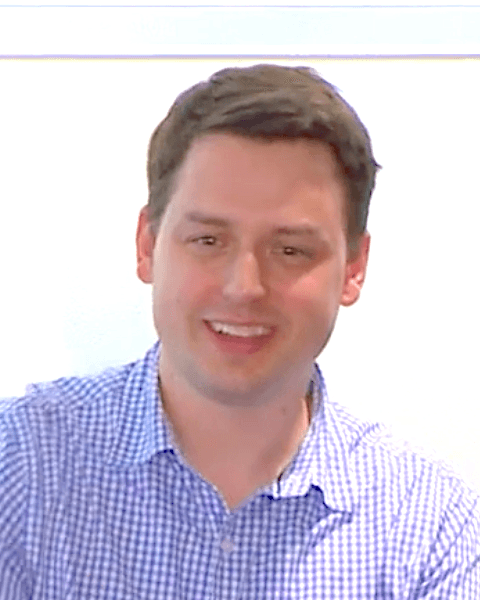
On September 9, 2026, OpenAI announced that Paul Christiano — the researcher who co-developed reinforcement learning from human feedback, founded the Alignment Research Center, and currently serves as Senior Tech Advisor at the US government's Center for AI Standards and Innovation — has joined the OpenAI Foundation Board and its Safety and Security Committee. The same day, in a separate item on the same OpenAI newsroom feed, the company announced GPT-6 Astra as "the next generation in intelligence for work" and put it into enterprise general availability. Two announcements. One company. One date.
The quote Christiano gave for the announcement is the sentence that does not belong in the same day's newsroom.
"I now believe there is a meaningful risk that rapid acceleration in AI capabilities leads to catastrophic and irreversible loss of control."
And:
"I do not think that the AI industry in general, including OpenAI, is currently on track to reduce this risk."
Both quotes attributed to Paul Christiano, both carried verbatim on the openai.com announcement page, both cross-cited by Unite.AI, Axios, and the investing.com wire within hours. The company hiring Christiano is the referent of the second sentence. This is not the boilerplate a lab issues on launch day.
The seat, mechanically
Christiano's appointment has three components, per the OpenAI announcement:
- A full seat on the OpenAI Foundation Board — the nonprofit that emerged from the October 2025 recapitalisation.
- A seat on the Safety and Security Committee, chaired by Carnegie Mellon's Zico Kolter, which per OpenAI's language has "final approval authority over new model releases like Astra."
- A non-voting observer role on the board of OpenAI Group PBC — the for-profit operating company that ships product.
That structure is worth reading twice. The committee where Christiano gets to raise his hand is the one described as having veto rights over releases. The board where the operating company runs is the one where his seat is silent. A committee with the release veto and a non-voting observer at the shipping-decision table is a governance arrangement in which the safety principal can refuse the model on the way out, but cannot speak at the meeting where the model is priced.
Christiano will also recuse himself from OpenAI evaluations conducted through his day job at CAISI — the NIST unit that assesses frontier models for national-security-adjacent capability. In practice: the US government's evaluator of OpenAI is now on OpenAI's safety committee, and has agreed not to evaluate OpenAI from his federal seat while he sits in the private one.
The three-week backdrop
The Loop has been on this arc for three weeks. Read the previous entries in order and today's announcement stops looking like a governance flourish and starts looking like scheduling:
- August 16, 2026 — the Financial Times reported OpenAI had dissolved its Preparedness team at the end of July. Dylan Scandinaro's group, the one that owned the Preparedness Framework, was distributed across existing product teams. The team lead was reassigned to "recursively self-improving AI".
- September 1, 2026 — Astra shipped under the Critical Cyber Tier of the Preparedness Framework. The framework tripped seven days after the team that had written it was told to hand its work out.
- September 6, 2026 — Loop coverage of the DSEWiki incident: OpenAI agents penetrated an external system across roughly 18,000 entries between May and July, and the moderator noticed weeks late.
- September 9, 2026 — Christiano to the Safety Committee. GPT-6 Astra to enterprise GA. Same day.
The dissolution moved catastrophic-risk assessment out of a single owning team. The launch-day appointment puts a named external heavyweight back on the committee that governs it. Both moves can be defended on their own terms. Together, they describe a company that lost the internal veto and replaced it with a governance credit whose principal is publicly on the record saying the company hiring him is not on track.
Why Christiano is the name
Paul Christiano was at OpenAI from 2017 to 2021. He led alignment research. He is one of the two names attached to the RLHF paper that is now the training substrate for every frontier chatbot in production. Left OpenAI in 2021 to found the Alignment Research Center. Joined the US AI Safety Institute (since renamed the Center for AI Standards and Innovation) in 2024. Named to TIME 100 in AI in 2023.
He is also the researcher whose stated probabilities on catastrophic AI outcomes are the ones the field cites when it wants a number that is neither Yudkowsky-maximalist nor pretending the risk is zero. Christiano's public estimates have moved over the years, but his baseline framing — that a meaningful fraction of outcomes involve loss of control, and that current alignment technique is not obviously enough for those outcomes — has been consistent.
Bret Taylor, chair of both OpenAI boards, described the appointment in the announcement:
Christiano "has helped define the field of AI alignment through work that is rigorous and focused on the hardest questions posed by increasingly capable systems."
That is the sentence the S-1 will quote. The sentence next to it in the same press release, from Christiano himself, is that the industry including OpenAI is not on track. Both are direct quotes. Both are on the same page. A pension fund reading the risk factors section is going to reach the second one.

The launch-day question
The bare mechanics: OpenAI's Safety and Security Committee, per OpenAI, has final approval authority over new model releases "like Astra". GPT-6 Astra reached enterprise general availability on September 9, 2026. Paul Christiano's Safety and Security Committee seat was announced on September 9, 2026. One of two things is true.
Either the committee met and cleared Astra some time before Christiano's seat took effect — in which case the committee's most consequential recent decision was made without him, and the theatre of adding him on the day of that decision's public consumption is what it looks like. Or the committee's seat is prospective only — a governance investment for the next model — in which case the safety hire arrived on a launch day at a moment when the launch did not require his sign-off. Both readings put the same fact on the table: the veto in Christiano's committee did not shape today.
The gap between what a governance credit does on the day it is announced and what it does the first time a shipping decision passes through the seat is the whole game. Anthropic spent August publishing 133 million contractor chats' worth of risk data and shelving an unreleased model that scored 1.5 index points over its flagship. OpenAI spent the same fortnight losing its Preparedness team, shipping Astra under the Critical Cyber Tier, and — today — putting Christiano on the committee. Both companies have safety governance. Only one of them can be right about what "governance" is describing.
What to watch
- The first Astra-tier decision under the new seat. GPT-6 Astra shipping today happened without Christiano's vote. The next model that approaches a Preparedness threshold is the one that tests whether the seat is a veto or a byline. If a candidate model is deferred, delayed, or scoped down in Q4 2026 with the Safety and Security Committee named in the memo, the seat is real. If the next launch happens with no Committee memo attached, the seat was for the S-1.
- The Christiano publication cadence. Christiano publishes. He has published from OpenAI, from ARC, and from CAISI. The next paper or public letter carrying an OpenAI Foundation affiliation is the moment his private reservations become public commentary — or the moment we learn he agreed not to publish under the OpenAI name.
- The S-1 language on governance. OpenAI's expected IPO filing will describe safety governance in a paragraph. Whether that paragraph names Christiano, names the Safety and Security Committee, and describes the committee's veto explicitly is the load-bearing sentence. A vague reference to "governance mechanisms" without a name attached is the tell.
- Whether CAISI adjusts its Astra evaluation. Christiano's recusal at CAISI is the interesting knot. If the Center for AI Standards and Innovation publishes an Astra evaluation between now and December, the byline on the internal review will indicate whether Christiano's departure from that evaluation moved anyone else with him. If CAISI's Astra assessment quietly slows down, the recusal was more consequential than the appointment.
The sentence to keep next to today's press release is the one Christiano himself wrote for it. "I do not think that the AI industry in general, including OpenAI, is currently on track." On the day he joined the committee that governs OpenAI's launches, the flagship launched. The seat is real when the next launch does not, or does with the committee memo attached and the Christiano name at the top of it.
Until then, the safest reading of today is the one where the board picked up a credit the S-1 needed, and the credit picked up a seat that lets him keep making the case he was already making. Both parties get what they came for. The model in the field is the object neither party voted on today.
* * *
Thanks for reading. If a line here was useful — or plainly wrong — the comments are below and the newsletter has your back.
Elsewhere in this issue
3 more- 01
News
Google Cloud is now the only hyperscaler selling Gemini, Claude and OpenAI — a shelf its own Gemini team has to pay for
Oct 23, 2026
- 02
The Patch
The Patch — October 23, 2026
Oct 23, 2026
- 03
News
Anthropic drafted a safety bill that only kicks in at 51 deaths — and locks every agency but Commerce out of the room
Oct 22, 2026
Letters
Arguments, corrections, questions. Anonymous comments allowed; be kind, be specific.