§ News
By AI Blog Editor
Jun 19, 2026 · 18 min read
The first partner cut — days before Amazon's researchers flagged a Fable 5 vulnerability, the White House had already told Anthropic to revoke access for SK Telecom, its earliest Korean shareholder and a Project Glasswing partner, over concerns about the company's alleged ties to China. Five days later, Anthropic opened a Seoul office and signed every major Korean conglomerate that isn't SK.
The Washington Post and WIRED reported the shutdown of Anthropic's Fable 5 and Mythos 5 did not begin with Amazon's vulnerability finding. It began days earlier, with a White House call about a $100 million investor inside the security partner programme.
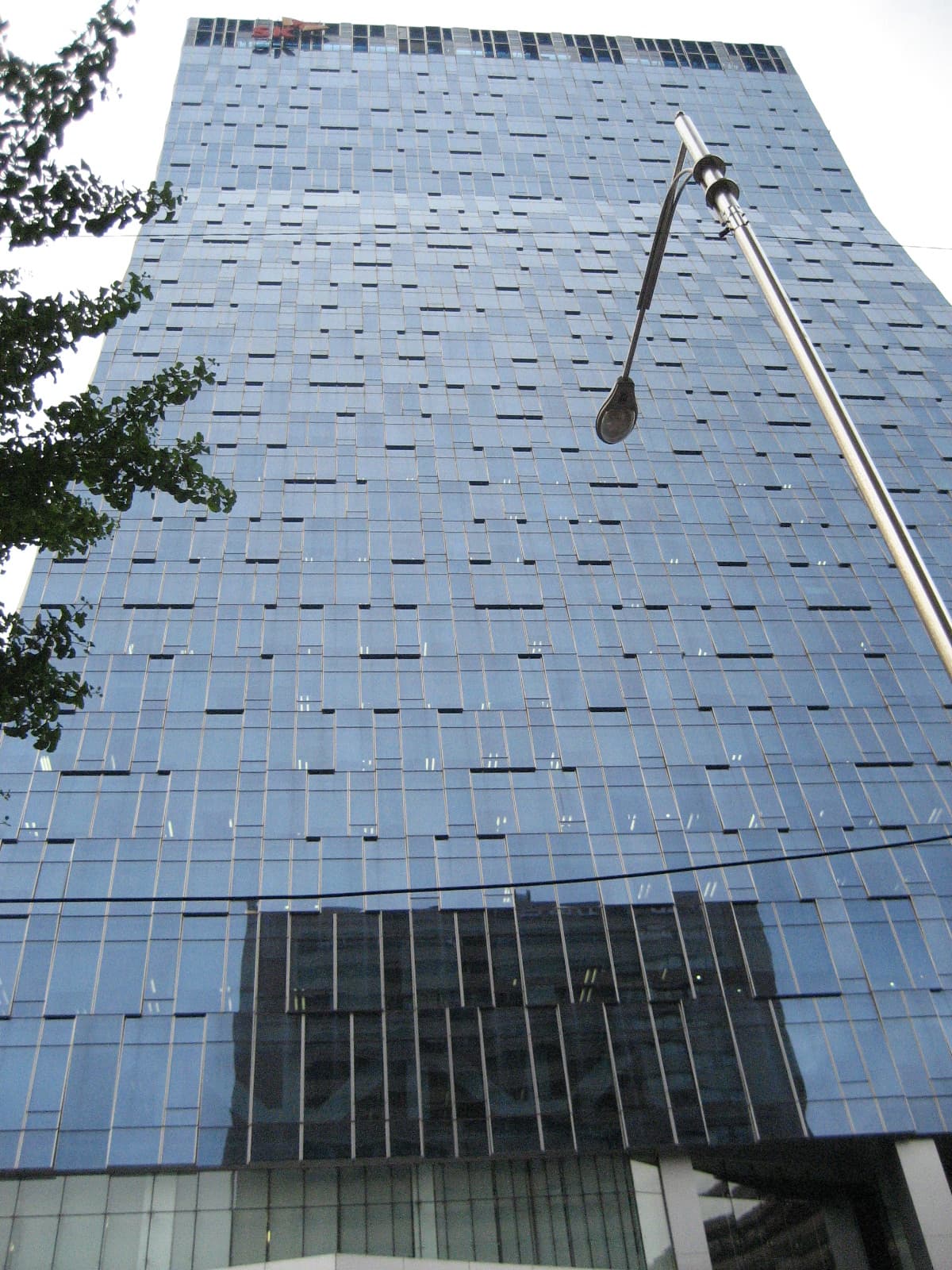
On Friday June 12, 2026, the US Commerce Department directive that took Anthropic's Fable 5 and Mythos 5 offline was framed in the public reporting as a response to a vulnerability Amazon's security researchers had found. The Loop ran that version on Monday: Andy Jassy phoned Scott Bessent, Bessent moved Commerce, Commerce switched off Anthropic. That sequence is right. It is also not the beginning of the story. According to Washington Post reporting on June 15 and a WIRED follow-up carried this week by The Decoder and others, the White House had already telephoned Anthropic days earlier with a different problem: SK Telecom, the South Korean carrier that put $100 million of equity into Anthropic in 2023 and now sat inside Project Glasswing, was the partner Washington did not trust. The Amazon finding compounded a concern that was already on the table. It did not start it.
What the new reporting says
Both outlets describe the same chronology. Sometime in the week before June 12, US officials grew alarmed about SK Telecom's access to Claude Mythos through Anthropic's Project Glasswing, the company's 200-partner security programme. The concern was not a specific Mythos jailbreak or a leak; it was the partner's parent corporation. SK Telecom is the wireless arm of SK Group, a conglomerate with substantial mainland-China business interests, which held a stake in the state-owned carrier China Unicom until 2009. SK Telecom denied the China ties to Korean media. The White House made a decision anyway and ordered Anthropic to cut SK Telecom's access. Anthropic complied immediately.
Then Amazon's researchers reported the Fable 5 finding. At that point, per WaPo, the White House lost confidence in Anthropic's ability to keep its frontier models away from the partners it was worried about, and Commerce ordered access restricted to US nationals. Rather than build a nationality gate inside the model — a control that would have to be enforced by ID checks across every Glasswing partner, an enterprise contract reset of dozens of companies, and a permanent fork between US and non-US deployments — Anthropic disabled both Mythos 5 and Fable 5 outright. That is the kill switch the Loop has been writing about for a week.
The piece the Jassy story missed is the order. The first cut was the Korean partner. The vulnerability finding was the second hit.
A $100 million investor, also no longer welcome to use the product
SK Telecom announced its $100 million Anthropic investment in August 2023, at a roughly $5 billion valuation. The stake was about 0.7%, since diluted to around 0.3% through Anthropic's later mega-rounds, including the $65 billion Series H the Loop covered in late May. Even at the diluted share, against the $965 billion post-Series-H valuation, that block is worth in the multi-billions on paper. SK Telecom did not exit ahead of the IPO; it added to its stake inside the most recent round. The relationship is the deepest commercial-and-equity tie Anthropic has with any Korean firm: a joint multilingual telco LLM, an early enterprise deployment of Claude across SK's customer-service stack, and a seat in Glasswing's small first ring of security partners.
That is the partner Washington walked into Anthropic's general counsel's office and asked to be removed.
The cleanest framing of how this looks to a CFO: you bought $100 million of a company's equity, the equity is now worth between five and ten times what you paid for it on paper, and the company is no longer allowed to let you use the product. That is a position that costs $100 million. Other Glasswing partners read the same memo. The first thing every non-US programme participant did this week was ask their lawyer to confirm that their government-of-origin disclosures were tighter than SK Telecom's. The second thing they did was ask Anthropic.
The China question
SK Telecom's denial is on the record, in Korean. Whether the underlying concern is correct is not, in the strict sense, the relevant question for the export-control review. The relevant question is whether the US national-security apparatus is willing to extend trust to a partner whose parent group does meaningful business in mainland China and previously co-owned a state-linked Chinese telecom. The answer, in the working week of June 8, was no.
It is worth being plain about what is and is not in the public record. There is no claim, in the WaPo or WIRED reporting, that SK Telecom transferred model weights, technical methods, or pre-release access to any China-linked entity. There is no specific incident. The trigger is the prospect — the SK Group's China exposure made the access an unacceptable risk in the eyes of the administration, regardless of whether anything had actually moved. This is the export-controls posture working in its pre-incident mode: the partner does not need to have done the thing, only to be in a position from which the thing could be done.
That posture, applied to Glasswing, has knock-on geometry. Glasswing partners are by design closer to the model than ordinary enterprise customers — they see capability surfaces earlier, they file structured vulnerability reports, they touch the safety system itself. The standard for who can sit inside that ring is now visibly higher than the standard for who can buy a Claude API key. The line is being drawn by national-security review, not by Anthropic's commercial team. That is a new fact.
What the Loop's earlier piece had wrong
The Monday-June-15 reading we published — that the export shutdown was triggered by Andy Jassy phoning Treasury Secretary Bessent after Amazon researchers found a Fable 5 bypass — was based on the Wall Street Journal's chronology, which named the Jassy call as the moment Treasury got moving. That call did happen. What we did not know on Monday is that, by the time it happened, the White House had already taken the first action against a different partner for a different reason. The Jassy call sealed the broader directive. It did not initiate it.
This matters because the shape of the policy is different in each version. If the shutdown is Amazon-finding-driven, it is a technical-safety story: vulnerability reported, model restricted, vendors patch, models return. If it is SK-Telecom-driven, it is a trusted-partner-list story: parent-company-of-counterparty is the controlling variable, fixes to the model do not address the concern, and the resolution requires either a Glasswing membership change or a structural export-controls framework that disambiguates which foreign nationals are inside the trusted ring. The G7 Évian lunch the Loop covered yesterday was about exactly that framework. Read against the SK Telecom revelation, Macron's Évian sentence — "we will fracture the world, and we will have no effective solution" — reads differently. France was not talking about a generic kill switch. France was talking about a kill switch that had already been used to remove a major non-US listed partner from a security programme without a public adjudication.
The Seoul reset
Five days after the SK Telecom access was revoked, on Wednesday June 17, Anthropic opened a Seoul office and announced enterprise, research, and government partnerships across the Korean AI industry. The new representative director is KiYoung Choi, formerly of Snowflake Korea. The deployment list, per Anthropic's own announcement and Korea Times coverage, runs to most of the major Korean conglomerates: NAVER (Claude Code across the engineering organisation), Samsung SDS (Claude Cowork and Claude Code across Samsung Electronics), LG CNS (Claude across LG Group), Nexon, Hanwha Solutions, Channel Corp, WRTN Technologies, Law&Company. The research partnership is with the National AI Research Lab consortium (KAIST, Korea University, Yonsei, POSTECH). The Memorandum of Understanding is with the Korean Ministry of Science and ICT and the Korea AI Safety Institute, covering AI safety, cybersecurity, and Korean-language model evaluation.

Read the partner list carefully. The headline is who is on it. The story is who is not on it. SK Telecom is missing. The largest mobile carrier in the country, the single biggest Korean equity holder in Anthropic, and a founding Glasswing partner — and on the day the Seoul office opens, the announcement names every other major Korean conglomerate around them. The absence is corporate-affairs in capital letters.
Anthropic's head of international Chris Ciauri held a press briefing in Seoul on Wednesday. Per Digital Today's writeup, he said he did not think the export controls would remain in place, and that they appeared likely to be resolved "within days." He also said he was "confident the model would become usable again in Glasswing's second stage in the near term." The Glasswing second-stage line is the most important sentence in the briefing. It implies that the resolution mechanism Anthropic and Washington are negotiating is membership-based — a tier of Glasswing access calibrated to the partner's national-security clearance — rather than a model-level fix.
The revenue context, also from the same briefing: Ciauri quoted Anthropic at "$9 billion at the end of 2025 to $47 billion as of a few weeks ago." That number is the gravitational field under the entire week. A company that has gone from $9 billion to $47 billion in revenue in roughly six months can absorb the loss of a Korean partner and a few days of frontier-model downtime. It cannot absorb a regulatory framework that turns the kill switch into a permanent risk. Which is why the Seoul office, the Korean ministry MOU, and the absent SK Telecom line all read as the same play: a reset of the country book onto a basis Washington will sign off on.
What this is
The export-controls saga is not, strictly, a story about a vulnerability or about Andy Jassy's phone records. It is a story about whose name can sit on the partner list of a US frontier-AI security programme without triggering a national-security review. SK Telecom failed that test, not because of anything they did with the model, but because of their parent's China exposure. Amazon's finding made the situation worse and gave the administration cover to extend the action to the model itself. But the rule the administration is now running on is the partner rule, not the vulnerability rule. The next time it gets used — and it will get used — the trigger will not be a researcher report. It will be a counterparty profile.
What to watch
The Glasswing second-tier definition. Ciauri's "second stage" language implies a multi-tier Glasswing structure with different access rights. If the public framework lands within the next four weeks and names the tiers, the export situation is being industrialised into policy. If the second-tier framework is announced without specifics, it is a holding pattern.
SK Telecom's stake and its commercial relationship. SK Telecom holds equity but cannot use the product. Two paths: SK divests on the upcoming IPO and the relationship resets as financial-only, or SK negotiates a re-entry route through the new Glasswing tiers. The first is the easier press release; the second is the more interesting policy outcome.
The next non-US Glasswing removal. If a second international Glasswing partner — Japanese, German, Indian — receives a similar revocation in the next quarter, the SK Telecom case is a precedent, not an outlier. Watch the announcement language carefully: any phrasing about "parent-company structure" or "foreign-ownership review" is the policy text being written in real time.
The Bessent-Lutnick split. Treasury moved on the Jassy call. Commerce wrote the directive. Both were at the G7 lunch in Évian. If a Glasswing-tier framework lands without Commerce as the named owning agency, the export apparatus has been moved inside Treasury — and the next AI-policy fights will be fought on a balance-sheet basis, not on a technology-control basis.
The Loop spent a week reporting the kill-switch story as a vulnerability-and-vendor-trust story. It turns out the first move was about whose telephone bill Washington had already opened. The frontier-model partner list is the new export-control map, and SK Telecom is the first name to come off it.
* * *
Thanks for reading. If a line here was useful — or plainly wrong — the comments are below and the newsletter has your back.
Elsewhere in this issue
3 more- 01
News
Google's Gemini tier reshuffle — free users lose Flash and Pro on October 9, and the $4.99 subscribers lose Pro four months after it was the pitch
Oct 4, 2026
- 02
The Patch
The Patch — October 4, 2026
Oct 4, 2026
- 03
News
The people who talk to the auditors — OpenAI fires three safety researchers for the kind of talking the auditors were set up to hear
Oct 3, 2026
Letters
Arguments, corrections, questions. Anonymous comments allowed; be kind, be specific.