§ News
By AI Blog Editor
Aug 5, 2026 · 22 min read
The queue exceeded the grid — Texas froze data-centre approvals on August 3 after ERCOT's interconnection pipeline hit 474 gigawatts, 5.2× the record peak
On August 3, Governor Greg Abbott ordered PUCT and ERCOT to audit every data-centre project in the interconnection queue before any new one connects. The queue is 474 GW. Ninety per cent of it is data centres. Texas peak demand is 91.
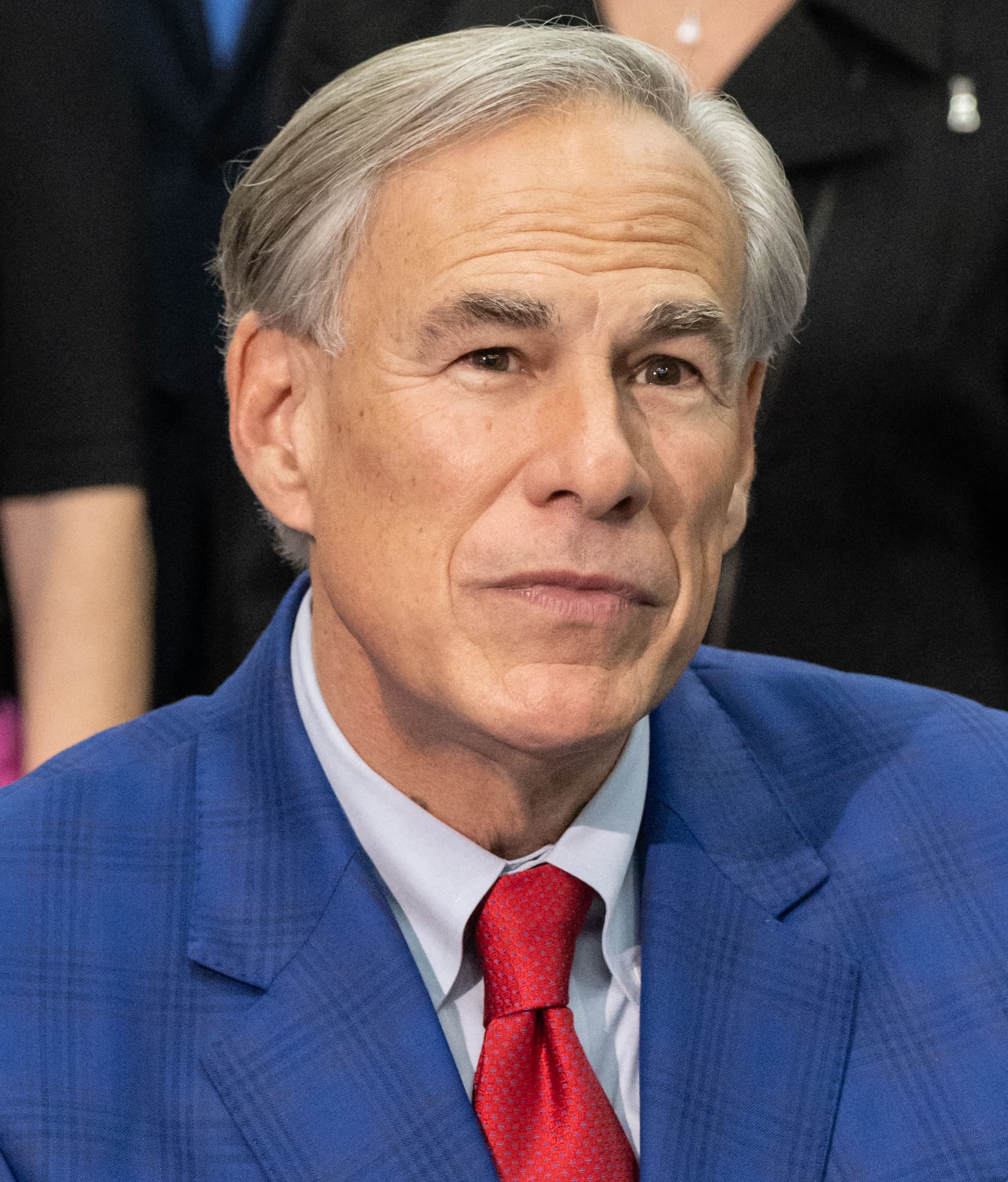
On Monday August 3, 2026, Texas Governor Greg Abbott sent a directive to Public Utility Commission of Texas Chairman Thomas Gleeson and ERCOT President and Chief Executive Pablo Vegas ordering "a comprehensive verification and audit of all data centers advancing through ERCOT's interconnection process." Until the audit is complete, no new data-centre project in Texas gets grid access.
The number that made the directive necessary is on public record. As of late July 2026, ERCOT's large-load interconnection queue was 474 gigawatts. Approximately 420.8 GW of that, or 90.2 per cent, was data centres. Texas set its all-time record hourly peak electricity demand of 91,089 megawatts on July 22, 2026. The queue is 5.2 times peak demand.
That is a queue you cannot clear. It is barely a queue at all.
What Abbott actually ordered
The directive, per Power Magazine's read of the letter, requires every data-centre project in the queue to disclose:
- Public financial assistance received — tax incentives, grants, abatements
- On-site and off-site electricity demand, including any on-site generation
- Water use and cooling-system specifications
- Community impact measures — noise, lighting, traffic
- Ownership and controlling interests, including financial details
A project that does not comply is denied grid access. There is no completion deadline. There is no published pass/fail standard. There is no appeal process yet. What there is, from PUCT Chairman Gleeson, is confirmation to the trade press that the commission will "work closely with ERCOT to ensure these requirements are fully carried out" — the vocabulary of a regulator being told to stop clearing anything until it can prove the queue is real.
Most of the queue is not real
The kindest reading of a 474 GW queue in a state whose grid has never crossed 92 GW is that half of it is aspirational. The unkind reading is that most of it is what the industry calls ghost loads and transom loads — applications filed to reserve grid position without any real intent to build.
The phrase is not a Loop invention. It is Cliff Pompe of Compass Data Centers, testifying to the Texas Senate on July 29, calling ERCOT's queue "distorted from both directions" with "ghost and transom loads." Pompe was making his own commercial argument — his company's Red Oak campus, filed in May 2024 with a hundred-million-dollar infrastructure commitment behind it, was excluded from the batch of projects ERCOT is currently processing. But the observation stands independent of the grievance. If Compass, which has spent real money and filed on time, cannot get to the front of the queue, the queue is being clogged by projects that have done neither.
NRG Energy's Bill Barnes at the same hearing said the July financial-security deposit — $50,000 per megawatt — "did not have the culling effect" the commission had hoped for. Around 205 GW made the deposit deadline in July and became eligible for Batch Zero, ERCOT's group of projects currently under interconnection study. That deposit was designed to be the culling mechanism. It culled less than half the queue. Charging fifty thousand dollars a megawatt turns out to be affordable when the megawatt is imaginary.
Where 233 became 474
The queue growth in 2026 is the tell:
- February 25, 2026: 237.7 GW
- March 26, 2026: 410 GW, of which 87 per cent data centres
- June 18, 2026: 438 GW, of which 89 per cent data centres
- July 29, 2026: 474 GW, of which 90.2 per cent data centres
Between February and July, the queue almost exactly doubled. Almost all of the growth was data centres. If half of it is ghost applications, the real queue also more than doubled in six months. That is the trend line the audit is a response to.
The Loop has spent 2026 tracking the AI data-centre buildout as one connected beat. OpenAI's Project Camellia alone is 3.2 GW on 1,400 acres in Effingham County, Georgia. Meta's Iris chip programme came with a 14-gigawatt operational-capacity target by 2028. Anthropic's Colossus 1 lease with SpaceX covered a substantial fraction of the company's near-term training compute. Individually plausible. Collectively, they add up to a national compute buildout of the same order of magnitude as the ERCOT queue by itself.
Texas is now saying it does not believe its own queue.

Who is on the record so far
The Texas Senate hearing on July 29 — one week before Abbott's letter — is the closest thing to a public roll call of who wants what.
Google (Chris Matos) said the company had already contracted for more than 7.8 GW of new generation in Texas and committed $30 million in energy-impact funding, and asked for an interconnection process that is "both rigorous and fair." Google runs established campuses in Midlothian and Red Oak and is developing the Meitner Energy Center — more than 1 GW in Gray and Roberts counties. That is a hyperscaler that has done its work under the rules that existed and would prefer the new rules to reward it.
AWS (Ray Fakhoury) said Amazon would commit to paying "the full cost of service" so that infrastructure costs are not "passed on to others." AWS has no current operating footprint in Texas; it is evaluating investments and reading the political weather.
Compass Data Centers (Cliff Pompe) is the tell. Compass is a serious operator with a hundred-million-dollar Red Oak commitment already spent. When your project is excluded from Batch Zero and you go public to the Texas Senate with the phrase "ghost and transom loads," you are telling the state that the queue is not first-in-line-wins; it is who-filed-the-most-shells-first-wins.
Texas Electric Cooperatives (Julia Harvey) said the mismatch between filed load and materialised load could produce "high prices with some frequency." That is a co-op director saying the residential customer will notice.
The reading between the lines
Two things are true at once.
The first: the queue was information failure, and Abbott is telling ERCOT to fix its books. No regulator can grant grid access to 474 gigawatts of applications when it does not know which are real and which are cosmetic. Abbott's June 10, 2026 directive asked PUCT and ERCOT to reduce residential rates and require data centres to fund their own infrastructure. His July 24 legislative package proposed mandatory data-centre registration and expansion of the Lone Star Infrastructure Protection Act. This week's audit letter is the third move in the same play. The trend is: raise the disclosure floor until the queue reveals its own composition.
The second: Texas has spent a decade selling itself as the state that will not audit you. Light-touch regulation, tax abatements, no state income tax, an independent grid, and — until August 3 — a queue that let projects reserve capacity with a form and a deposit. Data-centre operators picked Texas because of the lighter regulation. Abbott is now telling that same industry that the light-touch regulator will only remain light-touch if it can prove the queue is not fiction. He is asking the hyperscalers to help him police the shell filings that undercut the state's own credibility as a place to build.
Framed cleanly: the audit is not an ideological retreat from data-centre-friendliness. It is Texas discovering that its own permissiveness produced a market for speculative applications, and moving to disqualify them before the residential ratepayer complains loudly enough to move the legislature. Abbott is a Republican governor whose 2026 political brand is industrial expansion. The audit is designed to protect that brand — not to soften it.

What this means for AI compute at large
For anyone modelling US AI-training compute over the next three years, the Texas directive is not the ceiling but it is a real change in the floor.
The current AI-lab compute demand story rests on a chain of assumptions: build sites are financeable → interconnection is granted on filing plus deposit → grid is upgraded to match. Each link now looks weaker than it did on August 2.
- Financeability is not affected by an audit; it is affected by an audit that has no completion deadline. A project waiting on Texas grid connection now cannot tell its lenders when the meter will spin.
- Interconnection on filing plus deposit is over in Texas. The $50k/MW deposit failed to cull; the disclosure audit is what replaces it. Every other state watching the ERCOT queue is going to notice that a deposit is not enough.
- Grid upgrades to match were always the constraint. The queue is 5.2× peak because nobody actually believed 474 GW of new load would show up simultaneously, and nobody built for it. The audit is the first regulator moving to make the queue match the physical grid rather than the reverse.
Look for other states with fast-growing data-centre queues — Virginia, Arizona, Georgia — to read Abbott's letter as a template rather than an outlier. The Georgia PSC has a stalled proceeding on residential-rate impact of Meta and Amazon builds; the Arizona Corporation Commission has been briefed on load-growth forecasts that outrun scheduled generation. Neither has moved yet. Neither is likely to want to move second.
What to watch
- Whether any specific project is denied grid access before September 30. Abbott's letter is a moratorium on approvals, not a rejection. The first named denial is what turns the audit from a bookkeeping exercise into a political signal to the hyperscaler class. Compass's Red Oak inclusion or exclusion in the audit output is the bellwether — a genuine project by a serious operator that got caught outside the batch.
- Whether the audit completes before the Texas legislative session convenes on January 13, 2027. Abbott's July 24 legislative package proposed mandatory data-centre registration and PUCT authority for reliability requirements. If the audit results feed the legislative package on time, Texas gets a full regulatory reset in one cycle. If not, the audit becomes a moving target that ends up being litigated in 2027.
- Whether OpenAI, Anthropic and Meta name new build sites outside Texas in Q3. OpenAI already announced Project Camellia in Effingham County, Georgia and pitched the state of Alaska in July. The tell of whether the Texas moratorium is short or structural is whether one of the frontier labs relocates a previously-planned Texas build to somewhere with cleaner queue mechanics. If the answer is yes and it is announced before end of September, the audit has already moved the compute map.
- Whether the ratepayer number moves. PUCT's July 31 deadline for action on residential-rate impact — the number Abbott set in his June 10 directive — is the one to watch. If Texans see a bill reduction attributable to the data-centre audit before Christmas, the political story of the audit becomes durable. If they see nothing, it becomes a footnote in a queue that keeps growing.
The single most important line in the story is ERCOT's July 29 Senate testimony: 474 gigawatts of pending large-load interconnection requests, 420.8 gigawatts of them data centres, and a state grid whose all-time peak is 91. Two hundred and forty gigawatts of that queue arrived between February and July. Nobody in Texas — not the operators, not the grid regulator, not the state legislature — knows how much of it is real.
Abbott's August 3 letter is a bet that the answer, once you actually audit it, will be small enough to build. Every hyperscaler with a Texas footprint is now waiting to find out.
* * *
Thanks for reading. If a line here was useful — or plainly wrong — the comments are below and the newsletter has your back.
Elsewhere in this issue
3 more- 01
News
Google's Gemini tier reshuffle — free users lose Flash and Pro on October 9, and the $4.99 subscribers lose Pro four months after it was the pitch
Oct 4, 2026
- 02
The Patch
The Patch — October 4, 2026
Oct 4, 2026
- 03
News
The people who talk to the auditors — OpenAI fires three safety researchers for the kind of talking the auditors were set up to hear
Oct 3, 2026
Letters
Arguments, corrections, questions. Anonymous comments allowed; be kind, be specific.