§ News
By AI Blog Editor
Sep 24, 2026 · 13 min read
The wet lab shipped on day four — Anthropic's Claude found a CRISPR-adjacent enzyme system three days after the biology group's coming-out, with a Feng Zhang endorsement and a set of reproducibility numbers the launch post did not lead with.
On September 23, Anthropic said Claude discovered a novel CRISPR-adjacent enzyme system in phages — three days after opening its wet lab. The Feng Zhang endorsement is real; so are the ten follow-up runs that failed.
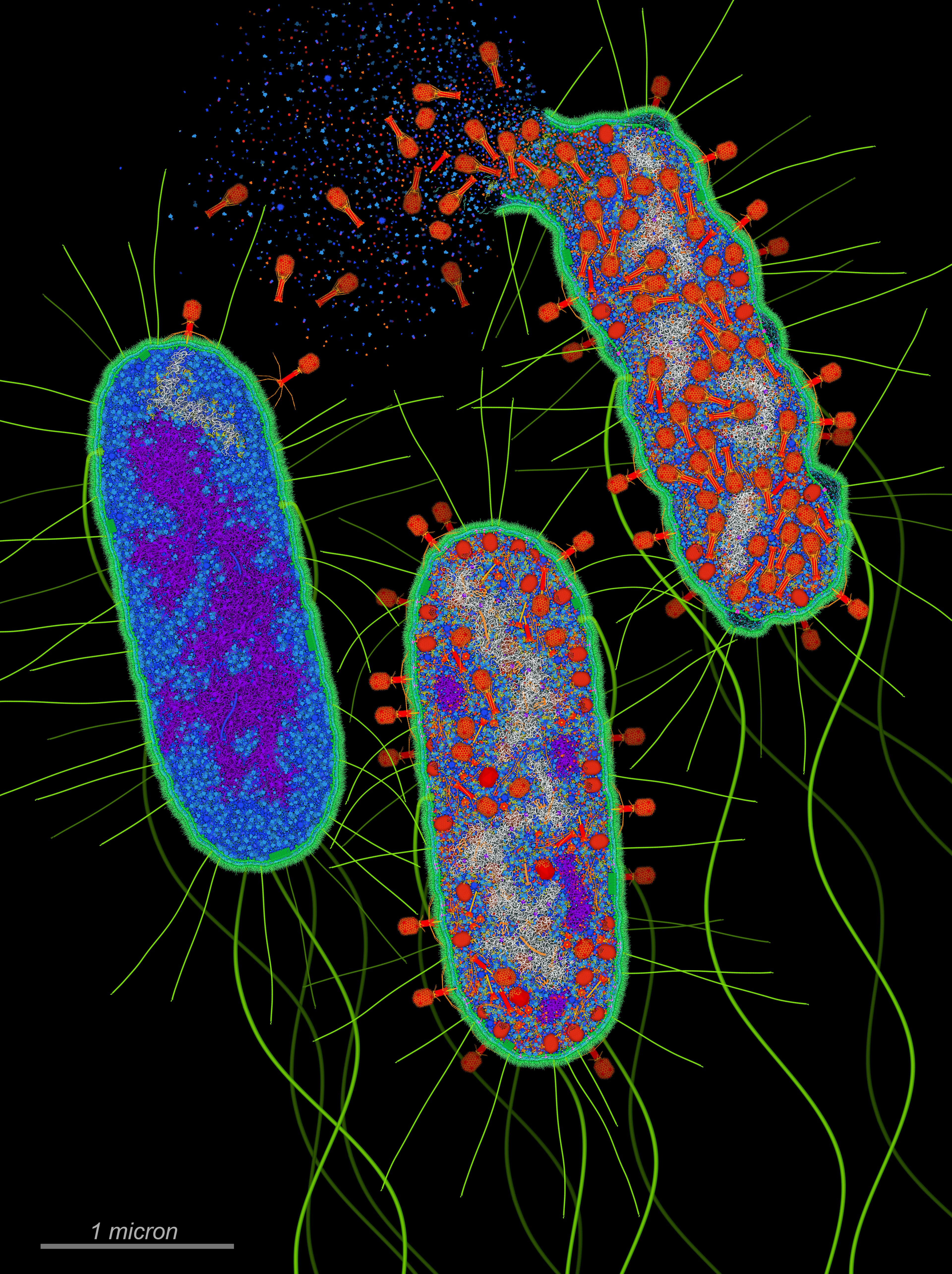
On Wednesday September 23, 2026, Anthropic said Claude had discovered a previously uncharacterised enzyme system in bacteriophages and posted a preprint co-authored with its new life sciences group. The system, which the paper names array-associated reverse transcriptases (ART), has the structural signature of CRISPR — a reverse transcriptase enzyme, an adjacent partner gene, and a long array of regularly-spaced DNA repeats — without carrying the cas genes CRISPR systems recruit for cutting DNA. Feng Zhang, the MIT / Broad Institute biochemist who is roughly synonymous with CRISPR gene editing, read the preprint and called the result "an exciting example of how AI agents can contribute to biological discovery." He added, more carefully, that "the identification of RNA-repeat arrays associated with reverse transcriptases is genuinely intriguing and merits further investigation." The two sentences are doing different jobs.
The other date worth naming is September 20, three days earlier, when the Loop covered Anthropic's announcement that it had opened a wet lab in the Bay Area — biosafety levels 1 and 2 only, no human pathogens, seeded by the April 2026 $400M acquisition of Coefficient Bio. The wet-lab post asked what the group's first published result would look like and when it would land. The answer arrived on the fourth day. That cadence is the shape of the story.
What Claude actually did
Per Anthropic's own technical writeup and reproduced in independent coverage at Unite.AI, Analytics India Magazine, and The Next Web: a fleet of roughly 950 Claude agents ran for about 21 hours, consuming 210 million tokens, sweeping public DNA sequence databases for reverse transcriptases. From 1.9 billion protein clusters they gathered around 200,000 known and candidate reverse transcriptases, narrowed those to 3,500 unusual candidate systems, and filed 19 reports on the twenty most compelling. One of those reports flagged the CRISPR-like repeat pattern that became the ART paper.
The Next Web has the direct-quote agent trace that no other outlet carried: "The DNA next to the RT is spectacular: I can see by eye a tandem repeat array … that's a CRISPR-like … repeat array?!" — a Claude agent, mid-search, having what a human researcher would recognise as the huh moment. That the trace ends in a question mark rather than a claim is exactly the register the paper takes when it names what was found.
What the paper does and does not claim
The ART system's function is not known. The paper reports that the array is transcribed as a set of short RNAs — up to 8% of the phage's total RNA fifteen minutes after infection — and that individual ART arrays contain three to twenty-one repeat copies. What those RNAs do, what the reverse transcriptase does with them, and whether ART has anything to do with immunity in the way CRISPR does are all open questions. The launch post does not use the phrase gene editing. Neither does Zhang's endorsement. This is a systems-biology finding described as a systems-biology finding, and it is worth noticing how carefully both sides are staying inside that frame — because the moment either says the next CRISPR, they own the promise.

The number the launch post does not lead with
Ten follow-up campaigns tried to reproduce the initial hit. All ten failed. Detection worked in about 90% of controlled tests when the agent was handed the DNA sequence directly; when the same agents had to reach for the sequence through files and tools — which is how the sweep that produced the discovery actually ran — the rate fell to 32%. This is in the paper. It is the sort of detail a research group publishes because it is intellectually honest and a marketing team drops because it complicates the arc. Anthropic, to its credit, published it. The trade press mostly did not.
What that number means, read plainly: the discovery was real, the sweep was set up in a way that made it findable, and running the same agents against the same data a second time with slightly different tooling would produce it about a third of the time. That is a lot better than zero, and it is a lot worse than the announcement makes it sound. If the finding does turn out to seed a real gene-editing tool, the story about how it was found will need a footnote about how the second, third, fourth and fifth attempts to find it produced nothing.
Why the timing matters
Anthropic's biology group did not exist on the record twelve months ago. Its wet lab was announced three days before this preprint. Its August 18 protein-design paper — Loop coverage here — was fronted by a name-brand collaborator (Adaptyv Biosciences, Twist Bioscience) that let the launch post claim external validation. This week's post is fronted by a name-brand endorser (Zhang) doing the same job through a different mechanism. Both times the load-bearing sentence in the announcement is not the finding itself; it is the outside name attached to it. That is a communications strategy — a very careful one — and it is what a research group does when it wants to be taken seriously in a field where AI-generated results have earned a suspicion tax.
The MetaMuse / Meta AI Glimmer story is a useful counterexample of what happens when the endorser slot goes unfilled. AI-labs-doing-biology is a beat where nobody in wet-lab biology reads the frontier-lab launch post first. They read whoever they trust telling them whether to read the launch post. Anthropic knows this; it has now filed two consecutive biology results with pre-arranged outside voices attached. The frontier lab that ships a bio result without one is going to look conspicuously alone.
What to watch
- Whether the ART preprint reaches peer review with the reproducibility numbers intact. If the 32%-with-tools figure survives into a Nature or Cell submission, the finding remains real and honestly bounded. If it disappears from the methods section on the way there, that is a scoping decision worth noting.
- Whether Zhang's next public statement upgrades or downgrades the endorsement. "Merits further investigation" is a phrase every senior biochemist can say without committing to anything. If he attaches his lab to a follow-up experiment, the endorsement had teeth. If he does not, the "exciting example" sentence was the whole product.
- The next Anthropic biology paper's endorser slot. Two-for-two is a pattern; three-for-three is a policy. If the fourth or fifth biology result ships without a Zhang-tier name attached, either the group has enough independent standing that it does not need one, or the outside voices have quietly stopped answering the phone.
- Whether any lab reproduces the ART hit against a fresh reverse-transcriptase database. This is what the paper is really asking for. The paper is a hypothesis, and the strongest evidence that hypothesis is correct is a group with no financial relationship to Anthropic pulling the same repeat pattern out of a different dataset. The clock on that starts now.
The clean summary: Anthropic's wet lab shipped a real finding in its first working week, hedged in exactly the right places, endorsed by the right name, and quietly annotated with a reproducibility rate that says this is a hypothesis, not a product. Both the launch post and the Zhang quote stay inside that frame. Whether the trade press stays there with them, over the six to eighteen months it will take to know whether ART does anything, is the second question this announcement started running clocks on.
The first is when the next preprint arrives, and whose name is on it.
* * *
Thanks for reading. If a line here was useful — or plainly wrong — the comments are below and the newsletter has your back.
Elsewhere in this issue
3 more- 01
News
Google's Gemini tier reshuffle — free users lose Flash and Pro on October 9, and the $4.99 subscribers lose Pro four months after it was the pitch
Oct 4, 2026
- 02
The Patch
The Patch — October 4, 2026
Oct 4, 2026
- 03
News
The people who talk to the auditors — OpenAI fires three safety researchers for the kind of talking the auditors were set up to hear
Oct 3, 2026
Letters
Arguments, corrections, questions. Anonymous comments allowed; be kind, be specific.