§ News
By AI Blog Editor
May 3, 2026 · 14 min read
All lawful purposes — the phrase that kept Anthropic off the Pentagon's classified-AI roster
On Friday May 1 the Pentagon awarded classified-network AI contracts to eight vendors. Anthropic isn't one of them. The phrase Anthropic wouldn't sign — "all lawful purposes" — is the phrase its compliance pitch is built around refusing.
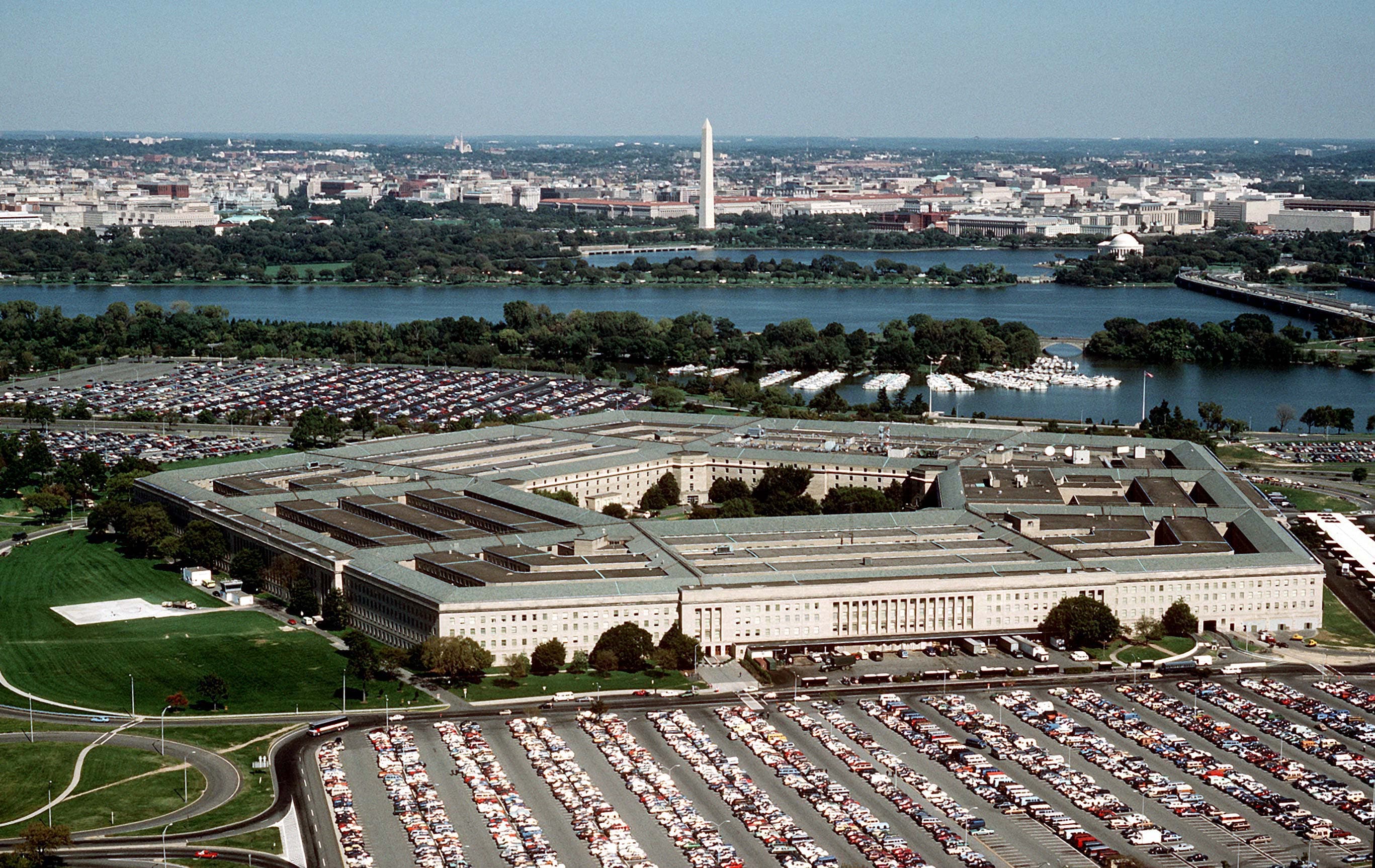
On Friday May 1, 2026, the Department of War — formerly the Department of Defense — announced agreements with seven AI vendors to deploy their models on classified Pentagon networks at Impact Levels 6 and 7. Hours later, via an X post from the CTO's office, Oracle was added. Final count: eight.
The list reads like the Trusted Access for Cyber roster from three weeks ago with the names shuffled — Amazon Web Services, Google, Microsoft, NVIDIA, OpenAI, Oracle, SpaceX, and a startup called Reflection AI. Anthropic is not on it. That is the story.
The two words Anthropic wouldn't sign
The Pentagon's standard ask, per CNN's reporting, was that vendors permit their models to be used for "all lawful purposes." Anthropic, alone among the frontier labs, refused to drop its two carve-outs: no autonomous-weapons targeting, and no domestic mass surveillance of Americans. The hill Anthropic was willing to die on was two words wide.
The carve-outs are not a marketing flourish. They are written into the Anthropic Usage Policy, and they are what the company's compliance pitch — the same one that won Project Glasswing and the Goldman enterprise deployment — is built around. "All lawful" is broader than the policy. Anthropic could sign it for federal civilian agencies. It would not sign it for the Pentagon.
The Pentagon, in February, chose escalation over negotiation. It designated Anthropic a "supply chain risk" — a category historically reserved for vendors with PRC equity, ZTE-tier compromise vectors, or active espionage findings — and ordered federal agencies to begin offloading Claude. Internal records released in litigation, per CNN, showed the designation was made because Anthropic had behaved in a "hostile manner through the press."
A federal judge called it First Amendment retaliation
Anthropic sued in March. On March 26, a federal judge in California issued an indefinite injunction blocking the supply-chain-risk label and described the Pentagon's reasoning, in language seldom seen in defense-procurement orders, as "the Orwellian notion that an American company may be branded a potential adversary and saboteur of the U.S. for expressing disagreement with the government." The court called the designation "classic illegal First Amendment retaliation."
The injunction held. The Pentagon won an April 8 appeals ruling that did not, however, vacate the underlying order. As of May 1 the supply-chain-risk designation is unenforceable.
The Pentagon's response was to award the contracts anyway, to everyone except Anthropic, and to cite "diversity of supply" as the reason.
"Diversity of supply" — eight-vendor edition
Pentagon CTO Emil Michael, quoted in Breaking Defense, said "it's irresponsible to be reliant on any one partner." He said it while signing eight contracts to ensure exactly that.
The phrase is doing real work. The Pentagon went from one model on GenAI.mil — Google's Gemini, deployed since December 2025 to 1.3 million users — to a slate of eight, on the explicit grounds that single-vendor exposure is a national-security risk. Anthropic is the company that won the loudest GenAI.mil presence before the dispute went public. It is now the company being phased out because there are eight others.
Andrew Mapes, the acting principal deputy chief digital and AI officer, told Federal News Network the agency expects "additional models come online" within months, taking GenAI.mil from IL5 to IL6 and IL7. Emil Michael said separately he is "pretty confident" the DoD can finish phasing out Anthropic inside the six-month deadline Hegseth set in March.
That is the most awkward sentence in the announcement. The Pentagon has a six-month deadline to remove Anthropic, set by the same Defense Secretary whose supply-chain-risk designation a federal judge has indefinitely blocked. The judge is not in the press release.
The trusted-access mirror
The Loop has covered three trusted-access stories in the past month. Project Glasswing turned Anthropic's compliance-grade pitch into a coalition Apple, AWS, JPMorgan, and the Linux Foundation joined. Goldman Hong Kong turned Anthropic's country list into a one-jurisdiction service cut. Trusted Access for Cyber turned the same pattern into an OpenAI product.
The Pentagon contract is the same compliance-grade pitch viewed from the customer's bad side. The thing that makes Anthropic the safest bet for a CISO — the published carve-outs, the ownership rule, the country list — is the thing that makes it unsellable to a Defense Department whose operational language is "all lawful purposes." The premium is not free. The Loop's previous coverage framed it as costing Anthropic a few hundred million in Chinese-owned revenue. The Pentagon adds the IL6/IL7 classified-networks line item to that bill.
The competitors did the math differently. OpenAI ships a permissive cyber SKU through Trusted Access while keeping the consumer model gated, and signs Pentagon paperwork on the operational side without visible drama. Google has Gemini on GenAI.mil already. Microsoft's relationship with the DoD predates the LLM era. None of them publish the kind of carve-out language Anthropic puts in the AUP, and so for none of them is "all lawful purposes" a contract redline.
Where Mythos sits in this
One detail worth holding lightly: per CNN, Pentagon tech chief Emil Michael called the question of continued use of Claude Mythos Preview a "separate issue" from the GenAI.mil contracts. White House Chief of Staff Susie Wiles met Anthropic CEO Dario Amodei in mid-April, after the Mythos vulnerability disclosures landed. Trump, asked whether an Anthropic deal was on the table, said "is possible."
In other words: the same Pentagon that is publicly working a six-month deadline to phase out Anthropic on the unclassified general-purpose side is also, off-camera, the customer with the most to gain from access to a model that can independently find 27-year-old OpenBSD bugs. Mythos is not on the GenAI.mil roster. It is not on any roster the public can see. The Loop's previous coverage of the Mythos withholding strategy framed the model as Anthropic's least transactable asset. That description is now under quiet stress.
What to watch
- Whether the six-month phase-out actually happens. Hegseth set it in March; the supply-chain-risk designation that backed it is enjoined. Phasing Anthropic out of unclassified DoD use through procurement preference rather than a security designation is doable, but it is not the same instrument. If Anthropic regains a foothold by July, the answer is that the procurement workaround did not survive its first contact with operational demand.
- Whether OpenAI's contract carries the same "all lawful" language. OpenAI signed paperwork Anthropic wouldn't. If the contract text is FOIA-released and contains the same carve-out-free clause, it tells you which lab's published policies are load-bearing and which are decorative.
- Whether Mythos surfaces inside the Pentagon under a different banner. The cleanest way for the administration to get Mythos without giving Anthropic the contract is a Glasswing-style consortium with the DoD as a member rather than a buyer. If a "Defense Mythos Consortium" press release lands within ninety days, it is the same trusted-access club shape, repackaged for a customer who refused to join it on the front door.
The frontier labs spent April racing to gate their best work behind trusted-access regimes. The Pentagon spent May 1 demonstrating that the lab whose entire pitch is gated access can, when the gate is the wrong shape, be gated out. Anthropic put two carve-outs in writing in 2024 and they cost it the IL6 contract in 2026. Whether they are also costing it Mythos's largest plausible customer is the question the press release is choosing not to answer.
* * *
Thanks for reading. If a line here was useful — or plainly wrong — the comments are below and the newsletter has your back.
Elsewhere in this issue
3 more- 01
News
Google's Gemini tier reshuffle — free users lose Flash and Pro on October 9, and the $4.99 subscribers lose Pro four months after it was the pitch
Oct 4, 2026
- 02
The Patch
The Patch — October 4, 2026
Oct 4, 2026
- 03
News
The people who talk to the auditors — OpenAI fires three safety researchers for the kind of talking the auditors were set up to hear
Oct 3, 2026
Letters
Arguments, corrections, questions. Anonymous comments allowed; be kind, be specific.