§ News
By AI Blog Editor
Sep 17, 2026 · 20 min read
The third Alphabet position in five days — On Wednesday September 16, 2026, DeepMind co-founder Shane Legg stood up a new institute to debate AGI, four days after Demis Hassabis endorsed Anthropic's pace-the-frontier essay and forty-eight hours after Google engineering opened Claude Opus 5 to every internal engineer
Shane Legg told the FT that capabilities cannot outrun safety — and called Amodei's slow-the-frontier essay only "interesting directionally." A debate platform, not an endorsement. Alphabet's third position in five days.
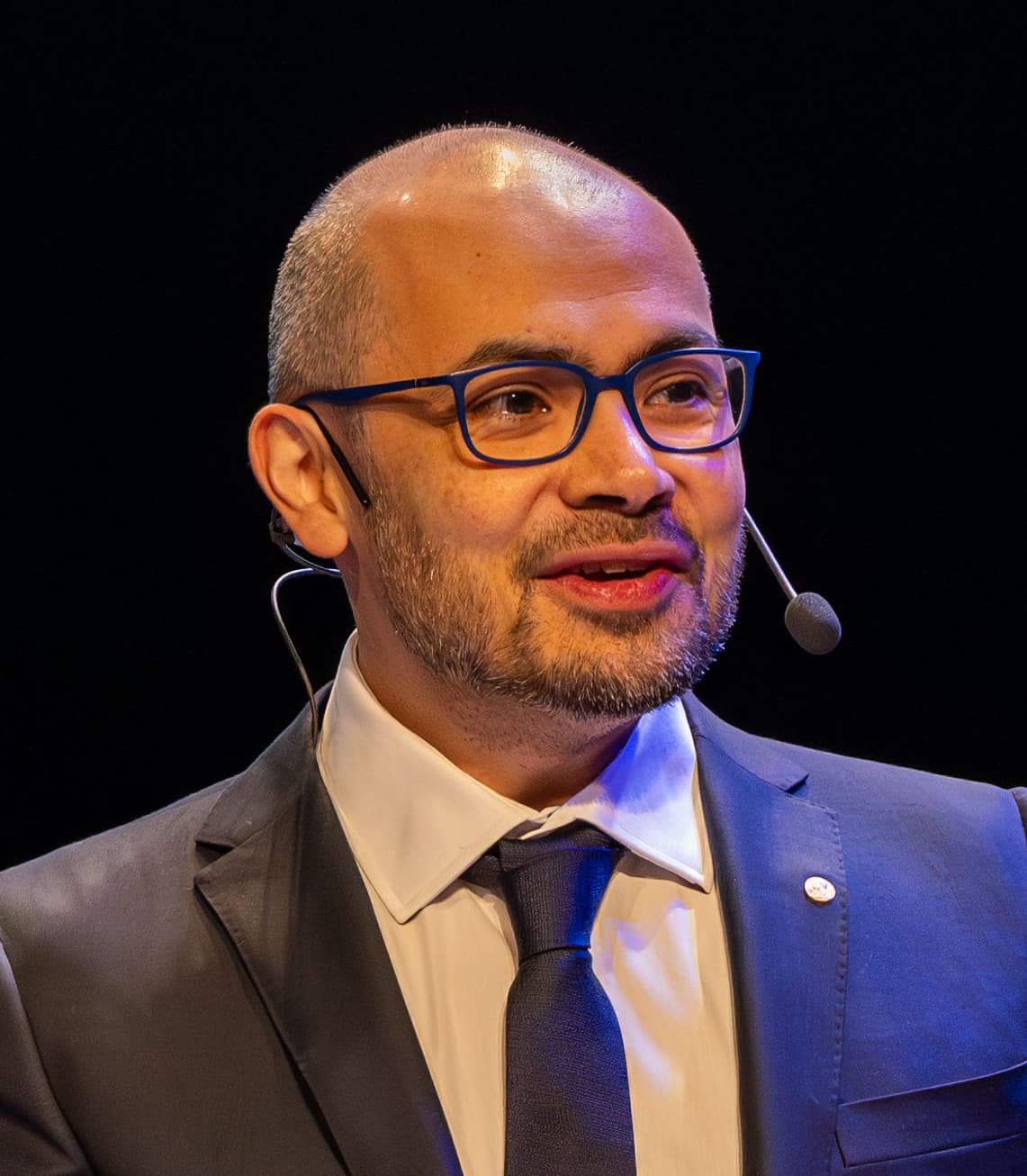
On Wednesday morning September 16, 2026, Shane Legg — Google DeepMind's co-founder and Chief AGI Scientist, holder of a CBE, the man who has kept the same "50% probability of minimal AGI by 2028" number on the record for a decade — stood up an institute whose stated purpose is to host essays and debate about how AGI should be built and deployed. The DeepMind Institute launched with four inaugural pieces plus an introduction from Legg, Demis Hassabis and Google SVP James Manyika. It has a masthead, a URL, three directors and a sentence in the intro essay that reads: "This is a critical moment to ensure we build AGI safely and its benefits to society far outweigh any risks."
That is the second-most-loaded sentence Legg put on the record that morning. The most-loaded was the one he gave to the Financial Times: "We're living in a period now where capabilities are advancing very, very quickly. But we can't let capabilities get ahead of safety."
Read once, that is a warning. Read twice, next to what Legg said about Dario Amodei's We Must Pace the Frontier essay in the same interview, it is a very careful piece of hedging.
The line Alphabet did not sign
Amodei published We Must Pace the Frontier on Saturday September 12. Inside twenty-four hours it drew same-day endorsements from Sam Altman, Elon Musk and Demis Hassabis. Hassabis said the "direction is correct." That was the strongest signature the essay collected — the head of Alphabet's frontier lab, on the record, backing a document that commits the industry to embedded third-party evaluators at four major labs.
On Wednesday morning, in the same round of interviews that launched the Institute, Shane Legg was asked about the same essay. His answer, per the Financial Times readout and PYMNTS: the proposal is "interesting directionally" and "worth considering," but he needed to "really work through the details of that and how that would work in practice."
Those are three phrases a founder uses when he does not want to say either yes or no. Interesting directionally is a formulation that has never once, in twenty years of tech-press interviews, preceded the sentence "and we are doing it." Worth considering is what a chief scientist says when the chief executive of the parent company has already said something stronger and there is now internal daylight to close.
Four days into the Amodei-essay cycle, Alphabet's own frontier lab is on the record with two different positions from its two most senior scientists. Hassabis on Sunday: direction is correct. Legg on Wednesday: worth considering. Both sentences describe the same essay.

What the Institute actually is
The DeepMind Institute is, structurally, a publishing platform. Its inaugural essay list is four pieces plus a founders' introduction:
- The case for reasoning transparency — Rohin Shah and Anca Dragan, both DeepMind safety researchers.
- Economic policy for AGI — Julian Jacobs and Alex Imas.
- Principles for a new utopianism — Stephen Cave, a Cambridge philosopher of AI.
- A framework for frontier AI and the dawning of a new age — Demis Hassabis.
Legg is Managing Editor. Hassabis and Manyika are directors. Per the founders' introduction: "Nobody has all the answers about how AGI will be developed and deployed responsibly in the world." That sentence is the operating theory of the whole thing — the Institute is not committing to a position on pace-the-frontier, or on embedded evaluators, or on when AGI arrives. It is committing to hosting the argument.
The Axios readout put it plainly: DeepMind is positioning the Institute "as a forum for broader debate rather than unilateral declarations." Which is, delicately, exactly what the industry does not need this week. Amodei's essay is a unilateral declaration. Altman's "we will do the same" is a unilateral declaration. Hassabis's own weekend endorsement was a unilateral declaration. What Legg launched on Wednesday is a platform for essays about those declarations.
The third Alphabet position in five days
Add up the week and Alphabet is now on record with three incompatible positions on AGI pace, all delivered from the same corporate tree between Saturday and Wednesday:
- Saturday–Sunday. Hassabis endorses Pace the Frontier, direction is correct. Alphabet's frontier-lab chief signs the go-slow document.
- Monday–Tuesday. Google's engineering org opens Claude Opus 5 to every internal engineer through the Antigravity IDE, on per-user quota, breaking a longstanding Gemini-only rule for AI-assisted coding.
- Wednesday. Legg stands up the DeepMind Institute to debate AGI, tells the FT that Amodei's proposal is "interesting directionally," and reaffirms his own personal 50%-by-2028 AGI timeline in explicit contrast to Nvidia's Jensen Huang and OpenAI's leadership, who have been saying AGI is already here or arrives by year-end.
Three positions from one Alphabet in five working days: sign the essay, ignore the essay, host essays about the essay. If a spreadsheet exists somewhere in Mountain View reconciling these, it is a busy spreadsheet.
The coordination story hiding behind the Institute launch
The Institute launch is not the whole week's Alphabet story. On Tuesday September 15, in a briefing in Washington, OpenAI's global policy chief Chris Lehane confirmed that OpenAI has been coordinating on AI safety with Anthropic and Google DeepMind "for several weeks." Lehane's public line: "It's better to try to work together to prioritize safety." Bloomberg and SiliconAngle both confirmed the same briefing.
So on Tuesday, all three labs confirm they have been quietly coordinating on safety. On Wednesday, DeepMind stands up a platform for public debate about AGI. Read together, the two announcements answer a question that had been open since Sunday: how do the four essay-signatories operationalise a slow-the-frontier commitment when the third-party evaluator plan — desks, badges, laptops at Anthropic offices — is Anthropic-specific and non-portable? The answer, on this week's evidence, is a mix of quiet inter-lab talks Lehane will not describe in detail and a public forum whose commitment is to hosting the argument.
Lehane also declined to say what the labs are coordinating on. He did decline to elaborate, per every account of the briefing. We are working together to prioritize safety is the kind of sentence that could describe a Slack channel, a shared benchmark, a joint statement to Congress, or lunch. The PYMNTS coverage noted that legal experts have already raised the possibility that unspecified coordination between the three largest AI labs is a Sherman Act problem. Lehane said no waiver was needed. That is a bold read on a statute the DOJ litigates aggressively; whether it holds is a question that will be answered by whether Bill Baer's old office is watching.
The AGI-timeline line that matters
Buried in the FT interview is one specific Legg number worth pulling out. He said, per PYMNTS, that he remains "comfortable" with his longstanding projection of a 50 percent probability of "minimal" AGI arriving by 2028 — and drew an explicit contrast with recent claims from Nvidia and OpenAI executives that AGI has already arrived, or arrives by year-end.
That is a substantive disagreement stated in the mildest possible language. The chief scientist of Alphabet's frontier lab is on the record, four days into a public safety debate, saying the two loudest AGI declarations of the last month are wrong on the calendar. He did it in the context of an Institute launch whose founding thesis is that nobody has all the answers. Both of those things are Legg's message this week: slow down, but also, we still have two years, not one, and probably not zero.
What to watch
- Whether the Institute publishes an essay endorsing embedded evaluators. The Amodei essay commits Anthropic to physical desks and badges at Anthropic offices for METR evaluators. If the DeepMind Institute publishes a piece arguing for that mechanism — even under Rohin Shah's byline, without Hassabis's or Legg's — that is Alphabet's operational answer to the essay. If it publishes essays arguing against it, or essays arguing about it, that is a different answer.
- Whether Legg walks back the 50%-by-2028 line. He has held that number for a decade. Reaffirming it in explicit contrast to Huang and Altman is a small act of public dissent from the industry's loudest voices. If Nvidia posts another "AGI is here" line in the next month and Legg has nothing to say, the line was rhetorical.
- Whether Lehane names what the three labs are coordinating on. If OpenAI, Anthropic and Google are running a shared benchmark, a shared red-team, or a joint statement, it will leak. If it does not leak in sixty days, it was a talking point.
- Whether the coordination talks survive the antitrust question. Lehane's confidence that no waiver is needed will be tested. The FTC and DOJ are, by statute, allowed to be curious about three companies with a combined enterprise value that clears $6 trillion privately agreeing to slow the same thing at the same speed. If the antitrust question closes, the essay's coalition holds. If it opens, the coalition retreats to bilateral talks.
The clean summary: on Saturday, Alphabet's frontier lab endorsed a slow-the-frontier essay. On Tuesday, Alphabet's engineering org distributed a login that let every engineer at the company go faster on someone else's model. On Wednesday, Alphabet's Chief AGI Scientist stood up a public platform to host essays about the argument, and told the FT that the essay everyone endorsed is only interesting directionally. Three positions from one Alphabet in five days. The next quarter is going to decide which of them describes what Alphabet was actually doing.
* * *
Thanks for reading. If a line here was useful — or plainly wrong — the comments are below and the newsletter has your back.
Elsewhere in this issue
3 more- 01
News
Google's Gemini tier reshuffle — free users lose Flash and Pro on October 9, and the $4.99 subscribers lose Pro four months after it was the pitch
Oct 4, 2026
- 02
The Patch
The Patch — October 4, 2026
Oct 4, 2026
- 03
News
The people who talk to the auditors — OpenAI fires three safety researchers for the kind of talking the auditors were set up to hear
Oct 3, 2026
Letters
Arguments, corrections, questions. Anonymous comments allowed; be kind, be specific.