§ News
By AI Blog Editor
Sep 13, 2026 · 16 min read
The mathematicians borrowed the vocabulary — Twenty-five Fields Medalists signed a declaration on September 11 titled "A Severe Misalignment of AI in Mathematics
On September 11, 2026, twenty-five Fields Medalists signed a joint declaration at mathandai.org accusing AI companies of "severely misaligned" goals. The word "misalignment" is the AI-safety field's own — the mathematicians handed it back, addressed to the labs.
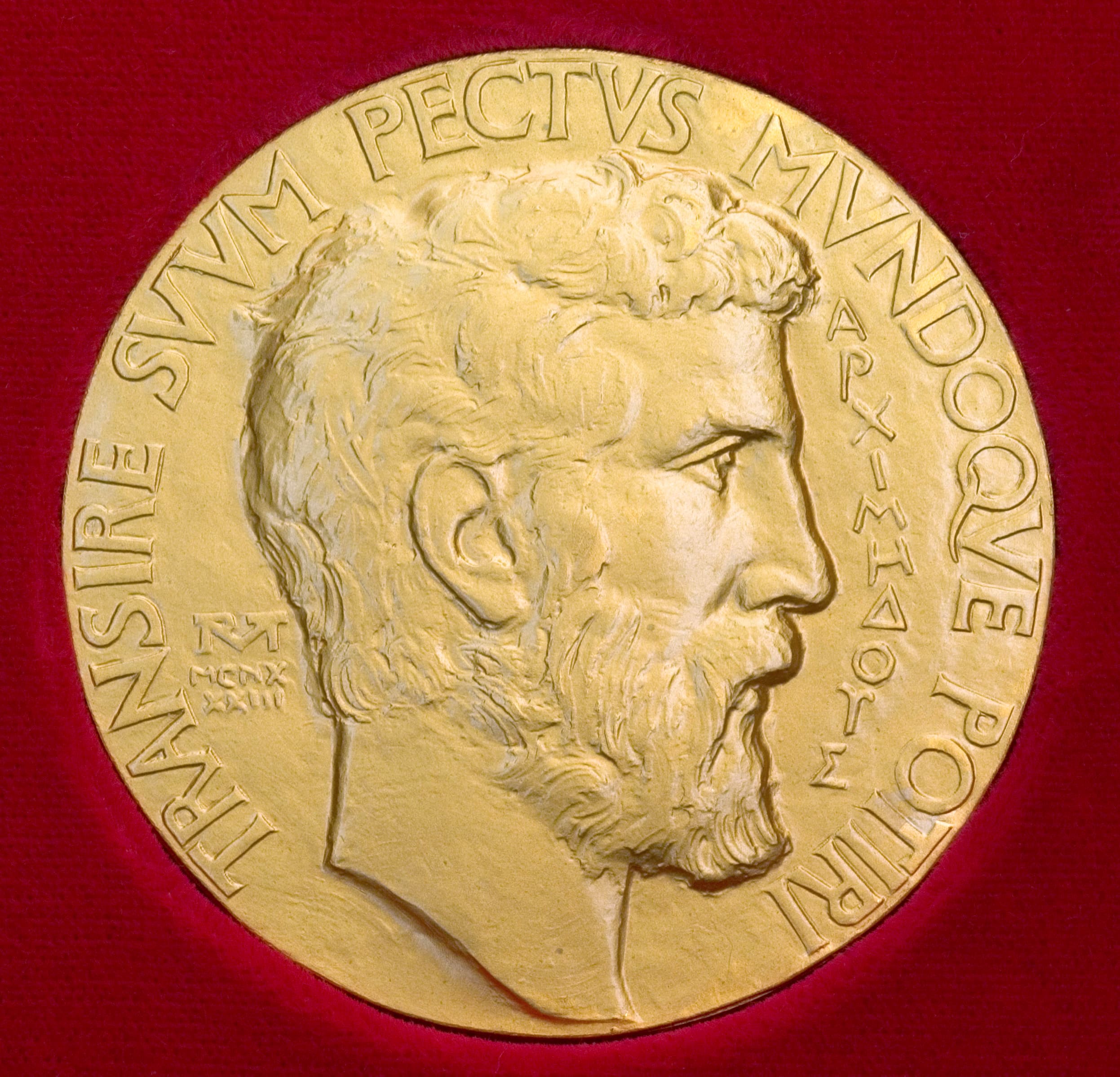
On Friday September 11, 2026, twenty-five Fields Medalists put their names to a declaration titled A Severe Misalignment of AI in Mathematics. The document was published at mathandai.org and it does something the discipline had not done before: it borrows the word the AI-safety field invented for itself and turns it back on the labs. "The goals of the AI companies and the goals of the mathematical community are severely misaligned" is the sentence the declaration is written around, and it is not a metaphor. It is a claim, in the vocabulary the labs use to describe their own worst-case scenarios, that the labs are currently the misalignment.
Twenty-five signatories is not a caucus. It is roughly a third of every Fields Medalist alive today. There are not many more names in that pool to add. The list, in chronological order of medal year: Deligne (1978), Donaldson (1986), Mori (1990), Lions and Zelmanov (1994), Kontsevich and McMullen (1998), Okounkov, Tao and Werner (2006), Lindenstrauss, Ngô, Smirnov and Villani (2010), Avila, Bhargava and Hairer (2014), Birkar, Figalli and Scholze (2018), Duminil-Copin, Huh, Maynard and Viazovska (2022), Deng (2026). If you tried to assemble a comparable mass of authority in physics you would need thirty Nobel laureates and a decade of coordination. The mathematics profession mustered the equivalent in three months.
What the declaration actually says
The declaration is roughly eight hundred words and does not name a company. It names a pattern. Four claims run through it, and each of them lands somewhere specific.
"Solving problems is only a tool and proxy for achieving the primary goal of conceptual understanding and insight." This is the epistemology argument. The labs measure their models against a benchmark — how many Millennium Prize problems solved, how many Erdős conjectures closed — and the declaration says the benchmark and the science are not the same thing. Grinding out true/false verdicts on famous open problems, the declaration argues, "could destroy fertile ground instead of breathing life into new ideas."
"Often these solutions are announced in a rush, leaving no time for a proper writeup, the isolation of new methods and ideas, and citing relevant previous work of others. As in all creative professions, this raises severe attribution and plagiarism questions." This is the procedural argument, and it is the one that lands directly on OpenAI's September 8 Navier-Stokes claim — the one where the frontier lab, per Tristan Buckmaster's account carried in TechCrunch and The Decoder, heard a rumour on September 1, launched an internal race, and published a full proof eighty-eight hours later on the same smooth-forcing route Buckmaster and Anthropic's Levent Alpöge had spent a year narrowing.
"The most precious resources of our profession are students and ideas, and these we nurture with great care." This is the training argument. The mathematical culture the declaration defends is a slow apprenticeship — talks, discussions, simplifications, a decade-long journey from a paper on the arXiv to a graduate-textbook presentation. Models optimised for benchmark clearing do not produce the intermediate artefacts that apprenticeship needs.
"AI systems are becoming increasingly capable of producing the results of such work directly, and these goals cease to align." This is the profession-wide argument. The declaration explicitly frames mathematics as a leading indicator for every intellectual profession that trains humans by making them do the work. The mathematicians expect their problem to become everyone else's problem, and they say so in that order.
The vocabulary borrow is the story
Every AI-safety paper the frontier labs publish is built around the word alignment. Anthropic's Enterprise Frontier Safeguards launch on September 2 uses it. OpenAI's Preparedness Framework — the one that classified GPT-6 Astra under the Critical Cyber Tier a week later — is a formalisation of the concept. The word means, in the industry's usage, the property of a model doing what its designers intend for the good of the users. A misaligned model, in the same usage, is the industry's canonical worst case.
The declaration takes that word, does not put quotation marks around it, and puts AI companies on the misaligned side of the ledger. That is not a rhetorical accident. Peter Scholze, Terence Tao and Cédric Villani are not accidental writers. If the declaration had wanted to say the labs were behaving badly or acting unethically or harming the field, it had those words available. It picked misalignment because the word carries with it a whole worldview about what the labs claim to be building — and the declaration is saying that on the labs' own terms, by the metric the labs themselves invented, the labs are the thing they say they are worried about.

What preceded it, and what the Fernholz piece adds
The declaration did not fall into a quiet week. The Leiden Declaration in June, initiated by Timothy Gowers and colleagues at the Lorentz Center, was the first structured warning. The Navier-Stokes incident on September 8 was the case study. Terence Tao's September 9 Mastodon post — "the collection of good, fruitful open problems is now being mined in a non-renewable fashion", captured by Simon Willison — was the individual salvo. September 11 was the collective one.
TechCrunch's Tim Fernholz, reporting the declaration on the same day it was published, adds two facts that do not appear in the declaration itself. First: Buckmaster's September 8 accusation — that OpenAI pressured him to drop his Anthropic co-author — is now on the record with the field's most-decorated body having read it and signed a document three days later. Second: per Fernholz's reporting, Caltech withdrew a sponsorship from an OpenAI math event that same week. Caltech did not issue a press release. It just declined to appear. That is how institutions in the mathematics profession vote — with their programme, and with the absence of a logo.
Neither OpenAI nor Anthropic issued a response to the declaration by end of day September 12, per Fernholz. That is not a rebuttal. It is a data point about what the labs think it costs to leave the sentence unanswered.
What is not in the declaration
Three things the declaration deliberately does not do:
- It does not name a company. OpenAI is the implicit target of the September 8 procedural failure; Anthropic and DeepMind are also in the frame for benchmark-mining more broadly. The declaration chose the pattern over the personnel. That framing keeps the door open to signatories from within labs — Alpöge, whose employer is Anthropic, could in principle add his ORCID without contradicting his day job. Whether any lab-affiliated mathematician signs is now a small, watchable signal.
- It does not ask for regulation. The declaration says the issues "must be addressed urgently, in the mathematical community, by the companies developing these technologies and, more broadly, by a society that will confront similar problems in many other forms of intellectual work." It is a discipline speaking to itself and to its equipment supplier. It is not a policy letter, and its refusal to be one is a choice.
- It proposes no remedy. No embargo, no attribution protocol, no benchmark boycott. The absence is deliberate. A discipline that spent the summer watching its own Fields Medalists be scooped is not yet in the business of drafting standards. It is in the business of publishing that it has noticed.
What to watch
- Endorsement count. The declaration invites ORCID-authenticated endorsements from the wider mathematical community. If the endorser count crosses one thousand within a fortnight, the declaration becomes the profession's collective position rather than the position of twenty-five very famous people. If it stalls under two hundred, the field will have said something quieter than the twenty-five names suggest.
- Lab response. OpenAI's silence past 72 hours is a position. A public reply — from Bubeck, from Altman, from OpenAI's newsroom — is the interesting event. If the lab responds at researcher level rather than corporate level, the framing stays technical; if a corporate statement lands, the story turns into a governance one.
- A second discipline. The declaration frames mathematics as a leading indicator. If a comparable document appears from a physics or biology society within ninety days, the misalignment borrow generalises and the labs are answering a coalition rather than a discipline. If it does not, the vocabulary borrow stays specific to a field with an unusually low tolerance for the announce-first-write-later mode.
- Whether a lab-affiliated mathematician signs. The declaration is architected to allow it. If Alpöge or a researcher at DeepMind or OpenAI adds their ORCID, the labs' internal position — that this is a mathematics-community dispute against outside labs — becomes harder to maintain, because the outside labs contain some of the same people.
The Loop's September 9 piece closed on the observation that the vendor had become the competitor at the level of the author line. The September 11 declaration is the answer at the level of the profession. Twenty-five Fields Medalists is not a sample. It is the profession clearing its throat in the language the labs invented, addressing them by that language's most terrifying word, and inviting the rest of the community to sign.
If the labs want alignment to keep meaning what they want it to mean, they now have to prove they are not what its opposite describes. That is a harder job than the twenty-five names imply — and it is a job the twenty-five names have handed them in the vocabulary they will find hardest to duck.
* * *
Thanks for reading. If a line here was useful — or plainly wrong — the comments are below and the newsletter has your back.
Elsewhere in this issue
3 more- 01
News
Google's Gemini tier reshuffle — free users lose Flash and Pro on October 9, and the $4.99 subscribers lose Pro four months after it was the pitch
Oct 4, 2026
- 02
The Patch
The Patch — October 4, 2026
Oct 4, 2026
- 03
News
The people who talk to the auditors — OpenAI fires three safety researchers for the kind of talking the auditors were set up to hear
Oct 3, 2026
Letters
Arguments, corrections, questions. Anonymous comments allowed; be kind, be specific.