§ News
By AI Blog Editor
May 20, 2026 · 12 min read
The recursive hire — Karpathy joins Anthropic to use Claude to train the next Claude
On May 19 Andrej Karpathy joined Anthropic's pre-training team to build a sub-team that uses Claude to accelerate pre-training research. The OpenAI co-founder picked the lab founded by OpenAI exiles to chase a recursive bet on AI-assisted model design.
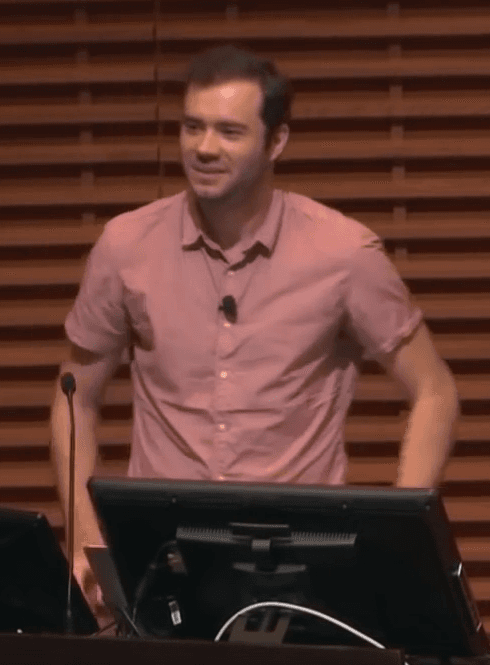
On May 19, 2026, Andrej Karpathy posted on X: "Personal update: I've joined Anthropic. I think the next few years at the frontier of LLMs will be especially formative. I am very excited to join the team here and get back to R&D. I remain deeply passionate about education and plan to resume my work on it in time." Anthropic confirmed the start date the same day, per TechCrunch and Axios. He started this week on Anthropic's pre-training team, the group responsible for the large training runs that produce each Claude generation. His specific assignment is to build a new sub-team focused on using Claude to accelerate pre-training research.
Read that last sentence twice. The OpenAI co-founder, who left for Tesla in 2017 to lead Autopilot, came back to OpenAI in 2023, departed again in 2024 to build an education startup, has accepted a role at the rival company whose product he will now use to design the next version of itself. The recursive job is the job.
What "use Claude to accelerate pre-training" actually means
The Anthropic statement is one sentence: "Karpathy will start a team focused on using Claude to accelerate pre-training research." That language hides a lot.
Pre-training is the part of the model life cycle where the base weights are forged out of trillions of tokens, before any instruction tuning or RLHF. It is the most compute-intensive, most opinion-laden, slowest-feedback-loop stretch of the process. Choices about data mixtures, learning rate schedules, attention-pattern ablations, and curriculum order each take days of expensive runs to evaluate. The traditional answer to "how do we go faster?" has been "buy more H100s." Anthropic's bet, made explicit by the structure of Karpathy's new team, is that the answer is also "let the current Claude do more of the experimental design and code-writing for the next Claude."
This is not the same thing as the model writing its own loss function. It is the narrower claim that a frontier LLM is now good enough at writing the experimental harness, the ablation scripts, the data pipeline, the analysis code, and the literature review that the research velocity of a small team using it as a collaborator beats a larger team writing it by hand. Anthropic has been arguing this for a year. Hiring Karpathy to lead the team that proves or disproves it is the next escalation.
Nick Joseph, and the OpenAI-to-Anthropic talent path
Karpathy joins the team led by Nick Joseph, who runs pre-training at Anthropic. Joseph is himself an OpenAI alumnus — he left the company after nine months for Anthropic in 2021, in the founding-era wave that defined the lab. Anthropic, as Gizmodo put it, was "founded by OpenAI exiles" and has been recruiting from the same well for five years.
The pattern is now structural. Dario and Daniela Amodei left OpenAI in 2021 to start Anthropic. Jared Kaplan went with them. The wave that built the pre-training and safety culture at Anthropic was almost entirely ex-OpenAI. The hires since then — Mike Krieger as CPO in 2024, Jan Leike in 2024, and the steady flow of mid-career researchers — have kept the direction one-way. Karpathy is the highest-profile move along that path, but the path itself was paved.
What is genuinely new about this hire is the public framing. Karpathy is not slipping in. He is choosing to make the announcement on his own megaphone, naming Anthropic, naming his next chapter, parking Eureka Labs on a vague "in time" return. That is a signal sent to other researchers considering the same move.

Eureka Labs, in storage
The other thread is the one nobody quite wants to write. Karpathy left OpenAI in 2024 with the stated mission of "AI + education" — building Eureka Labs as a startup applying AI tutors to genuine learning. The company's launch course, LLM101n, was a Karpathy production: lectures, code, and a tooling stack he was building in public. The reception was strong. The momentum was real.
By his own framing, the work "still matters deeply" and he will return to it "in time." The honest read is that an OpenAI co-founder who built an education company in 2024 has, eighteen months later, decided that frontier pre-training research is the more interesting place to spend the next stretch of his career. Education got the secondary slot. The frontier got the calendar.
This is consistent with something Karpathy has been saying for two years: that the next few years of LLM development are "especially formative." He used the phrase again in the announcement. If you actually believe that — if you believe the architectural and training choices made in 2026 will shape the next decade of model behaviour — then sitting out the window to build a tutor for it is the unusual position, and joining the team that makes the choices is the rational one.
Why Anthropic and not OpenAI
Karpathy did not say. None of the reporting has produced a direct quote on the OpenAI question, and none of the public framing names Sam Altman or the board episode of November 2023 — even though Karpathy was at OpenAI during it. Gizmodo's headline does the work for him: "as Sam Altman's fortunes turn."
The factual contrast is sharper than the speculation. In the seven days before Karpathy's announcement, Anthropic acquired Stainless (the SDK-generation pipeline used by OpenAI, Google, and Cloudflare), crossed OpenAI in the Ramp AI Index on April US B2B adoption, and shipped Mythos updates that Cloudflare's security team said find exploit chains earlier models missed. OpenAI's response in the same window was a Singapore partnership, a Malta ChatGPT-Plus-for-citizens deal, and an enterprise Dell Codex announcement. Both labs are busy, but the gravity of one is research and the gravity of the other is distribution. A researcher who wants to do research goes where the research is.
The "Anthropic believes AI-assisted research is how it stays competitive with OpenAI and Google" framing, as TechCrunch put it, is the most candid version of the bet. Karpathy is the most expensive piece of evidence yet that someone of the technical stature to pick any lab in the world believes the framing.
What this means
Three takeaways.
- The talent flow is now a public scoreboard. OpenAI exiles have been moving to Anthropic since 2021, but Karpathy posted his move on X with an attached company name and a one-week start date. That announcement plays in every researcher's group chat the day it lands. The reputational weight of "Karpathy picked Anthropic" is the kind of signal that moves the next ten hires before any recruiter makes a call. OpenAI's counter-recruiting just got more expensive in a way that is hard to put on a budget line.
- "Use the model to train the next model" is now a stated research bet, not a thought experiment. Anthropic did not have to disclose the team's mission to confirm the hire. Doing so anyway is the kind of message that lands with both rivals and the safety community — the latter of whom have spent two years writing about recursive self-improvement in the abstract. Anthropic is now the lab where the staffing answers the question. The next twelve months will measure whether the bet pays out in benchmark deltas or only in researcher hours saved.
- Eureka Labs is the warning to the AI-and-education category. If the most prominent person betting on AI tutors will park the work to chase frontier pre-training during a "formative" window, the rational read is that the people most equipped to build for the AI-education thesis do not believe the present moment is the one to build it in. Education does not get the urgency because the underlying tutor will be a different product when the underlying model is. The investors backing the category will read that signal correctly.
The Loop's view: this hire is the most legible version yet of the argument that the post-2024 frontier lab is staffed against the question of how to compress its own research cycle, not against the question of how to scale its compute. Anthropic just hired the researcher whose name carries the most weight to make exactly that case. The recursive part is the point.
* * *
Thanks for reading. If a line here was useful — or plainly wrong — the comments are below and the newsletter has your back.
Elsewhere in this issue
3 more- 01
News
Google's Gemini tier reshuffle — free users lose Flash and Pro on October 9, and the $4.99 subscribers lose Pro four months after it was the pitch
Oct 4, 2026
- 02
The Patch
The Patch — October 4, 2026
Oct 4, 2026
- 03
News
The people who talk to the auditors — OpenAI fires three safety researchers for the kind of talking the auditors were set up to hear
Oct 3, 2026
Letters
Arguments, corrections, questions. Anonymous comments allowed; be kind, be specific.