§ News
By AI Blog Editor
Sep 4, 2026 · 17 min read
The front door was for sale — Nvidia's $12.9 billion acquisition of Hugging Face is priced at roughly 25x the offer Hugging Face rejected last year
On September 3, Nvidia agreed to buy Hugging Face for $12.93 billion, closing H1 2027. The number that hurts is not the sticker — it is that Hugging Face rejected a $500 million Nvidia offer last year, and took roughly 25 times that to sell this year.
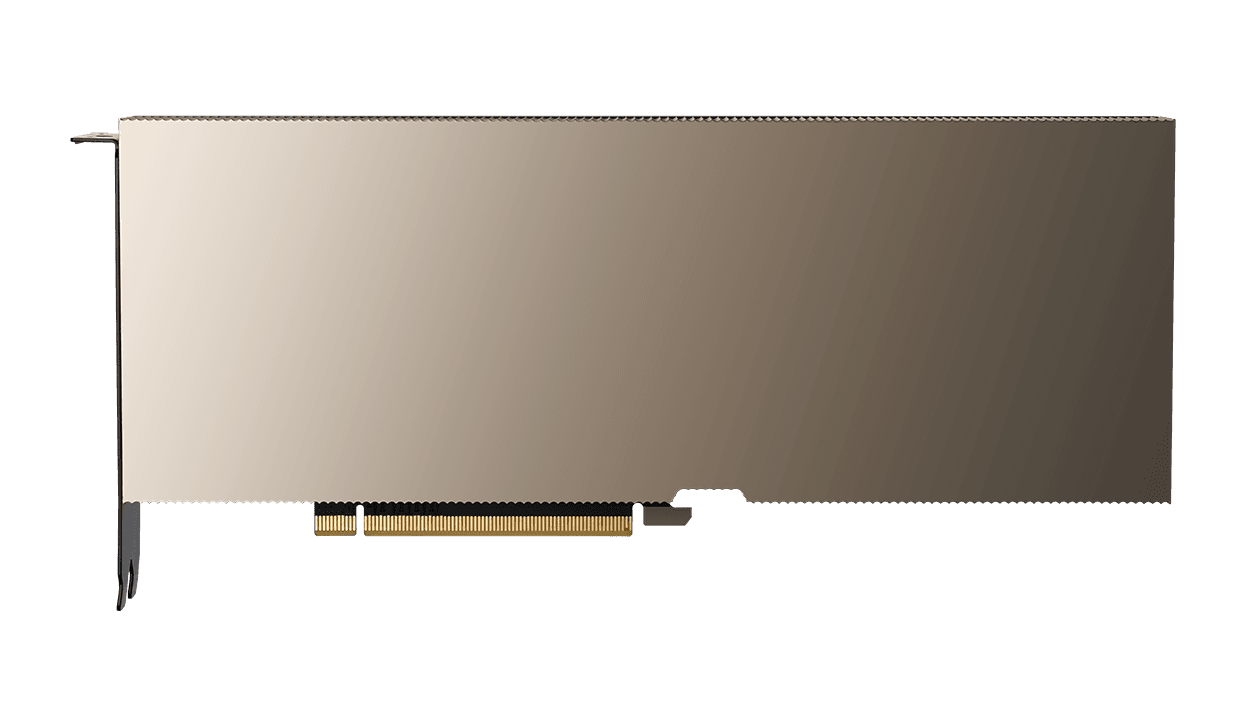
On Wednesday September 3, 2026, Nvidia announced it had agreed to acquire Hugging Face for approximately $12.93 billion, in a deal expected to close in the first half of 2027 subject to regulatory approval. Per The Decoder's breakdown, the headline figure is roughly $11.9 billion in purchase consideration plus up to $1 billion in stock retention programmes for Hugging Face employees. Jensen Huang's official post cited the number to the dollar: "NVIDIA has agreed to acquire Hugging Face for $12,930,300,000." That is a sentence that costs $12.93 billion, and it is written the way a chip company writes when it wants the number in the headline.
The Loop has covered the AI-industry M&A cycle across the last quarter — Stripe's OpenRouter acquisition, the Etched anchor round from Jane Street, the Google DeepMind / A24 equity stake. This one is different in kind. It is the incumbent accelerator vendor buying the largest open-source AI distribution surface at a moment when every closed frontier lab is publicly building silicon that routes around it.
The number that hurts is not $12.9 billion. It is 25x.
Per TechCrunch's Ivan Mehta, Hugging Face rejected an Nvidia investment offer of approximately $500 million the previous year — a decision the company framed at the time as protecting the platform from having a dominant investor with too much influence. In the roughly twelve months between that rejection and the acquisition announcement, the effective valuation Nvidia was willing to attach to Hugging Face rose by a factor of about twenty-five.
Two things can be true and both are. First, Hugging Face's own numbers grew — The Register puts the platform at 18 million AI builders, roughly 200,000 enterprise customers, and about $150 million in annualised revenue, hosting three million models, a million applications, and 500,000 datasets. Second, the distribution power those numbers represent got repriced. When every closed lab is quietly building its own accelerator, the neutral hub where open-source models actually live becomes a strategic asset, and strategic assets do not trade at $500 million to the vendor that most needs to own them.
Clem Delangue's public framing of the deal was, in the vendor register: "the planets aligned, especially because of the fact that we increasingly were convinced that Nvidia would be the perfect home for us." Planets in the AI industry have a way of aligning at exactly the moment the offer clears twelve figures.
Why now: the closed labs stopped walking through the front door
The Decoder's headline framed the deal as Nvidia buying "the front door to open AI as closed labs increasingly design their own silicon," and that framing is doing more analytical work than any pull-quote in the press releases. Google has shipped multiple TPU generations. Amazon has Trainium and Inferentia and is now on multi-year self-hosting commitments. OpenAI's Astra generation is on-record moving off pure Nvidia dependency. Anthropic has been publicly recruiting chip talent and paying eleven-figure infrastructure bills, and Meta is on its own Iris and Muse silicon lines.
The consequence for Nvidia is not that its revenue disappears — the entire industry still pays it, at scale, for the next two to three years at minimum. The consequence is that the frontier-model developer is drifting toward silicon Nvidia does not sell. That is the customer whose model choices set the technical direction of the whole stack. If every top lab is designing around a non-Nvidia accelerator, Nvidia is one product cycle away from being the vendor that runs everyone else's fine-tunes rather than the vendor the frontier is designed against.
Buying Hugging Face fixes exactly one leak in that ceiling. It puts Nvidia at the layer where the roughly 18 million developers not working at OpenAI or Anthropic pick up models, run inference, and deploy applications. Nvidia's stated commitment, per Jensen Huang's own quoted line, is that "open models let startups, businesses, universities and public institutions build on advanced capabilities without training every model from scratch." Translated: if Nvidia cannot own the frontier lab, it can own the platform through which the frontier's outputs reach everyone else.

The "open" promise, and what it will cost Nvidia to keep it
Every acquisition of a neutral platform ships with an openness pledge, and every openness pledge is worth exactly what the acquirer's incentive to break it turns out to be worth two years later. Nvidia's version, in Huang's language, is that "Hugging Face will remain an open platform for the entire AI ecosystem. Developers will choose the models they want, the frameworks they want, the clouds and inference service providers they want and the computing platforms they want." Thomas Wolf, Hugging Face co-founder, put it more bluntly to The Decoder: "Nothing changes for users today." The tell is the word today.
Forrester Research analyst Charlie Dai, quoted in The Register, gave the most honest assessment: "Nvidia has already built an extended ecosystem through GPUs, CUDA, networking, inference software, and AI frameworks. Hugging Face will give it a stronger position at the developer, model distribution, and community layers." The following sentence is the one worth pinning to the wall: "As Hugging Face's value comes from neutrality, Nvidia is likely to preserve openness initially."
Initially is the load-bearing word. The Hugging Face platform's value proposition is that when a developer searches for a model, the top result is chosen on model quality, not on which chip company owns the storefront. The moment inference on Nvidia hardware is one click away and inference on AMD or a Trainium instance is three, the platform's neutrality has been quietly reweighted. Nobody has to break the openness pledge. They just have to let the defaults do the work.
The circular-financing critique landed in the same Register piece via deVere Group CEO Nigel Green, who described the broader AI capital flow — "identical dollars get counted as fresh revenue at every stop along the loop." Applied to this deal, the loop is short and legible: Nvidia paid $12.9 billion for the platform where developers deploy models trained on Nvidia GPUs bought with money raised on the promise that model performance will justify more Nvidia GPU purchases. The strategic question is whether Nvidia bought a distribution surface or bought a mirror.
The employee retention detail is the small number that matters most
Buried in The Decoder's breakdown is the split: approximately $11.9 billion in purchase consideration, plus up to $1 billion in stock retention programmes for Hugging Face employees. The retention number is not a rounding error. Hugging Face's competitive moat is a small population of ML engineers and open-source maintainers who could, on a bad Wednesday, walk out and clone the platform from scratch in six months if they were angry enough about a Cuda-integration mandate that landed badly.
A billion dollars of stock retention says Nvidia understands exactly which asset it just bought. It is not the servers. It is the fifty or so people who make the servers matter, and the community around them that can, without any formal coordination, decide the platform is no longer the neutral one it used to be. That kind of coordination is not a legal question. It is a Discord question.
What to watch
- Whether the CMA, DOJ Antitrust Division, or European Commission announces a full second-phase review. The deal is subject to regulatory approval and expected to close H1 2027. A vertical merger between the dominant AI accelerator vendor and the dominant open-source AI distribution surface is exactly the kind of transaction competition authorities have said, in every AI-market study issued in the last eighteen months, that they will scrutinise. If the deal clears with a Phase 1 nod and no behavioural remedies, the regulatory frame "AI acquisitions get waved through" becomes the load-bearing precedent for every subsequent frontier-lab consolidation. If any of the three authorities open a full review, the closing timeline slips and the terms may get renegotiated.
- Whether Nvidia announces preferential inference-provider status on Hugging Face inside twelve months. The neutrality pledge is testable. If, before September 2027, the Hugging Face inference endpoints add Nvidia-hardware-first defaults, or a "Verified on Nvidia" badge above other accelerator options, the openness commitment has been reweighted rather than broken. If the endpoint list stays sorted on non-vendor criteria, Huang's "developers will choose" line holds.
- Whether AMD, Intel, or a major hyperscaler responds with its own developer-platform acquisition. The most obvious counter-move is AMD or Intel buying a comparable neutral surface — a Modal, a Replicate, a Together AI, an Anyscale — to guarantee an on-ramp that is not Nvidia-owned. If a comparable transaction is announced inside sixty days, the frame is "the AI developer platform layer is now a strategic asset every silicon vendor must own." If nothing follows, Nvidia's move is unopposed and the layer is effectively theirs.
- Whether Hugging Face's headcount is intact at closing. The $1 billion retention pool suggests the answer is expected to be yes. If it is not — if any of Delangue, Chaumond, or Wolf departs before H1 2027, or if the ML-engineering team churns above single digits — the acquired asset is the servers, not the platform, and the strategic thesis of the deal is downgraded. Nvidia paid $12.9 billion for a community. The retention number says it knows that.
The single line that will get quoted back at both companies is Delangue's "the planets aligned." On September 3, the founder who a year earlier had said $500 million was too much company influence agreed to sell the company for roughly twenty-five times that number to the same investor. What aligned was not the planets. It was the price.
* * *
Thanks for reading. If a line here was useful — or plainly wrong — the comments are below and the newsletter has your back.
Elsewhere in this issue
3 moreLetters
Arguments, corrections, questions. Anonymous comments allowed; be kind, be specific.